
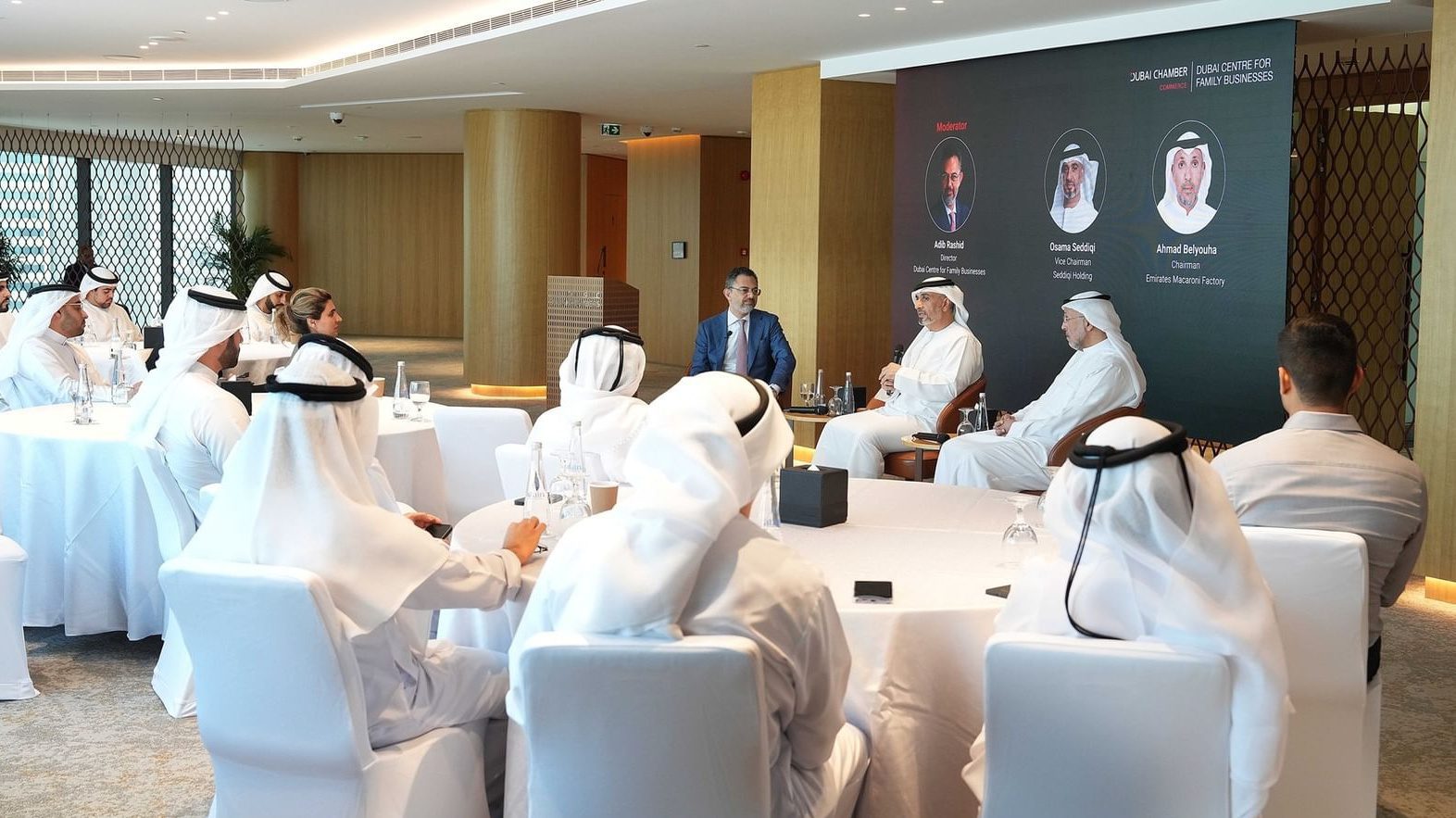
A recent governance-focused session examined sustainability and resilience strategies for family-owned businesses in a shifting economic environment. Moreover, the discussion explored how such enterprises can strengthen long-term legacy while adapting to evolving market conditions.
Titled “Safeguarding Family Business Legacy in Turbulent Times,” the session addressed mechanisms to reinforce intergenerational continuity and operational stability. Additionally, it highlighted practical approaches to governance enhancement, succession planning, and organisational adaptability amid increasing market volatility. The event brought together 35 representatives from Dubai’s family business community, along with industry leaders including Osama Seddiqi, Vice Chairman of Seddiqi Holding, and Ahmad Belyouha, Chairman of Emirates Macaroni Factory.
Leadership insights highlight governance and succession priorities
Participants shared perspectives on maintaining business continuity and responding effectively to structural and economic shifts. Furthermore, discussions emphasised the importance of preparing future leadership cohorts and strengthening internal governance frameworks to support long-term competitiveness.
Mohammad Ali Rashed Lootah, President and CEO of Dubai Chambers, said the legacy of family businesses depends not only on the achievements of founding generations but also on the development of sustainable and adaptable business models.
He stated that “Effective corporate governance, the empowerment of young leaders, and enhanced operational resilience are key pillars for ensuring continuity and strengthening long-term competitiveness, while preserving the values and principles that define each family business’s identity and journey.” Moreover, the remarks underscored the importance of structured leadership transition in sustaining enterprise value over time.
Governance Series strengthens long-term business sustainability agenda
The discussion also reinforced the importance of succession planning and coordinated governance practices. As a result, participants highlighted the need for unified strategic direction to navigate evolving customer expectations and market disruptions.
The Governance Series, therefore, continues to support family enterprises through structured learning initiatives focused on succession, compliance, and sustainable growth. Additionally, the programme encourages knowledge exchange and the sharing of best practices, thereby reinforcing resilience and long-term continuity across family-owned businesses.
