
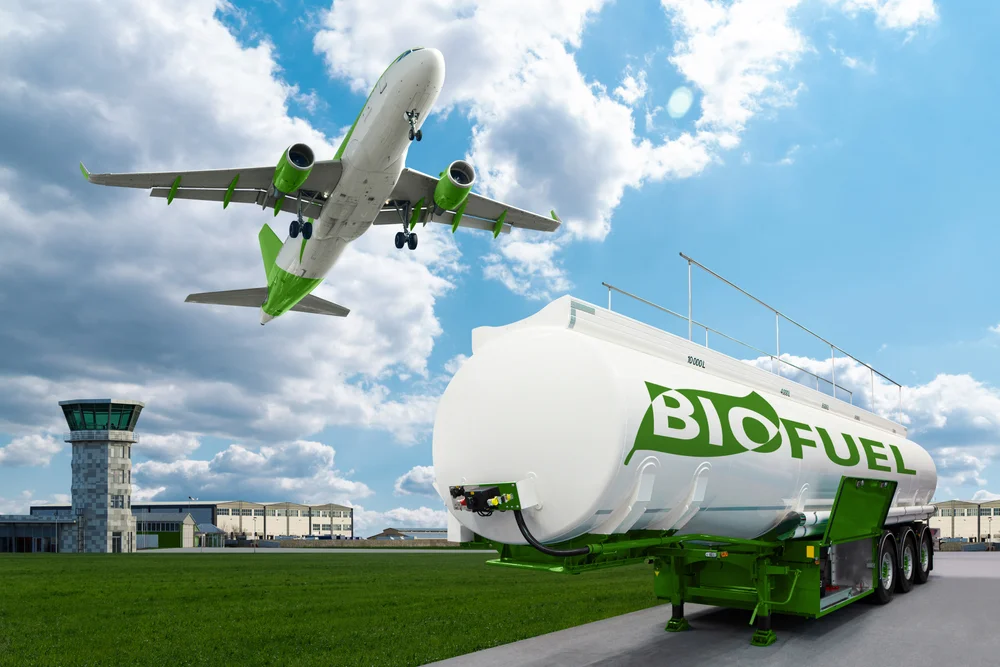
The European Parliament and Council negotiators have come to an agreement to increase the use of sustainable fuels like advanced biofuels and hydrogen in the aviation sector.
The agreement was made in a provisional deal reached on Tuesday night regarding the RefuelEU Aviation rules, according to WAM. The main aim of the deal is to decrease emissions and ensure that the EU becomes climate neutral by 2050. The agreement includes a minimum share of sustainable aviation fuels that must be made available at EU airports. From 2025, at least 2% of aviation fuels will be green, with this share increasing every five years to 6% in 2030, 20% in 2035, 34% in 2040, 42% in 2045 and 70% in 2050.
Additionally, a specific proportion of the fuel mix, starting at 1.2% in 2030 and reaching 35% in 2050, must comprise synthetic fuels like e-kerosene. According to the agreement, the definition of “sustainable aviation fuels” will include various biofuels, synthetic fuels, and recycled jet fuels made from waste gases and waste plastic.
MEPs ensured that feed and food crop-based fuels and fuels derived from palm and soy materials will not be considered green as they do not align with the sustainability criteria. They also managed to include renewable hydrogen as part of a sustainable fuel mix, a promising technology that could progressively contribute to the decarbonisation of air transport.
To further promote the decarbonising of the aviation sector and to inform the public, MEPs ensured that as of 2025 there will be an EU label for the environmental performance of flights. Airlines will be able to market their flights with a label indicating the expected carbon footprint per passenger and the expected CO2 efficiency per kilometre. It will allow passengers to compare the environmental performance of flights operated by different companies on the same route.
MEPs also managed to convince EU member states to direct all revenues from non-compliance fines from airlines, airports or fuel suppliers, to research and innovation into bridging the price difference between sustainable and conventional fuels.
EP rapporteur José Ramón Bauzá Díaz (Renew, ES) said, “After months of intense negotiations, I am happy to conclude the Fit for 55 package today. I am also proud to say the European Parliament has been successful in defending and advancing the ambitious development of sustainable aviation fuels across the EU. We have created a level playing field through harmonised rules and preserved EU air connectivity. With this regulation, the decarbonisation of aviation becomes closer.”
