
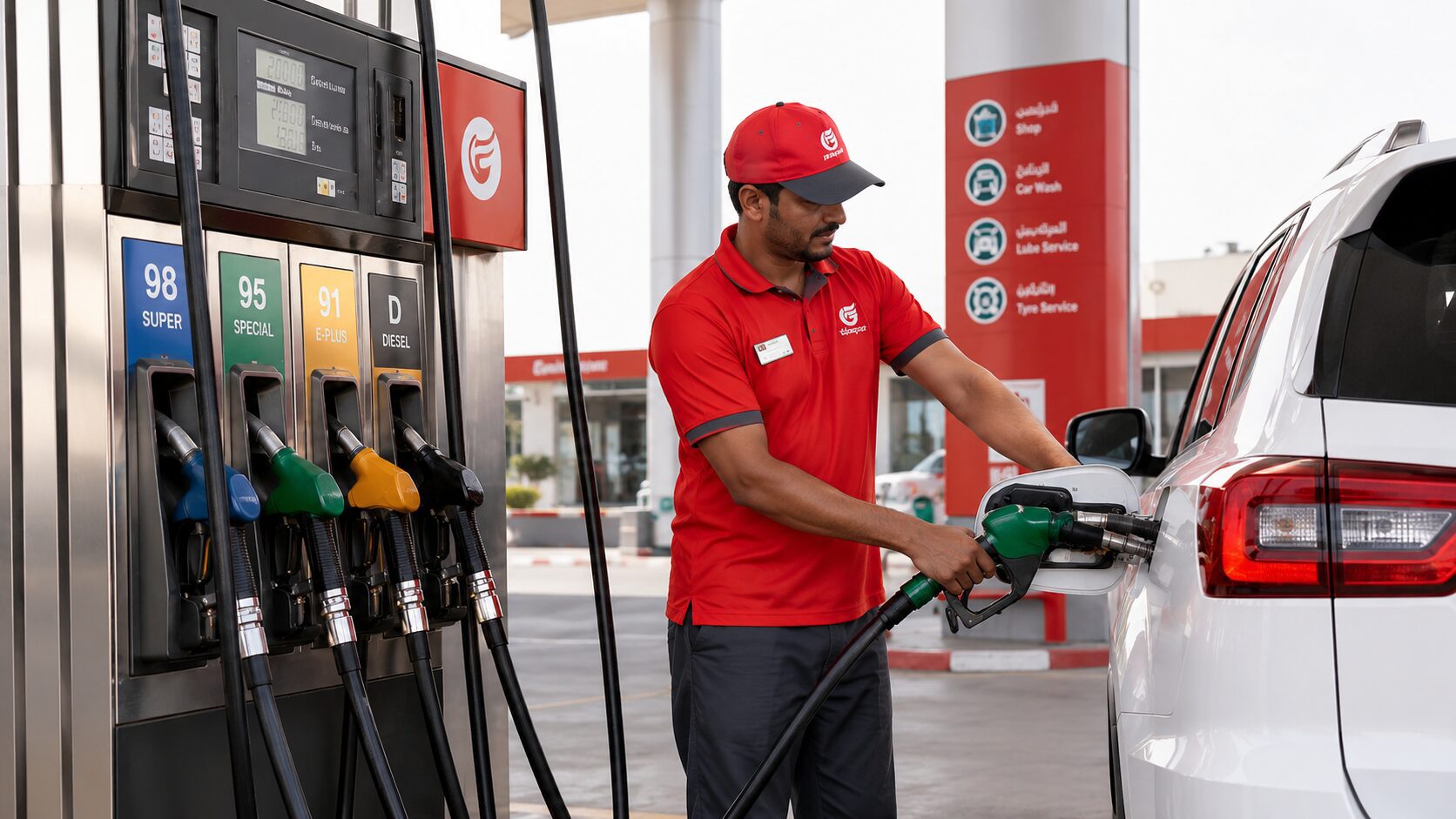
The UAE has announced its fuel prices for June 2026, introducing the first pricing update since becoming an independent oil producer after leaving OPEC and OPEC+ in May. While petrol prices have increased across all grades, diesel prices have declined compared to May.
From June 1, Super 98 petrol will cost Dh3.95 per litre, up from Dh3.66. Similarly, Special 95 petrol will rise to Dh3.83 per litre from Dh3.55. Meanwhile, E-Plus 91 petrol will increase to Dh3.76 per litre, compared to Dh3.48 in May. In contrast, diesel prices will fall to Dh4.33 per litre from Dh4.69.
Petrol Continues Three-Month Upward Trend
Petrol prices have now increased for three consecutive months, reflecting the broader rally in global oil markets. Between February and May, international oil prices climbed sharply, which contributed to higher fuel costs across the UAE.
As a result, motorists may face increased transportation expenses. Since fuel remains an essential household expense, even small monthly increases can gradually affect family budgets. Consequently, many drivers may need to allocate a larger share of their income toward fuel costs.
The country last experienced record fuel prices in 2022 following the Russia-Ukraine conflict. During that period, petrol prices crossed Dh4 per litre for the first time. In July 2022, Super 98 reached Dh4.63 per litre, while Special 95 climbed to Dh4.52, setting all-time highs.
Oil Market Faces New Dynamics After OPEC Exit
The UAE officially exited OPEC and OPEC+ on May 1, 2026, ending more than six decades of membership. Following its departure, the country could potentially raise oil production by as much as 30 percent above previous quota-restricted levels, depending on the pace of capacity expansion.
Several market scenarios could emerge from higher production. First, a gradual increase of 200,000 to 300,000 barrels per day would likely have minimal impact on global oil prices. However, a moderate increase of 500,000 to 1 million barrels per day could help limit future price rallies, particularly once shipping conditions through the Strait of Hormuz normalize.
If production expands by more than 1 million barrels per day, oil prices could come under downward pressure unless global demand grows significantly faster. Over the longer term, market sentiment may influence prices just as much as actual supply levels.
Additionally, OPEC has traditionally relied on spare production capacity to influence market expectations. Therefore, the departure of a major producer could reduce the group’s ability to shape market sentiment and guide future price expectations.
