
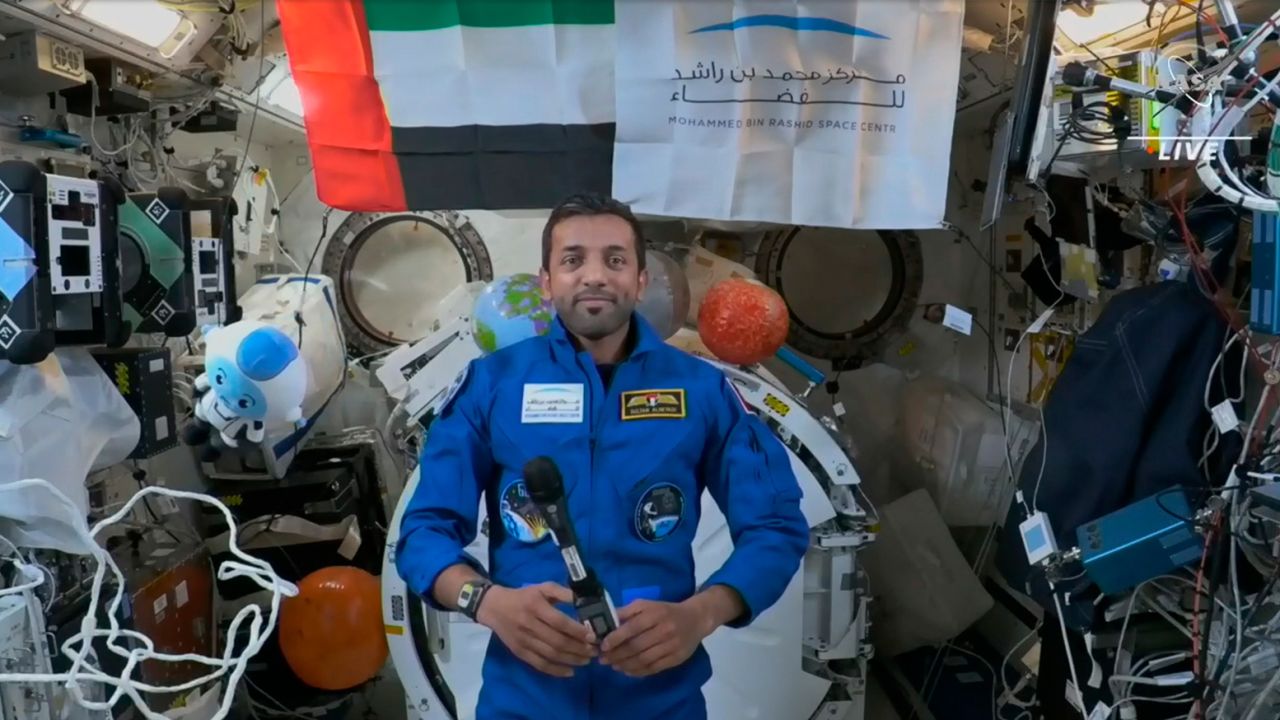
According to a local newspaper, the launch of Emirati astronaut Sultan Al Neyadi into space last month was a significant moment for the UAE, with the UAE making major advancements in space exploration. Al Neyadi was one of four crew members aboard the SpaceX rocket Falcon 9 and is on a six-month mission on the International Space Station.
The editorial in The National noted that Al Neyadi’s journey was not only watched by people in the UAE but also across the Arab world, generating national pride. This mission follows the 2019 trip by Emirati astronaut Hazza Al Mansouri, who became the first Emirati to travel to space for eight days. Al Neyadi and Al Mansouri trained together for over three years and consider each other as brothers.
On April 28th, Al Neyadi will make an attempt at a spacewalk, which if successful, will make him the first Arab astronaut to step into space. The event will be broadcasted live by Nasa and the Mohammed bin Rashid Space Centre (MBRSC).
The paper added, “Spacewalks are challenging and daunting – not least for it being carried out in a suit weighing 27kg and floating in microgravity. But there are other reasons this coming week could be historic.”
Since the launch last month, several scientific experiments have been conducted in space, and there are plans for over 20 different experiments with UAE and international universities during the six-month ISS mission. This week will be particularly busy for some of these experiments, with significant complexities and safety concerns that may result in postponement, according to WAM.
Before the spacewalk, a more challenging manoeuvre is scheduled for tomorrow, with the planned lunar landing of the UAE’s Rashid rover at 8.40 pm on April 25th. While success is not guaranteed, the UAE’s space programme has made significant progress and achieved great leaps.
As the Emirates, Lunar Mission manager Hamad Al Marzooqi said, “It’s a risky business, but again, it’s not the end. At MBRSC, we have plans for what’s next. If we can call it a trial, yes, maybe it’s a trial. But, again, we will have a second and third.” Of all the countries who’ve attempted the feat, only the US, the former Soviet Union and China have achieved soft landings on the lunar surface.”
The fact remains, whether or not this particular attempt at landing the rover on the moon succeeds, much will be learnt from the mission that will advance space research and inform future lunar expeditions.
“It’s a helpful reminder to bear in mind that when it comes to big long-term national projects such as space travel and space research, accomplishments can be immediate, as the UAE well knows. Equally, however, they can also take time and add up slowly – as the old adage goes, in the repeated tries it may take to succeed,” the Abu Dhbai-based daily concluded.
