
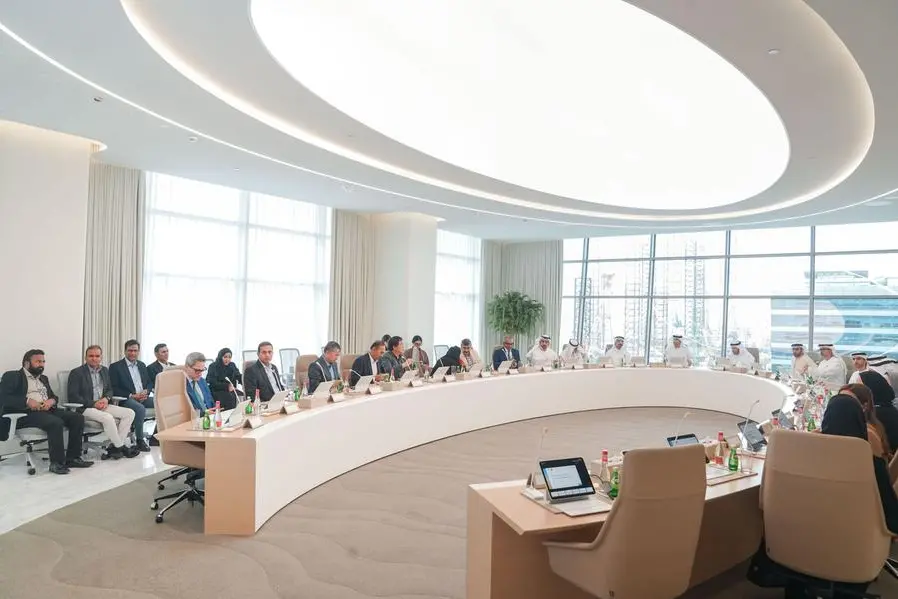
Dr. Thani bin Ahmed Al Zeyoudi, Minister of Foreign Trade, led a high-level coordination session at the headquarters of the Ports, Customs and Free Zone Corporation (PCFC) in Dubai. The gathering convened senior executives from leading global shipping companies and representatives from maritime associations, as part of continued efforts to tackle challenges affecting regional supply chains.
The session was attended by Abdulla bin Damithan, Chairman of PCFC, and Dr. Abdulla Busenad, Director General of Dubai Customs, along with senior figures from across the logistics and maritime industries.
During the discussions, Dr. Al Zeyoudi reaffirmed the UAE’s firm commitment to maintaining seamless trade flows and reinforcing supply chain resilience across the region through close stakeholder collaboration and forward-looking solutions to current challenges.
He emphasised that sustained high-level coordination among key stakeholders highlights the UAE’s consistent focus on strengthening partnerships and expanding regional and global cooperation. These efforts aim to improve the efficiency, flexibility, and responsiveness of supply chains, ensuring the uninterrupted movement of goods, particularly essential and strategic commodities.
Ongoing initiatives also include the development of alternative trade corridors and the deployment of advanced customs and operational frameworks, further enhancing the UAE’s competitiveness and reinforcing its position as a trusted global trade and logistics hub.
He added that the UAE remains committed to supporting regional and international trade stability through targeted initiatives and adaptive policies that drive supply chain performance and sustainability. The country continues to deepen collaboration with partners to build a more integrated, resilient, and future-ready trade ecosystem.
Bin Damithan, in his remarks, underscored the importance of continuous coordination among stakeholders, noting tangible progress since the previous meeting in addressing regional challenges and maintaining steady trade flows into the UAE.
He highlighted that relevant entities have worked in close alignment to roll out strategic measures aimed at strengthening supply chain resilience. These include enhancing the efficiency of alternative routes such as Fujairah and Khorfakkan ports, as well as reinforcing regional maritime connectivity to facilitate smooth and efficient cargo movement.
He further noted that these outcomes reflect strong cooperation and commitment from both public and private sector stakeholders, while stressing the ongoing need for collective action amid rising costs and increasing operational complexities.
Additionally, he pointed out that the meeting provides a valuable platform to assess recently implemented measures and identify opportunities for deeper collaboration in the next phase, supporting the advancement of practical and sustainable solutions to boost supply chain efficiency and continuity.
He reiterated that ensuring the steady flow of essential goods remains a top priority, alongside strengthening the UAE’s standing as a dependable regional and global logistics hub.
Dr. Busenad, meanwhile, outlined key customs initiatives introduced to facilitate trade and improve operational efficiency, reaffirming Dubai Customs’ commitment to delivering proactive and innovative solutions in partnership with stakeholders.
