
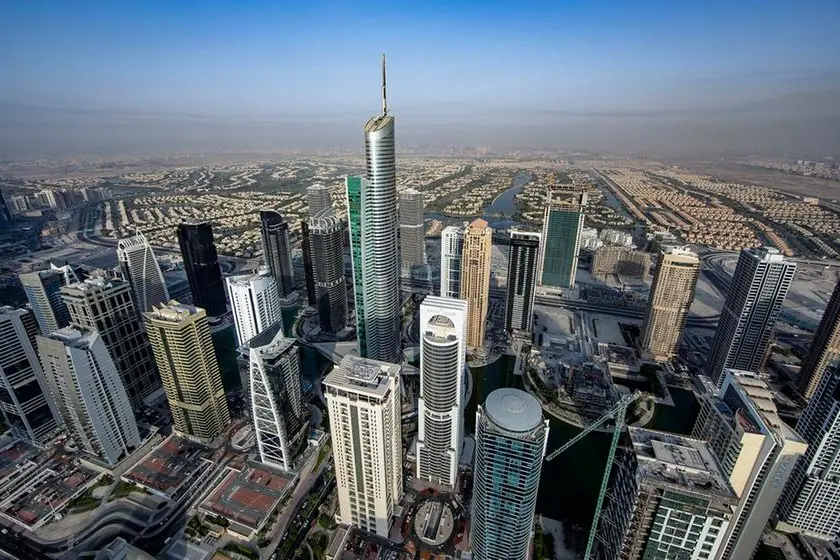
The UAE has made significant progress in its infrastructure sector in 2024, launching key projects to support economic growth and development.
A major milestone is the Barakah Nuclear Energy Plant, now fully operational with Unit 4 commencing commercial activities. The plant produces 40TWh annually, supplying 25% of the UAE’s electricity with clean, carbon-free energy.
The UAE approved a substantial infrastructure package, including nine new dams, the expansion of two existing ones, and embankment barriers. These projects aim to boost water reserves by collecting rainwater and floodwaters, with a storage capacity of 8 million cubic metres. Additionally, nine water canals spanning 9 kilometres will be constructed, with all projects expected to complete in 19 months.
Abu Dhabi allocated AED 66B for 144 infrastructure projects, covering sectors like housing, education, and tourism. Key projects include a 25-km median islands initiative for enhanced traffic flow and bridge constructions in Mohamed bin Zayed City and other major roads.
Dubai announced the expansion of Al Maktoum International Airport, costing AED 128B, to handle 260 million passengers annually. Other projects include the AED 30B “Tasreef” rainwater drainage initiative and the Dubai Exhibition Centre expansion to host 600 annual events by 2033.
Sharjah introduced irrigation projects and completed 9.5 km of industrial road networks. Ajman inaugurated energy distribution stations and completed internal roads, while Umm Al Qaiwain launched the NAQA’A desalination plant with a daily capacity of 150 million gallons and a new cargo airport.
Ras Al Khaimah and Fujairah enhanced water infrastructure, with major upgrades to pumping stations worth AED 122M each. These initiatives collectively underscore the UAE’s commitment to sustainable and future-ready infrastructure.
