
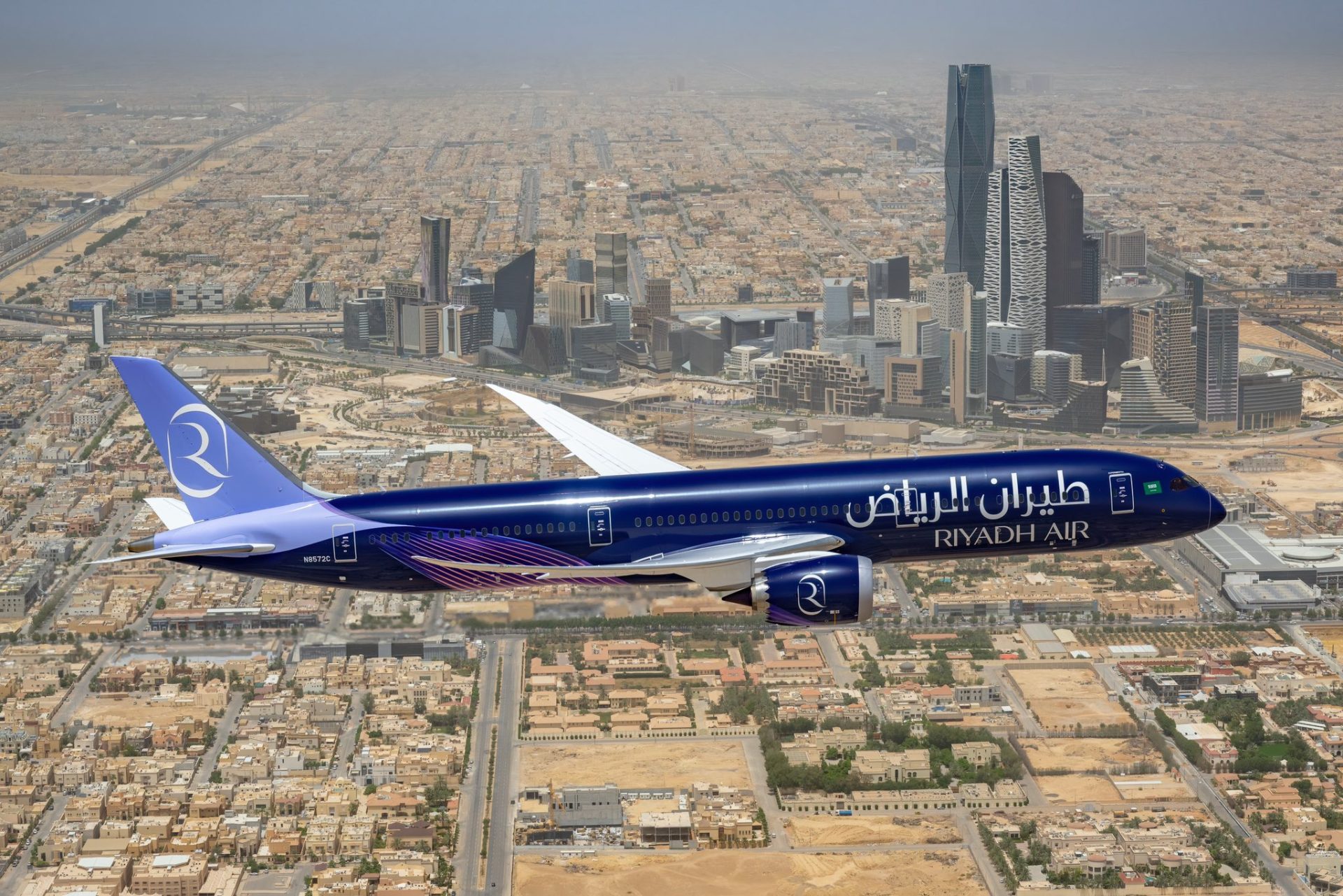
Connecting Saudi Arabia’s capital to the global stage through a focus on “point-to-point” travel is the central goal of Chief Operating Officer of Riyadh Air, Peter Bellew.
In a discussion with Gulf Business at the Dubai Airshow, Bellew highlighted Riyadh Air’s commitment to setting itself apart in the region through digital operations, a technologically skilled staff, and passenger-centric attitudes.
Despite the excitement surrounding the venture, Bellew acknowledges the challenge of staying focused on urgent tasks, particularly in the competitive hiring landscape faced by airlines globally.
Riyadh Air has already recruited 20 pilots, boasting nearly 800 years of combined experience, with plans to hire 700 pilots, 6,000 cabin crew, and 1,000 engineers in the next three years.
Bellew emphasizes the need for meticulous attention to detail in procurement and delivery lines, striving for impeccable execution until the launch, according to Gulf Business.
Drawing on decades of experience, Bellew prioritizes addressing the most risky aspects and maintaining the team’s focus on crucial tasks when establishing a new airline.
Moving to Saudi Arabia, Bellew notes the country’s highly integrated digital systems, simplifying processes from renting a house to legal matters, banking, and immigration, facilitating the onboarding of personnel.
Riyadh Air’s Vision: A Paperless Airline, Seamless Boarding, and a Global Network by 2030
Describing Riyadh Air as a “digitally native airline,” Bellew envisions a paperless environment, with all operations, including engineering, being entirely digital.
On the customer side, Riyadh Air plans to implement seamless and paperless boarding systems, with passengers’ faces serving as their tickets.
Bellew aims to make technology user-friendly for both staff and customers, fostering empathy among staff and empowering them to make informed decisions through technology.
Riyadh Air’s differentiation strategy involves connecting Riyadh, currently the least connected capital among G20 countries, to major capitals in Europe and other parts of the world, with an expectation of 80 to 90 percent of passengers travelling to and from Riyadh directly.
For the scale-up to 2030, Riyadh Air aims to serve 100 cities with 170 aircraft, connecting major capitals and providing direct services to aviation hubs worldwide.
In addressing the carbon footprint, Riyadh Air plans a strategic approach, monitoring it on a granular level using data from aircraft and day-to-day operations, giving the crew visibility and direct responsibility for their carbon impact.
