
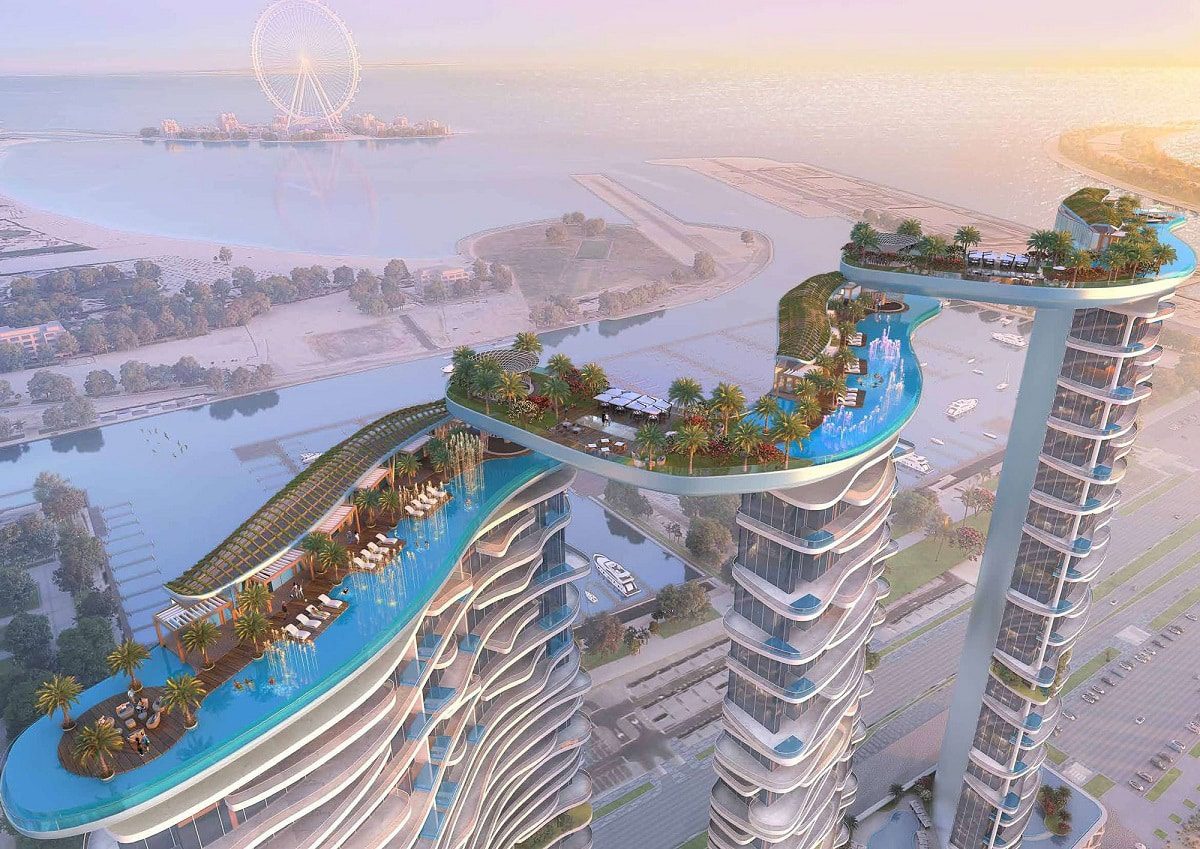
Dubai’s branded residences have become a leading choice for high-net-worth individuals (HNWIs) worldwide, according to Knight Frank’s 2024 Destination Dubai report.
The data shows that 69 percent of HNWIs globally are now interested in owning a branded property in the city, an increase from 59 percent in 2023.
Knight Frank’s second annual 2024 Destination Dubai report surveyed 317 HNWIs – 217 globally and 100 GCC-based expats – collectively, the respondents possess a net worth of $5.4B and own 1,149 homes worldwide.
The desire to buy a branded residence is higher among non-GCC HNWIs at 83 percent, compared to 46 percent for GCC-based expats. According to Lars Jung-Larsen, Partner – Luxury Brands at Knight Frank MENA, this indicates the growing attraction of Dubai’s branded residential offerings.
Jung-Larsen stated, “Branded residences provide access to a luxury lifestyle now synonymous with Dubai, and luxury branded residential operators such as the Ritz Carlton, Bulgari, Dorchester Collection, and the Four Seasons are all seeking to capitalise on the demand for high-end homes in Dubai. The strong demand for such homes is reflected in the achievement of a record AED 16,283 per square foot for a 6-bedroom Bulgari Ocean villa in the summer of 2022.”
The report also highlights a key trend in the emirate’s third freehold residential market cycle – the rise in purchases by genuine end-users, second-home, or holiday-home buyers. This trend is also evident in the branded residential segment.
Faisal Durrani, Partner – Head of Research, MENA, explained: “14 percent of HNWIs wish to acquire a branded residence as their main home, and this figure increases to 22 percent among those with a net worth of over $15M who would like a branded residence in Dubai as their primary home. This mirrors our findings among the ultra-high-net-worth community, who appear particularly keen on purchasing Dubai’s most expensive homes and making the city one of their many global bases.
“Indeed, 23 percent of HNWIs would use a branded residential purchase in Dubai as a holiday home or second home, while 12 percent would consider it a retirement home,” he added.
The report found that 23 percent of HNWIs would use a branded residential purchase in Dubai as a holiday or second home, while 12 percent would treat it as a retirement home.
HNWIs also have high expectations for price appreciation. Just over a third (36 percent) believe any branded residential purchase in Dubai will appreciate by 5-10 percent in the first year, with this expectation highest (50 percent) among those with a net worth of $10-15M. A further 30 percent expect prices to rise by 10-15 percent within 12 months.
“The expectation among the HNWI community for strong price appreciation of branded residences is likely linked to the fact that branded residences traded for a premium of 86 percent compared to the rest of the market, against a global average of a 30 percent premium,” Durrani added.
This premium pricing is justified by the additional features these properties offer, such as security, facilities, services, quality assurance provided by the brand, the ease of placing the property into a rental pool, and the “lock up and leave” nature of a well-managed property. However, Durrani warned that this premium is not guaranteed, and developers must work hard to justify it, especially with increasing competition in this segment.
Jung-Larsen added, “The feeling of ‘owning a part of a hotel,’ having full access to the amenities and hospitality of the hotel, but in your own private environment is what really sets branded residences apart for the ultra-rich. The next point of differentiation for a residential property could be branding by a non-hospitality brand.
This would typically be a brand from the fashion, jewellery, or automotive sectors. The exciting aspect of this format is that buyers of non-hospitality branded residences can ‘live the brand’ 24/7 with furniture and decor designed by the brand, along with exciting amenities and hospitality partnerships matching the brand’s positioning, and including bespoke services and members-only benefits.”
The report found that GCC-based expat HNWIs seem inclined to spend relatively modest amounts on branded residential real estate in the emirate, with 91 percent aiming to spend between $600-999 per square foot. In contrast, global HNWIs are more likely to spend significantly more, with nearly a fifth (17 percent) willing to pay over $5,000 per square foot. This figure rises to 23 percent for those with a personal wealth exceeding $20M.
Shehzad Jamal, Partner – Strategy & Consultancy, MEA, stated, “Branded residences offer a relatively easy way to access the ‘Dubai Life’ and often come with access to world-class facilities and amenities, usually provided by an adjoining luxury hotel.”
“Owners also benefit from world-class facilities and property management, crucial for those not residing in Dubai and wanting assurances that their asset is being well cared for,” Jamal concluded.
