
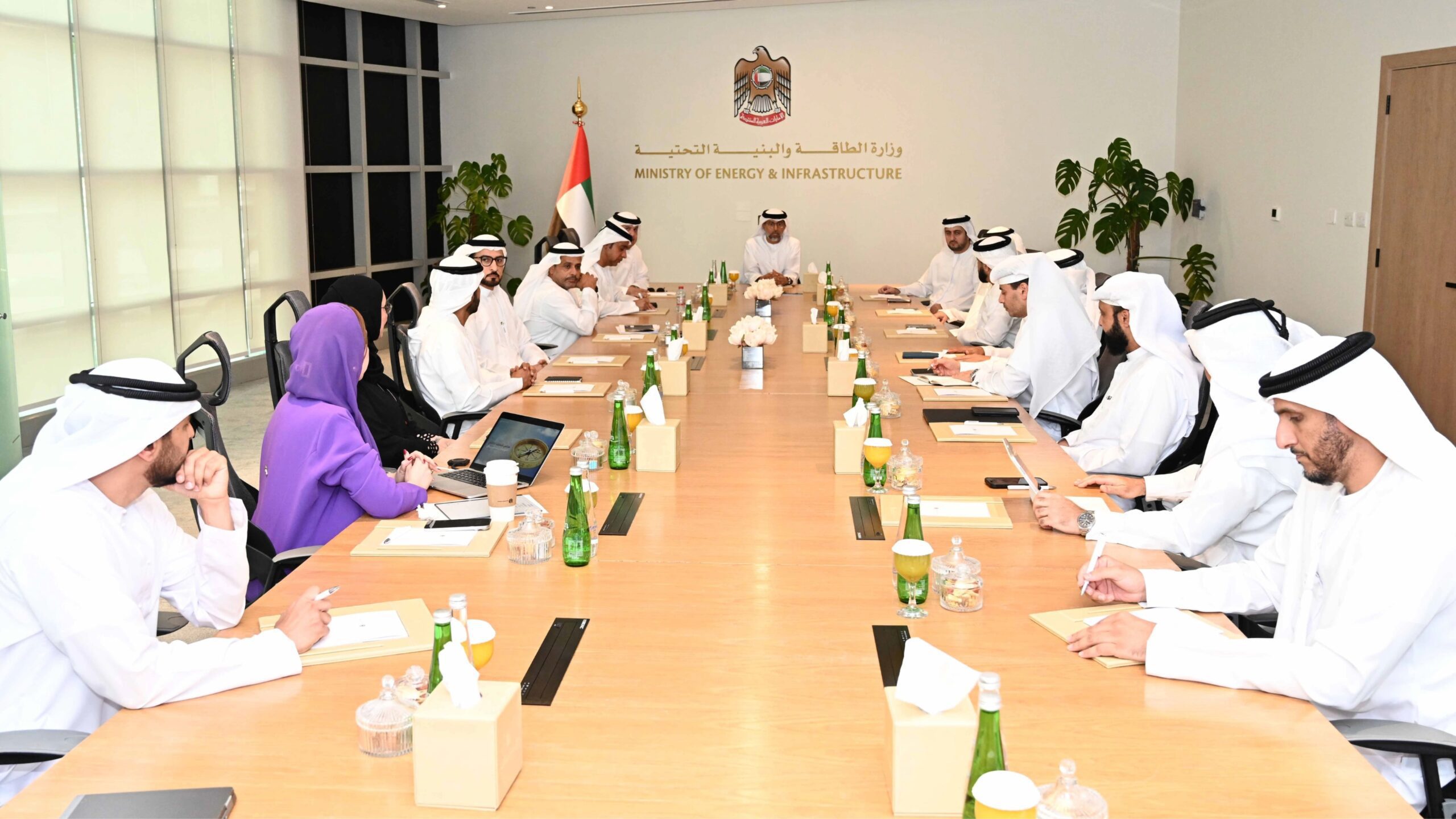
Suhail Mohamed Al Mazrouei, Minister of Energy and Infrastructure, chaired the inaugural meeting of the UAE Logistics Integration Council in Dubai. The council brings together federal and local entities, including ports, roads, customs, and railways, to align strategies and streamline logistics operations. Its creation reflects national efforts to unify visions, strengthen efficiency, and reinforce the UAE’s position as a leading global trade hub.
Discussions focused on logistics integration, digital transformation, and smart solutions. Members addressed the development of a National Logistics Integration Strategy covering data management and digital platforms, while agreeing to form subcommittees to oversee implementation. The council also highlighted reducing bureaucracy, particularly in maritime transport, as a way to boost service efficiency and competitiveness.
Strengthening Infrastructure and Innovation
The meeting spotlighted the National Maritime Navigation Centre as a strategic initiative supporting sustainability, safety, and innovation. The centre will manage vessel traffic monitoring and operate the Unified National Maritime Single Window to streamline procedures. It is also designed to enhance maritime safety, support emergency response, and provide accurate data for decision-makers.
The council reviewed private sector partnerships as essential to the UAE’s logistics ambitions, recognising their role in attracting investment and boosting global competitiveness. A presentation by the General Civil Aviation Authority emphasised the importance of air freight in driving economic growth.
Al Mazrouei stated that the logistics sector’s contribution is projected to rise from AED136.7 billion in 2024 to more than AED200 billion within seven years. He explained that this target aligns with the ‘We the UAE 2031’ vision, which aims to position the nation among the world’s top three in the Logistics Performance Index.
Vision for Sustainable Competitiveness
Al Mazrouei noted: “The UAE Logistics Integration Council works on launching transformative initiatives that promote digital and green transformation in the transport and logistics sector, through the expansion of smart solutions, reduction of carbon emissions, and achieving a balance between economic growth and environmental protection—reflecting the UAE’s commitment to the path of sustainable development.”
He added that the UAE’s advanced infrastructure, combined with its strategic location, qualifies the country to remain a key global hub for trade, re-export, and logistics. Collaboration between federal and local entities, along with the private sector, was identified as a cornerstone of progress.
“The logistics sector is one of the pillars of the national economy, as it contributes effectively to the GDP and provides thousands of high-quality job opportunities. In addition, it plays a vital role in attracting foreign investments and enhancing the UAE’s appeal as an advanced and reliable business environment,” Al Mazrouei emphasised.
The meeting concluded with the reaffirmation that integration and cooperation will drive efficiency, reduce costs, and deliver a better user experience. With major infrastructure investments and adoption of global best practices, the UAE continues to position its logistics sector as a key driver of long-term economic growth and global competitiveness.
