
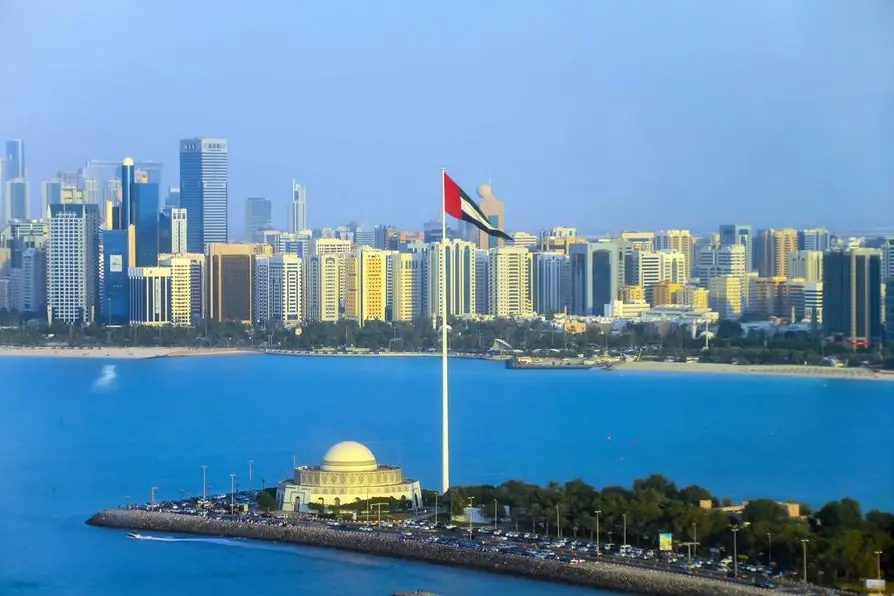
Infrastructure initiatives launched across the United Arab Emirates in 2026 underscore a unified national strategy focused on driving multi-sector development and elevating overall living standards.
Covering energy, water, transport, road networks, urban planning and broader economic activity, these projects demonstrate the country’s emphasis on long-term planning, streamlined execution and the integration of advanced technologies, strengthening a cohesive infrastructure ecosystem that underpins sustainable economic expansion.
Within the energy and water segment, the Ministry of Energy and Infrastructure initiated the first phase of a nationwide programme aimed at reducing energy and water consumption in government facilities. The rollout begins with Abdullah bin Omran Hospital in Ras Al Khaimah and extends to 60 buildings, backed by AED120 million in investment. A second phase, developed in collaboration with private sector partners, will scale the initiative to 360 government buildings at an estimated cost of AED1 billion.
Alongside this, Emirates Water and Electricity Company has attracted multiple bids for the 3.3GW Al Nouf 1 Independent Power Producer project, set to become the largest of its kind in the country. Located within the new Al Nouf complex in Abu Dhabi, the development is designed as a next-generation energy hub, supporting advanced power generation systems alongside low-carbon reverse osmosis desalination technologies.
The government of Ras Al Khaimah has also entered into a long-term wastewater treatment agreement with a consortium that includes Etihad Water and Electricity, TAQA Water Solutions—part of Abu Dhabi National Energy Company—and Saur International Water Services. The project will deliver a treatment facility with a daily capacity of 60,000 cubic metres, expected to serve close to 300,000 residents upon completion.
In Dubai, authorities have rolled out infrastructure upgrades targeting sewerage and stormwater drainage systems in Al Quoz Creative Zone, allocating AED250 million as part of a wider AED500 million investment plan. Additionally, five contracts have been awarded under the second phase of the Tasreef programme, valued at AED2.5 billion, to expand stormwater drainage coverage across 30 strategic areas spanning 430 million square metres, with capacity to support a projected population of 3 million by 2040.
Dubai Municipality has further progressed the Deira stormwater drainage project, completing 36 percent of the AED500 million development. The project spans 13 districts across more than 4,700 hectares, incorporating 60 kilometres of drainage networks, with full completion targeted by the end of 2027.
Meanwhile, in Sharjah, the Electricity, Water and Gas Authority has expanded water supply capacity in Kalba from 6 million to 9 million gallons per day. The initiative also integrates desalination facilities, transmission infrastructure and distribution networks into a unified system, enhancing operational efficiency and service responsiveness.
