
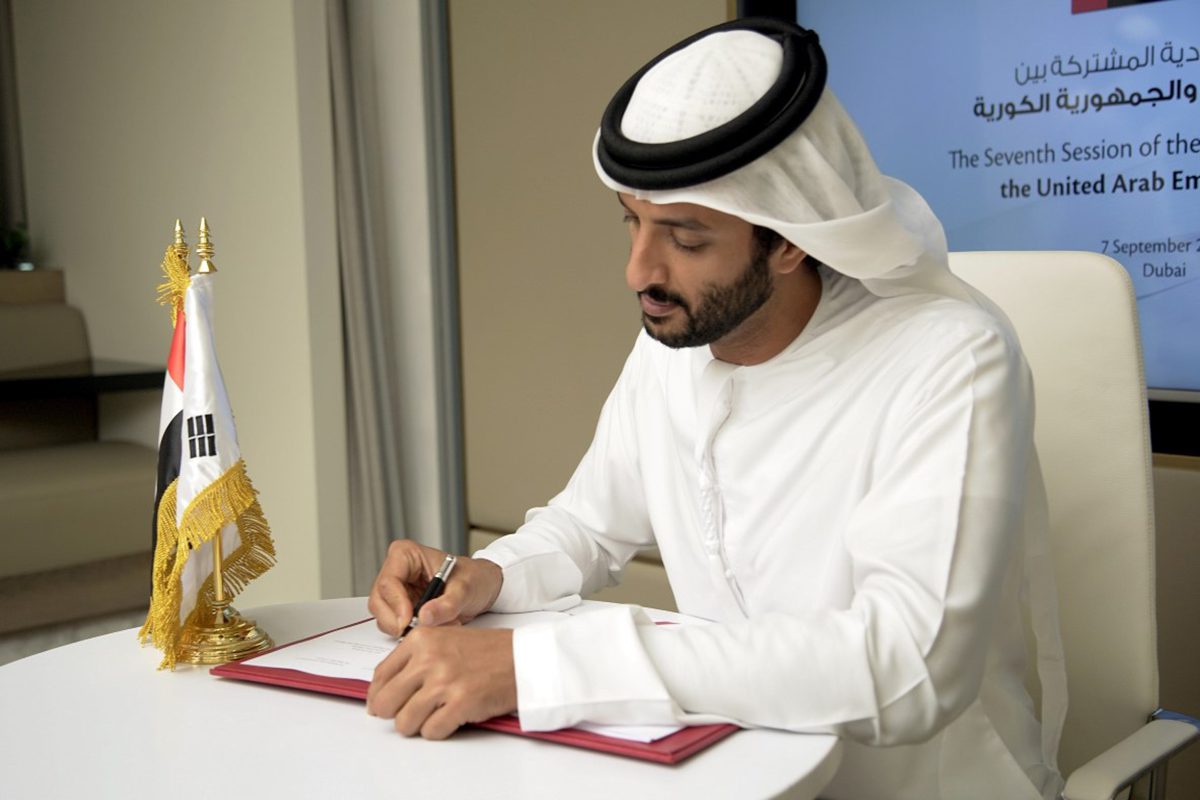
“Comprehensive Economic Partnership Agreement (Cepa) made between India and the UAE in February 2022 came into implementation on 1st May 2022 bringing the first occurrence of tariff-free imports” quoted by Abdullah bin Touq Al Marri, Minister of Economy.
In an interview with WAM, Al Marri said the Cepa between the two countries would help encourage trade by reducing custom tariffs by 90 percent and increase non-oil trade from $45 billion at end of 2021 to $100 billion annually in the next five years.
The UAE chose India to sign the first Cepa, which underscores the strategic ties between the two countries. Since the launch of the Cepa program as part of the ‘Projects of the 50’ initiative, the UAE began talks to sign Cepas with several countries of strategic importance both regionally and internationally, aiming to sign eight agreements in 2022, he added.
On the annual growth of the trade exchange between the two countries and their targets over the next five years, Al Marri said the Cepa between UAE and India will intensify their bilateral trade and add 1.7 percent, or $9 billion, to the UAE’s GDP by 2030, increase UAE’s exports by 1.5 percent and its imports by 3.8 percent by 2030. It will also create some 140,000 jobs for talented people and those with specialist skills in the most promising sectors of the country’s economy by 2030.
On the new areas of cooperation, he stressed that Cepa offers many advantages, including reducing and canceling tariffs, widening access to markets, and creating opportunities in vital areas, such as aviation, environment, hospitality, logistics, investment, and construction, financial services, and digital trade.
The Cepa will offer numerous advantages to small and medium-sized enterprises (SMEs) in the private sectors of both countries, Al Marri added. It represents a historically strategic step to promote economic integration and cooperation between the two countries and establish a solid foundation that will open new horizons between their business communities.
The deal will also open access to different markets and create new investments and opportunities in critical areas, including energy, environment, and digital trade, he said. The agreement covers 11 service sectors and more than 100 sub-sectors, including business services, professional services, accounting, real estate, advertising, communications, building and construction, related services, educational services, environmental services, financial services, insurance, social and health services, and travel and tourism service, he added.
Al Marri stressed that India is the UAE’s largest trading partner in terms of non-oil exports, equivalent to 14 percent of the country’s total global exports, while the UAE is also India’s third-largest trading partner and accounts for 40 percent of its trade with Arab countries.
“This historic agreement aims to increase our non-oil bilateral trade to $100 billion annually over the next five years. India is also one of the UAE’s largest investment partners, whether in terms of investments issued or received by the country,” he added.
Major exports
The most prominent commodities exported from the UAE to India and the commodities imported from India are mainly gold, diamonds and jewelry, machinery, electrical appliances, petroleum and plastics, and minerals that include iron, steel, and aluminum.
The two countries account for more than 16 percent of the global trade in diamonds, gold, and jewelry, and the other country accounts for 20 percent of their national gold trade.
