
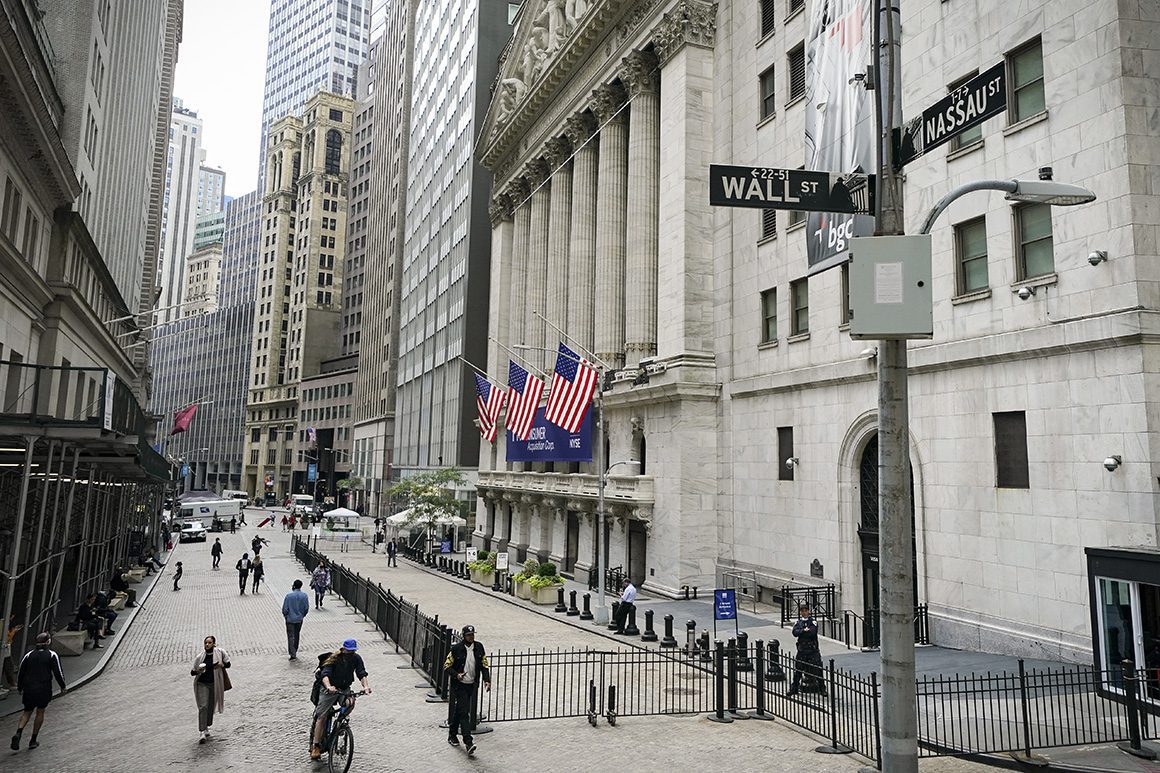
As fears spread that US interest rate hikes to combat inflation would slow economic development, Asian equities followed Wall Street lower on Friday.
Shanghai, Hong Kong, Seoul, and Sydney all experienced a drop. Tokyo edged higher when trade resumed following a holiday.
The 500 index fell 3.6 percent on Thursday, its largest one-day drop in two years, as the optimism that had fueled the previous day’s gain faded.
Investors are concerned that the Federal Reserve, which hiked its benchmark interest rate by a half percentage point on Wednesday, will be able to keep inflation under control without sending the US economy into recession. Traders were initially buoyed by Fed Chairman Jerome Powell’s statement that the central bank would not consider further rises.
In a report, ING’s Rob Carnell stated, “Clearly, investors had second thoughts about the so-called ‘dovish raise’ from the Fed.” “Rate hikes are coming thick and quick, but there is little if any hope of a change in inflation any time soon,” according to the odds.
The Shanghai Composite Index dropped 1.6 percent to 3,019.11, while the Hang Seng in Hong Kong slid 3.6 percent to 20,051.61. Tokyo’s Nikkei 225 index rose 0.9 percent to 27,053.81.
The Kospi in Seoul was down 1.3 percent to 2,642.26 points, while the S&P-ASX 200 in Sydney fell 2.3 percent to 7,197.40 points. Singapore and New Zealand also declined.
Investors are concerned about Russia’s attack on Ukraine, high oil prices, and global supply chain disruptions.
The 500 index slid 3.6 percent to 4,146.87, reversing a 3 percent gain on Wednesday.
The Dow Jones Industrial Average fell 3.1% to 32,997.97 points. The Nasdaq, which is dominated by technology stocks, fell 5% to 12,317.69.
On Thursday, the US government was set to release employment figures, a heavily awaited data indicator.
BNP Paribas economists believe the Fed will continue to raise the federal funds rate until it reaches a range of 3% to 3.25 percent, up from zero to 0.25 percent earlier this year.
As the situation in Ukraine continues, energy markets are turbulent, and demand remains high despite restricted oil supplies. European governments are attempting to replace Russian energy supplies and are considering imposing an embargo. OPEC and its allies resolved on Thursday to gradually boost the amount of crude they ship around the world.
In electronic trading on the New York Mercantile Exchange, benchmark US crude rose 77 cents to $109.03. On Thursday, the contract increased 45 cents to $108.26. Brent crude, the worldwide oil price benchmark, rose 75 cents to $111.65 per barrel in London.
