
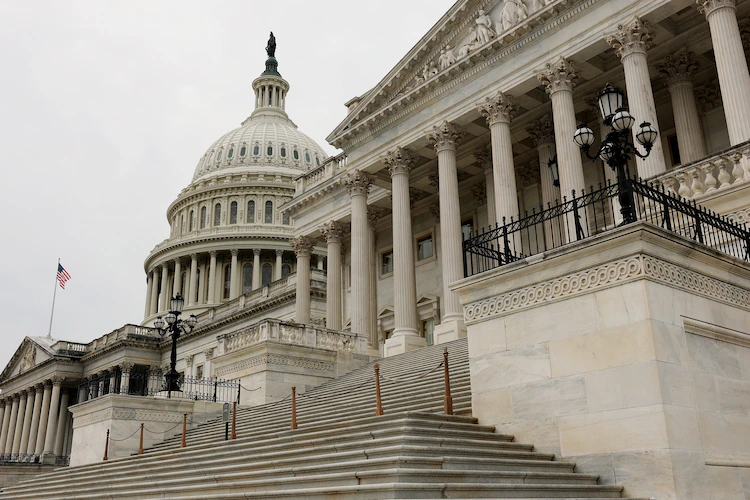
Both Republican and Democratic funding proposals collapsed in the Senate on Tuesday night, leading to a government shutdown at 12:01 a.m. Wednesday.
The shutdown followed the failure of a Democratic-led bill that sought to extend health care subsidies under the Affordable Care Act and restore Medicaid funding cuts, alongside a Republican short-term measure designed to keep the government running for seven weeks.
After the twin defeats, White House Budget Director Russell Vought instructed federal agencies to proceed with their contingency plans for an orderly closure of operations.
Senate Minority Leader Chuck Schumer pressed Republicans to return to negotiations following the chamber’s inability to approve a stopgap measure to avert the crisis.
“We are ready to negotiate, but Republicans cannot insist on an all-or-nothing approach,” Schumer stated at a late-night press briefing.
The Senate is expected to revisit the same proposals on Wednesday in hopes of breaking the deadlock.
President Donald Trump, together with congressional leaders from both parties, met on Monday at the White House in a last-ditch effort to prevent a shutdown.
“I believe we are heading toward a shutdown because Democrats refuse to act responsibly,” Vice President JD Vance said after the meeting.
Democrats remain firm in withholding support for a temporary agreement, insisting on reversing Medicaid cuts and extending health care tax credits—demands Republicans reject.
Since 1977, there have been 20 funding lapses, most lasting only a day. Wednesday’s shutdown marks the 21st.
The last shutdown, which began in December 2018 during Trump’s first term, lasted a record 35 days. Many federal employees struggled financially, turning to food banks, while essential workers frequently called in sick due to childcare and commuting costs.
By the time that shutdown ended in January 2019, the Congressional Budget Office estimated that roughly $3 billion in economic activity had been permanently lost.
In recent days, agencies have been slow to release detailed plans, but some have already issued warnings of potential disruptions.
Millions At Risk of Losing Pay
Up to 4 million federal workers, including service members, face missed paycheques during the shutdown. Hundreds of thousands—such as airport security staff, air traffic controllers, and military personnel—will be classified as essential and required to work without pay. National parks and Smithsonian museums are also expected to close.
Around 2 million active-duty troops may be forced to continue working without pay, alongside National Guard members deployed under federal orders.
Federal contractors, including hourly workers such as janitors and guards, will neither be required to work nor guaranteed compensation. Meanwhile, lawmakers on Capitol Hill will still receive their annual salaries of $174,000.
Social Security, Medicare, and Medicaid payments will continue, though administrative services could slow.
The Food and Drug Administration will be unable to fully guarantee the safety of meat, dairy, and eggs.
The Office of Management and Budget has yet to provide updated numbers on expected furloughs but warned of possible large-scale layoffs. Democrats condemned these threats as intimidation tactics.
Beyond Washington, the consequences extend nationwide—since about 85% of federal workers are based outside D.C., covering prisons, courts, and national parks.
Pentagon Contingency Plans
Roughly 2 million troops, including National Guard members deployed domestically, could see their pay halted unless lawmakers approve emergency protections.
Officials confirmed that military personnel will receive October 1 pay, but future paycheques depend on swift congressional action. If no deal emerges, it would be the first time in decades that Defence Department employees go unpaid—although Coast Guard staff did face this in 2018.
According to the Pentagon’s shutdown strategy, all active-duty troops must continue service. Contracts will proceed under stricter scrutiny, prioritising border security and the missile defence project known as the “Golden Dome.”
Ongoing overseas missions, shipbuilding, depot maintenance, and weapons supply will also remain priorities.
“The department will continue defending the nation and conducting ongoing operations,” the plan reads, stressing that all service members are expected to report for duty.
Although back pay is guaranteed once government funding resumes, many military families face significant financial strain. About one in four report food insecurity, with an equal share holding savings under $500.
National Guard Operations
National Guard units operating in D.C., Oregon, and Tennessee may also go unpaid despite being under state governors’ command, as federal funding covers their missions.
The Guard’s D.C. task force acknowledged the risk of delayed funding but confirmed its members would continue operations such as clearing trash, maintaining public areas, and distributing food.
Military leaders gathered in Washington this week to hear President Trump and Defence Secretary Pete Hegseth stress the importance of “warrior ethos.” However, if a shutdown persists, many could be stranded away from their posts due to halted travel budgets.
Government guidelines state personnel must return home promptly if caught mid-travel during a shutdown. While reimbursable, repayments could be delayed until after funding is restored.
Impact on Air Travel
Transportation Security Administration staff will largely continue working without pay. Out of nearly 61,500 TSA employees, more than 58,000 will remain on duty.
Commercial flights are expected to operate normally, with no direct impact on airline staff.
Health and Human Services
At the Department of Health and Human Services, about 59% of employees will continue working, with some paid and others expected to work without pay. The rest will be furloughed.
The CDC will retain only 36% of staff, including a small portion working unpaid, while the FDA will keep 86% of employees, with 19% unpaid. Safety checks on new animal food ingredients will stop, limiting oversight of livestock-based food safety.
At the National Institutes of Health, only about 24% of staff will stay, nearly all working without pay.
Justice Department Delays
The Justice Department will keep most of its essential staff active but may delay civil litigation not tied to safety or property protection.
Training programmes and non-critical offices, such as the Pardon Attorney’s office, could also see disruptions.
During the 2018–2019 shutdown, the DOJ cancelled around 60,000 immigration hearings. This time, however, immigration case processing is expected to continue under Trump’s national emergency on illegal immigration.
Labour and Economic Data
Of the Department of Labor’s 13,000 employees, just over 3,100 will continue working. The shutdown means the department will not release its jobs report, scheduled for Friday, and all active data collection will halt.
Social Programmes and Benefits
Social Security, Medicare, and Medicaid payments will continue, though administrative delays are likely.
Meanwhile, nearly 7 million women and children depending on the federal WIC programme could lose access to food assistance if the shutdown extends beyond a week.
Postal Service
The U.S. Postal Service will remain unaffected, operating on its own revenue stream.
