
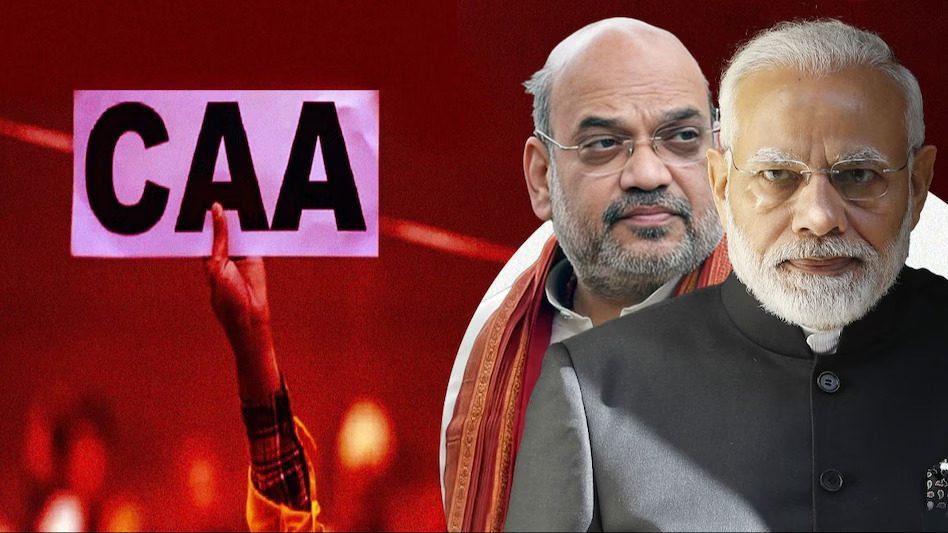
On Monday, 11th of March 2024, the Union Home Ministry officially published the regulations for the Citizenship Amendment Act (CAA). This vital element of the BJP’s 2019 manifesto was approved by Parliament in that same year.
The introduction of these rules, referred to as the Citizenship (Amendment) Rules, 2024, enables individuals eligible under CAA-2019 to seek Indian citizenship, signifying a crucial advancement in offering sanctuary to the persecuted.
The Home Ministry stated, “These rules, known as the Citizenship (Amendment) Rules, 2024, will enable individuals eligible under CAA-2019 to apply for Indian citizenship.”
Key points about the Citizenship Amendment Act:
Enacted in 2019 by the Modi government, CAA aims to grant Indian citizenship to persecuted non-Muslim migrants, including Hindus, Sikhs, Jains, Buddhists, Parsis, and Christians from Bangladesh, Pakistan, and Afghanistan who arrived in India before December 31, 2014. The rules now outline the application process for CAA-2019 eligible individuals.
CAA does not apply to Indian citizens and focuses on offering Indian citizenship to foreigners facing religious persecution in neighbouring countries based on their faith. It is for those “forced or compelled to seek shelter in India due to persecution on the ground of religion.”
Exclusions under CAA include regions under the Sixth Schedule of the Constitution and areas covered by the Inner Line Permit system, protecting tribal and indigenous communities in the North-Eastern region. Residents in these areas are not eligible to apply for Indian citizenship under CAA.
Over the past six years, India has granted citizenship to around 2,830 citizens from Pakistan, 912 from Afghanistan, and 172 from Bangladesh. Many belong to the majority communities in their respective countries, according to Business Today.
The law has faced widespread opposition and nationwide protests. Opposition parties, including the Congress party, criticize it as “discriminatory.” Concerns surround the timing of the rule notification, with allegations of potential influence on the upcoming Lok Sabha elections in West Bengal and Assam.
