
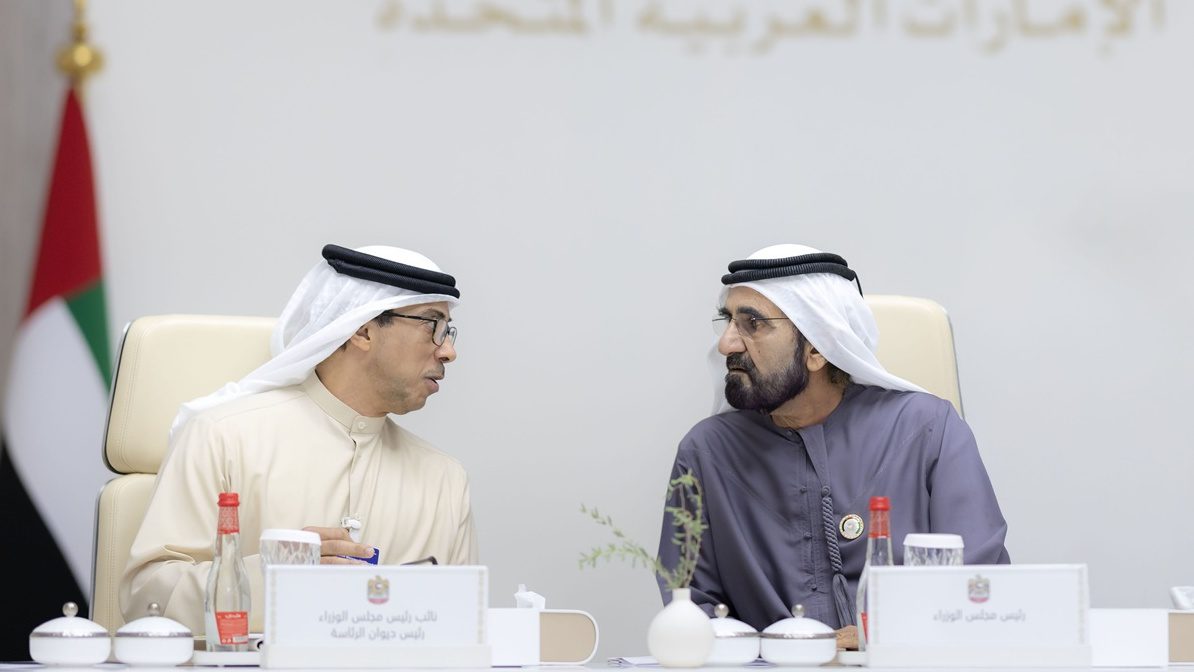
The UAE has unveiled a National Investment Fund with an initial capital of AED36.7bn ($10bn) as it pursues AED2.2tn ($599.1bn) in accumulated foreign direct investment by 2031. The announcement came during a Cabinet meeting held at the Dubai Airshow, where leaders also reviewed economic, industrial, aviation and societal progress achieved in 2024. During the session, several long-term national strategies were advanced to support identity, family stability, food security and environmental protection.
During the meeting, Sheikh Mohammed bin Rashid Al Maktoum said, “I chaired today’s Cabinet meeting at the Dubai Airshow. The UAE continues to support this global platform, which brings together delegations from 115 countries and more than 150,000 specialists, reinforcing our position as a key contributor to shaping the future of the global aviation sector.” He later added, “As part of the Cabinet agenda, we approved the establishment of the National Investment Fund with an initial capital of AED36.7bn, open to future review and expansion.”
He explained that the Fund aims to attract more foreign capital through structured incentive packages and to help raise annual FDI inflows from AED115bn ($31.3bn) to AED240bn ($65.4bn) by 2031. He also noted the long-term ambition to increase total accumulated investment from AED800bn ($217.8bn) to AED2.2tn. Although the initiative targets high-impact companies, it will also work closely with economic, investment and tourism authorities to strengthen national growth. “Our message to global investors is clear. The UAE welcomes you, the UAE will provide the world’s best environment for investment. The UAE will continue to support your growth and long-term success,” he said.
Expanding Industrial Capacity and Social Development Efforts
The Cabinet reviewed major advances in the national industrial strategy. According to the latest figures, industrial spending exceeded AED110bn ($29.9bn) after rising 244 percent over the past five years. Furthermore, industrial exports reached AED197bn ($53.7bn), and the sector now contributes AED210bn ($57.2bn) to GDP. The long-term target of AED300bn ($81.7bn) remains in place for 2031. Alongside this, the UAE National Identity Strategy was approved, introducing seventy government initiatives designed to strengthen belonging among younger generations and to reinforce family cohesion.
In addition, leaders approved the National Family Growth Agenda 2031, which encourages higher marriage and birth rates among Emiratis through targeted policies, behavioural programmes and reproductive health initiatives. Progress across GCC-related economic cooperation was also assessed. As a result, updated data showed that the UAE holds the highest number of economic licences issued to GCC citizens, totalling 36,000. Moreover, it is home to more than 52,000 property owners from other GCC countries and hosts 7,500 GCC students in public higher education. Trade between the UAE and GCC partners reached AED333bn ($90.6bn), highlighting continued integration.
National Achievements in Aviation, Food Security and Re-Export Activity
The Cabinet also reviewed significant developments in civil aviation. The sector contributed AED340bn to GDP in 2024, representing 18.2 percent of the total. Passenger traffic rose 10 percent to reach 148 million, while air traffic operations climbed 11 percent to surpass one million. The UAE now holds top global positions in air transport infrastructure quality, aviation safety compliance and overall air transport performance. Additional approvals covered a new national policy for classifying natural reserves, a federal law on plant genetic resources, and measures to support digital trade and tax system efficiency.
Food security achievements from the past year were presented as well. Authorities launched baseline indicators for food loss and waste, rolled out conservation programmes and expanded community initiatives aimed at cutting waste by 50 percent by 2030. Meanwhile, the National Re-Export Development Agenda recorded AED717.8bn ($195.7bn) in re-export activity, contributing 24.5 percent of non-oil trade after growing 5 percent from the previous period.
Internationally, the Cabinet ratified agreements covering investment protection, visa exemptions and regional electricity cooperation. It also approved hosting the Union of Arab Securities Authorities headquarters. Finally, the Federal Traffic Council was reconstituted under the Ministry of Interior to support continued improvements in national transport policies.
