
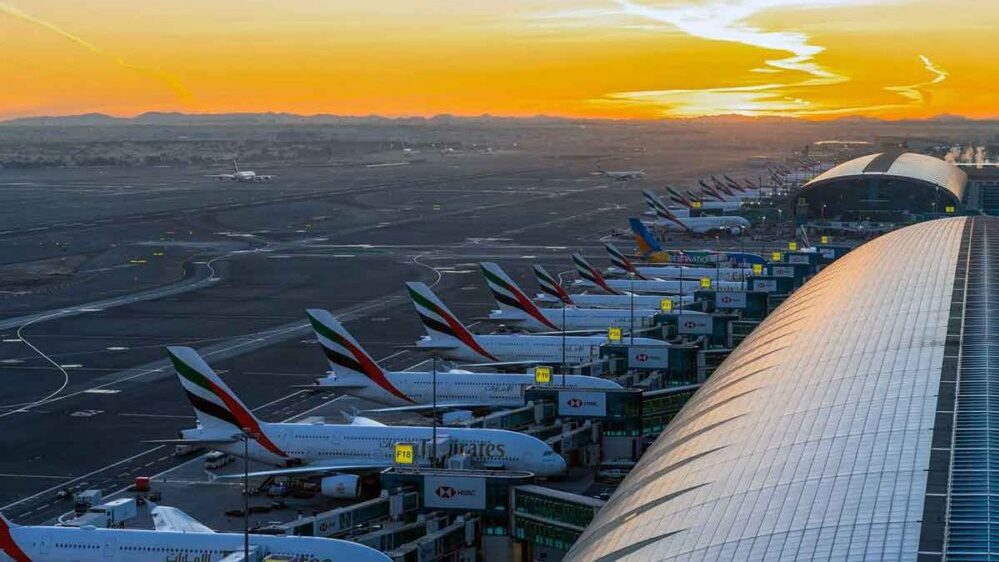
The United Arab Emirates is preparing to operate between 200 and 300 repatriation flights to support stranded travellers, as authorities implement a phased and carefully managed reopening of national airspace following recent regional missile and drone incidents, officials confirmed.
During a government media briefing, Dr Saif Al Daheri, spokesperson for the National Emergency Crisis and Disasters Management Authority, stated that coordination efforts are underway with airlines and relevant regulatory bodies to organise the upcoming wave of repatriation services.
Minister of Economy and Tourism Abdulla bin Touq Al Marri confirmed that temporary emergency air corridors have been established in collaboration with neighbouring countries and the International Civil Aviation Organization to facilitate secure and controlled flight operations.
He noted that, under current emergency protocols, the UAE is capable of handling up to 48 flights per hour. Capacity will be increased progressively, subject to ongoing safety assessments and operational evaluations.
Bin Touq added that limited flight operations have already resumed in stages to enable the return of citizens and residents. Since March 1, national carriers have operated 60 flights, transporting 17,498 passengers.
In the next operational phase, authorities are preparing to facilitate more than 80 scheduled flights per day, with the capacity to transport over 27,000 passengers as part of the broader repatriation plan.
The government has also committed to covering accommodation and essential living expenses for travellers impacted by flight suspensions, ensuring access to lodging, meals and necessary visa arrangements until onward travel is secured.
To maintain orderly airport operations and prevent congestion, travellers experiencing delays have been advised to await direct communication from their respective airlines before proceeding to airports.
Officials reiterated that maintaining the safety and security of national airspace and the travelling public remains the highest priority throughout the phased reopening process.
