
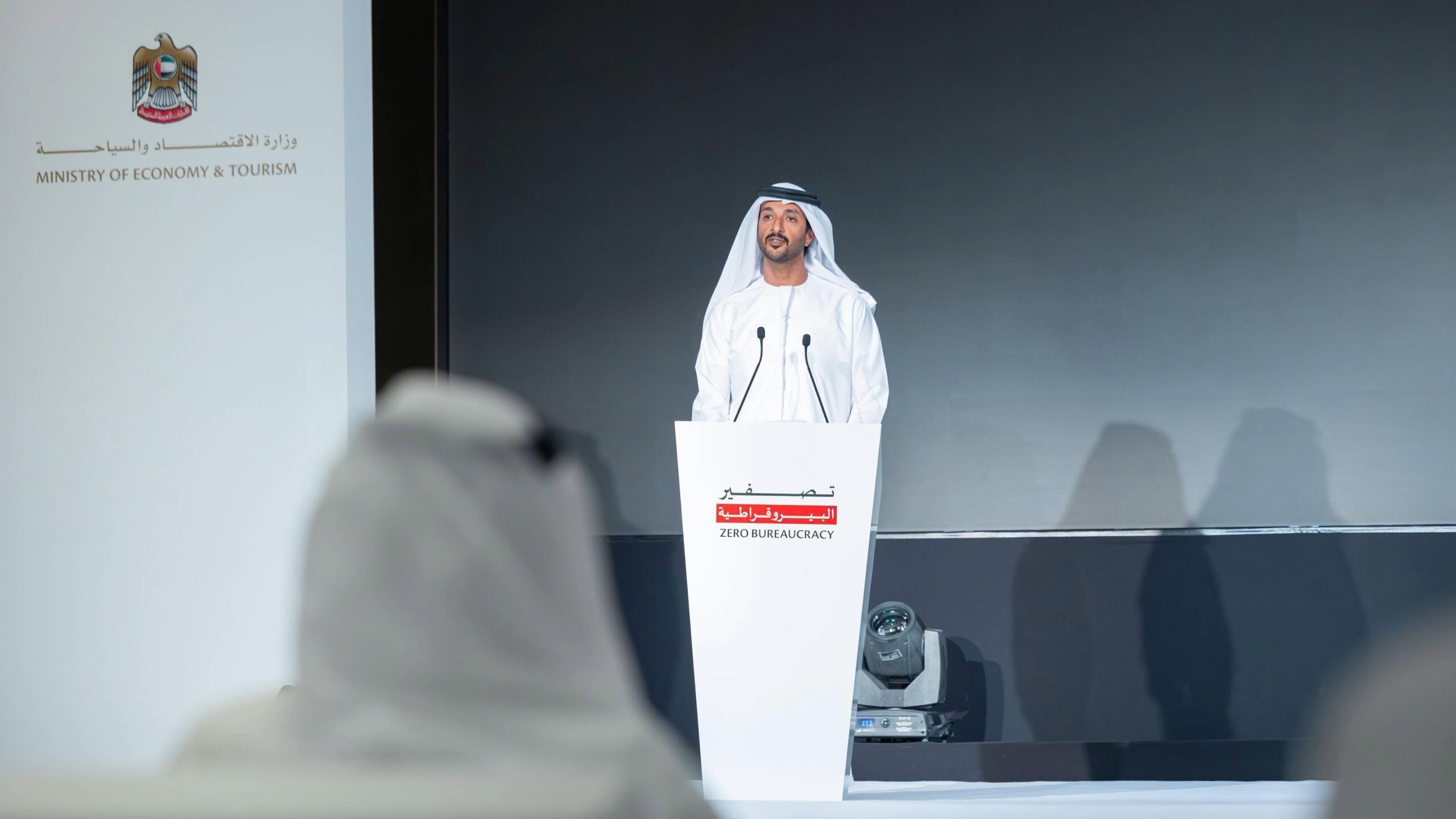
The second Zero Bureaucracy Forum was held in Dubai, showcasing efforts to strengthen the digital services ecosystem and boost efficiency through artificial intelligence and advanced technologies. The initiative also aims to simplify procedures for businesses and individuals, while building stronger collaboration between public and private sector partners.
The event was attended by Abdulla bin Touq Al Marri, Minister of Economy and Tourism, and Dr. Thani bin Ahmed Al Zeyoudi, Minister of Foreign Trade, alongside representatives from ministries and federal and local entities. Speakers included Mohamed Bin Taliah, Eng. Abdullah bin Mohammed Al Muwaiji, Badreya Al Maidoor, Marwan Al Zaabi, and Fatima Al Naqbi.
Bin Touq said that the launch of the Zero Government Bureaucracy Programme reflects a vision to shape the future and simplify lives. He emphasised that simpler, faster, and more efficient services by global standards will strengthen economic sectors, enhance competitiveness, and improve quality of life.
He explained that progress has been achieved through a framework delivering user-friendly digital services, stimulating the business environment, and removing unnecessary obstacles. He added that the ministry was one of the first to digitise services during the 2020 pandemic, and within three years, all services became available through digital platforms.
Driving National Priorities and Integration
Bin Touq highlighted that the programme aligns with the “We the UAE 2031” vision, aiming to position the UAE as one of the world’s most distinctive nations. He said teamwork and leadership guidance continue to drive zero bureaucracy as a national priority, enabling world-class services marked by flexibility and competitiveness.
Mohamed Bin Taliah stated that the second phase of the programme focuses on achieving zero digital bureaucracy. He explained that this involves integrating government entities, accelerating information exchange, and reducing routine procedures. He underlined that placing people at the centre of policies ensures adaptability and sustainable quality of life.
He added that the forum demonstrates the government’s commitment to innovative solutions, enhanced services, and efficient experiences. By streamlining procedures and reducing bureaucracy, the programme supports future readiness and a more resilient society.
New Initiatives and Future Visions
The forum featured presentations on upcoming digital services, updates on achievements, and discussions about strengthening competitiveness in government operations. It also introduced the “Excellence in Leadership” initiative, which places people at the core of priorities. The initiative focuses on empowering individuals and SMEs, boosting productivity and creativity, and building a prosperous and advanced society.
Additionally, the forum marked the graduation of participants from the Digital Service Design Course, based on the Government Services Development Methodology 2.0. The course equips professionals to design seamless digital experiences that save time and effort while contributing to the zero-bureaucracy agenda.
