
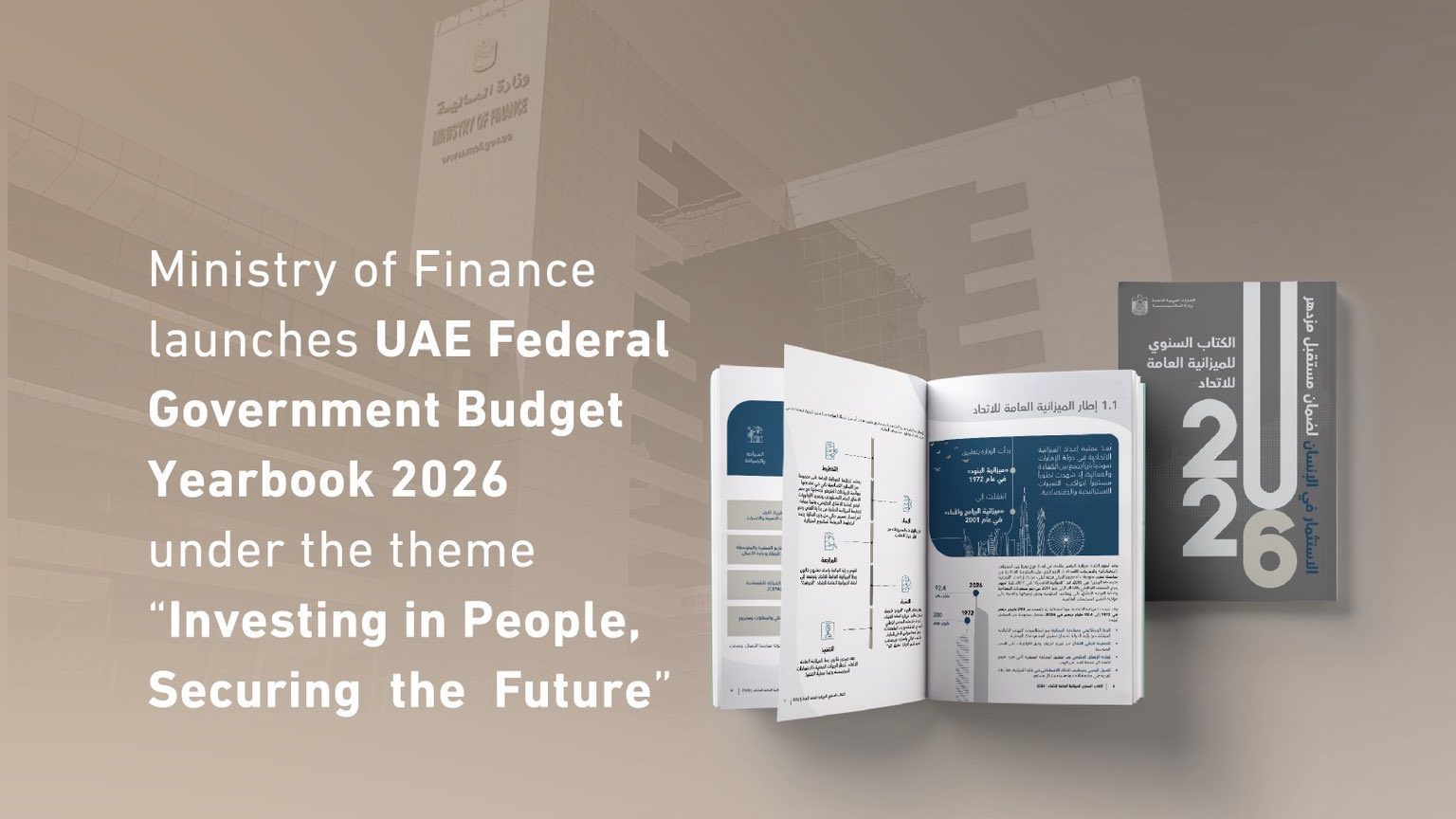
The UAE Ministry of Finance has launched the Federal Budget Yearbook 2026 under the theme “Investing in People, Securing the Future,” outlining a human-centred approach to national financial planning in the United Arab Emirates.
The yearbook highlights a development framework that places people at the centre of government planning while reinforcing the strength and resilience of the UAE’s financial system amid evolving global conditions. It also reflects the ministry’s commitment to transparency, inclusivity and stronger integration between financial planning and national strategic priorities.
Budget Reflects Vision for Sustainable Development
Maktoum bin Mohammed bin Rashid Al Maktoum, First Deputy Ruler of Dubai, Deputy Prime Minister and Minister of Finance, said the 2026 federal budget will accelerate efforts to realise the leadership’s vision of building a sustainable future centred on investing in people and improving quality of life.
“The UAE Federal Government Budget for 2026 sets a clear direction for how government resources are allocated to support society. This is reflected in the structure of the budget and its spending priorities, which aim to deliver lasting developmental impact, improve quality of life and strengthen long-term social and economic stability,” he said.
He added that the budget preparation process continues to evolve to keep pace with economic developments while strengthening the alignment between government spending and national priorities. The approach also expands the use of artificial intelligence in budget management to enhance long-term financial sustainability.
Balanced Budget and Higher Spending
The federal budget maintains fiscal balance for the second consecutive year, with both revenues and expenditures reaching AED92.4 billion in 2026. This compares with AED71.5 billion in 2025, representing an increase of nearly 29 percent.
Spending priorities remain focused on sectors that directly impact community wellbeing. The budget allocates AED30.8 billion to public services and AED16.9 billion to education, reflecting continued investment in human capital development.
Additionally, AED5.7 billion has been allocated to healthcare services, while AED3.7 billion will support housing initiatives aimed at strengthening family and community stability. Economic affairs will receive AED1.4 billion to support growth and development activities, while AED33.9 billion is allocated across other sectors.
Strengthening Financial Sustainability
Mohamed bin Hadi Al Hussaini, Minister of State for Financial Affairs, said the Federal Budget Yearbook 2026 presents a forward-looking financial vision built on medium- and long-term planning.
He noted that the government continues to strengthen the link between spending, performance and outcomes to ensure that public resources deliver the greatest impact while maintaining efficiency.
Al Hussaini explained that financial sustainability remains a strategic priority through improved financial planning, diversified revenue sources, enhanced public debt management and stronger partnerships between the public and private sectors.
The yearbook also outlines the framework used in preparing the federal budget and its alignment with the long-term national vision of UAE Centennial 2071, highlighting the role of fiscal policy in supporting sustainable economic growth and national development.
Digital Transformation and Transparency
The publication emphasises the increasing role of digital transformation and artificial intelligence in improving budget management and public financial decision-making. These technologies help streamline government services, improve operational efficiency and reduce administrative complexity.
Furthermore, the yearbook presents the federal budget in a clear and accessible format designed to demonstrate not only financial figures but also the developmental impact of government spending.
The Ministry said the release of the yearbook forms part of the federal government’s broader commitment to transparency and strengthening public trust in national financial policies while supporting the UAE’s long-term development goals.
