
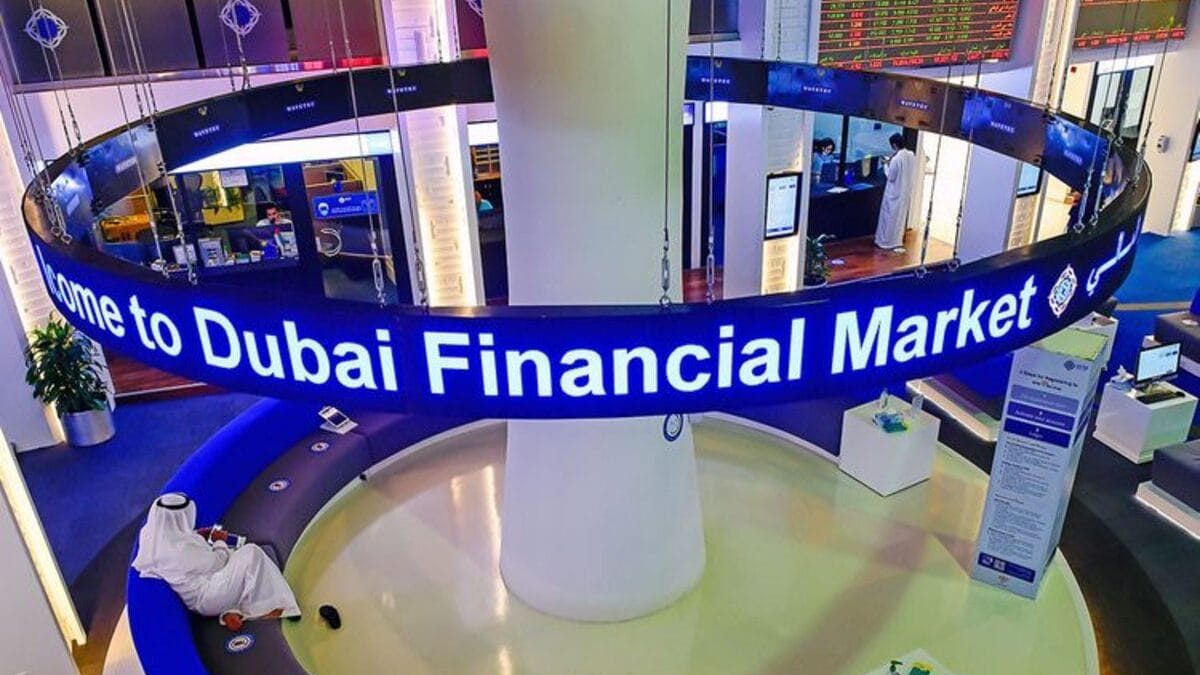
Trading on the UAE’s major stock markets, the Abu Dhabi Securities Exchange and the Dubai Financial Market, has been suspended on Monday, 2 March and Tuesday, 3 March 2026. The move is a precautionary response to current developments in the Middle East, which have generated sharp volatility and heightened risk perception in regional financial markets.
The market authority cited its regulatory and supervisory role in deciding to halt activity, stating that it will continue to monitor the evolving situation and take further measures if required.
Immediate Financial Market Effects
Regional Equities and Trading
- With the exchanges closed, billions in market capitalisation are temporarily off-market, creating a pause in price discovery and uncertainty around valuations until trading resumes.
- Other Gulf markets that remained open recorded sharp declines in early trading, reflecting spill-over sentiment. For example, some regional benchmark indices were down between 2% and 5% when trade took place elsewhere.
Global Risk Sentiment
- Broader equity markets have also reacted to the situation:
- U.S. and Asian stock futures were lower in early trading amid the escalation of tensions.
- Safe-haven assets such as gold saw upward pressure, while energy prices surged due to concerns over supply disruptions.
Energy Markets
- Crude oil benchmarks experienced upward pressure as regional instability raised fears of supply bottlenecks, notably around critical shipping routes like the Strait of Hormuz.
- Elevated energy prices can feed through into inflation expectations, affecting cost structures for businesses and consumers worldwide.
Market Infrastructure and Operational Considerations
The closure underscores how conflict-linked uncertainty can disrupt normal market operations. Pausing trading across equity markets aims to mitigate disorderly volatility and provide time for regulators and market participants to calibrate risk assessments and continuity planning.
Credit and fixed-income markets may also face wider spreads as risk premia increase, while derivatives and international investment flows could reroute to alternative centres or safe-haven instruments during the disruption.
Broader Economic Outlook Risks
Higher geopolitical risk typically prompts:
- Increased volatility premiums in asset prices across stocks, bonds, and currencies.
- Heightened demand for liquidity by institutional investors potentially depresses risk assets.
- Elevated commodities pricing, especially energy, can amplify inflationary pressures.
Policy responses, including reserve management and central bank communication, will likely influence the depth and duration of market reactions in the coming days.
