
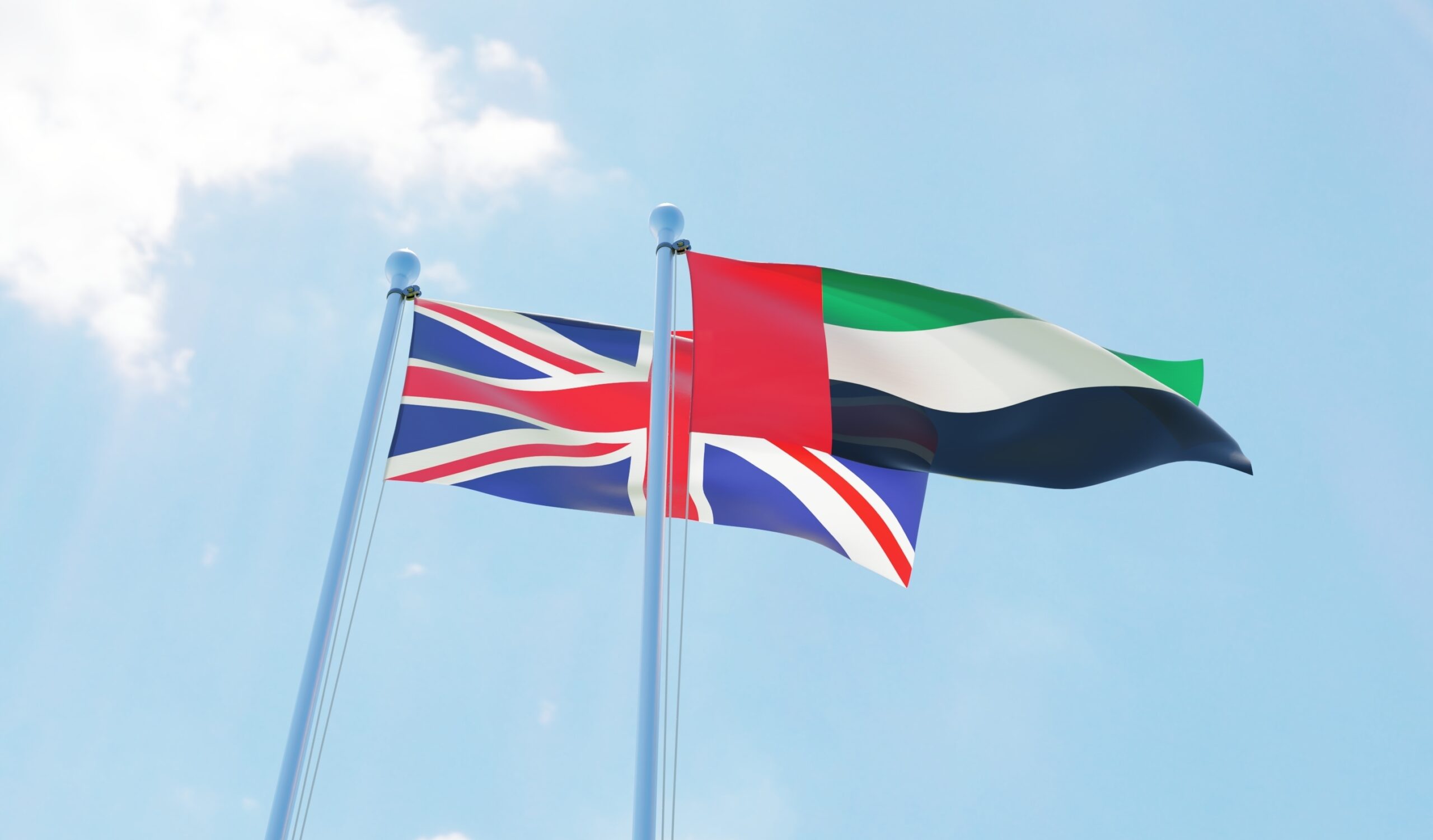
The UK’s Department for Business, Energy, and Industrial Strategy and the UAE’s Ministry of Energy and Infrastructure signed a Memorandum of Understanding (MoU), which aims to exchange information, knowledge, expertise, and studies in the sector to enhance energy’s critical role in sustainable development on a local and global scale.
Suhail bin Mohammed Al Mazrouei, the UAE minister of energy and infrastructure, was present for the signing event, which took place in the ministry’s Abu Dhabi office complex. Sharif Al Olama, the UAE Ministry of Energy and Infrastructure’s Under-Secretary for Energy and Petroleum Affairs, and Grant Shapps, the UK Secretary of State for Business, Energy, and Industrial.
The MoU intends to improve strategic and technical collaboration in the energy industry and develop technology for renewable energy sources, including incentive programmes and regulatory frameworks. Along with environmentally friendly transportation, electric cars, according to Zawya, sustainable alternative fuels, biomass projects, waste conversion to energy, and carbon capture, use, and storage projects, it also intensifies collaboration in smart grids and related technologies.
The memorandum also highlights their collaboration in low-carbon hydrogen, low-carbon nuclear energy, related policies, and technology, as well as in the holding of high-level meetings to discuss and consider issues of mutual benefit, fostering collaboration in clean and renewable energy, and organising workshops for industry-related events.
The two parties’ commitment to sustainable development in the implementation of energy, science, and technology policies, taking into account economic, social, and environmental issues with regard to climate change, is also stated in the agreement. In addition, it documents their commitment to market access, trade, and investment opportunities in the energy sector as well as to the sustainable exploitation of energy resources. Finally, it calls for the encouragement of industrial organisations and private sector businesses to work together more closely and to look into new business opportunities.
The UAE Minister of Energy and Infrastructure went on to say that the MOU is extremely important given the shared interests of the two nations since it aids in the implementation of an energy policy that would offer low-carbon, secure, and sustainable energy supplies at competitive costs. He emphasised that the two countries understand the significance of the need to increase energy efficiency, decarbonize its components, and develop renewable energy technologies in order to contribute to the achievement of zero carbon emissions by 2050.
In light of the outcomes of COP 26 in the UK and the fact that the UAE is preparing to host the 28th session of the Conference of the Parties (COP28), Al Mazrouei further emphasised the vital role played by the UK and the UAE in establishing the groundwork for climate action. Additionally, he emphasised their part in advancing the Paris Agreement, net-zero targets by 2050, and other goals of the United Nations Framework Convention on Climate Change.
Al Mazrouei added that these alliances support the two nations’ strategy for launching projects and initiatives to ensure the implementation of the Paris Agreement on Climate Change, which the UAE was one of the first nations to ratify. These alliances also aid in the transition toward clean, renewable energy. He added that the MoU opens up a wide range of opportunities for growth and development as part of the efforts of the two countries to diversify their energy mix, rely more on clean energy, and form more alliances to take advantage of the opportunities brought about by their respective countries’ leadership in the world.
