
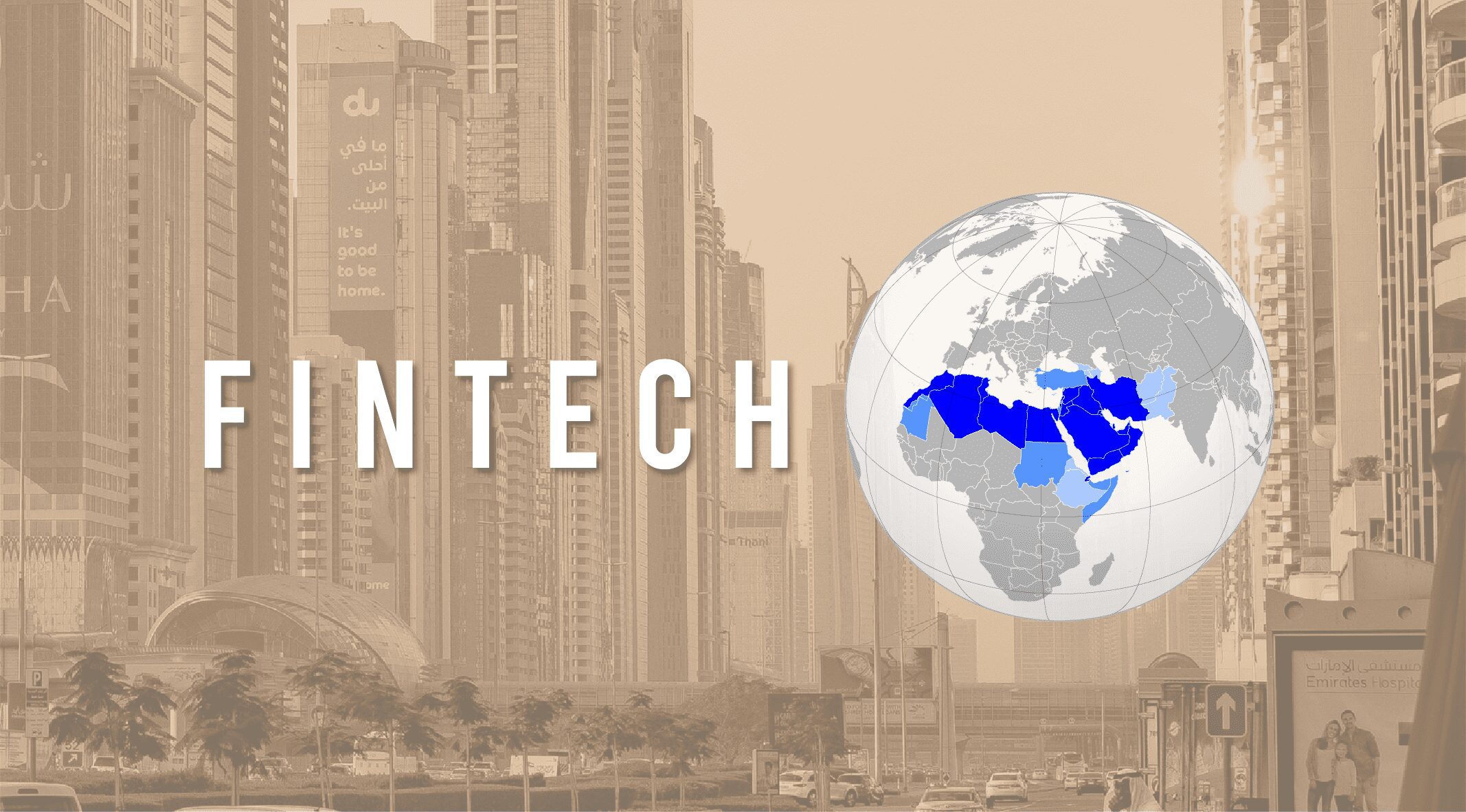
In the past three years, the MENA region’s fintech ecosystem has been more active, with investors supporting all major sectors like payments, wealth, insurance, and lending. The development of fintech in the MENA religion is being fuelled by technical advancements made to enhance the current financial services, which had remained largely branch-focused. The fintech environment is also diverse; UAE is the most advanced region in this regard, followed by Bahrain, Egypt, Morocco, Tunisia, and Jordan.
Following Arab states, North Africa has a sizable unbanked population, but with the support and receptivity of regional regulators, it is anticipated that this number will significantly decrease in the current decade. For instance, new attempts have been launched to control digital payment systems by the central banks of Jordan, Bahrain, Egypt, and the United Arab Emirates. Bahrain, Abu Dhabi, Dubai, and Lebanon have also enacted legislation governing crowdfunding.
One of the most rapidly expanding fintech ecosystems worldwide has been found in the MENA area, the goal of which is to enhance the current financial services through technological innovation. The COVID outbreak has increased the innovation and development that Fintechs offer, which has increased demand for Fintechs in the MENA region’s BFSI sector. Additionally, Lebanon has enacted legislation for crowdfunding like ADGM & DIFC.
The ecosystems of government and fintech have advanced significantly in this area. A framework for monitoring Open Banking services and safeguarding data privacy from Fintechs has been introduced by ADGM (Abu Dhabi Global Market). In order to assist issuers wanting to raise capital through distributed ledger technology, the Dubai Financial Services Authority (DFSA) has released a Framework for Regulating Security Tokens. To control digital payment systems, the central banks of Egypt, Bahrain, the United Arab Emirates, and Jordan have taken special actions. Saudi Arabia has moved up three spots on the index of how easy it is to do business, demonstrating that it is actively diversifying its economy.
Effects of these regulatory adjustments and sector-specific enhancements in more depth
• Banks
The Gulf Cooperation Council (GCC) and the Middle East and Northern Africa have a number of institutional collaborations throughout the MENA region. Several Central Banks also offer regulatory assistance as the banks operate internationally. Additionally, there is a phase of bank consolidation in the area, with the larger banks joining to form a Super Big Banking group. In 2019, the third-largest bank in the UAE, Union National Bank (UNB), merged with Abu Dhabi Commercial Bank (ADCB). A few of the most valuable banks in the region were created when the National Commercial Bank of Saudi Arabia announced that it will merge with Samba in 2021. In 2020, Dubai Islamic Bank and Noor Bank merged to operate as one entity.
• Remittances & Payment Transfers
With new technology providers, platforms, and payment solutions being introduced, the Digital Payments transfers & Remittance category in the MENA area has had the strongest growth. The widespread adoption of smartphones and the internet has opened the door for advancements in the digital payments industry, which are responsible for the market’s sweeping expansion.
With new technology providers, platforms, and payment solutions being introduced, the Digital Payments transfers & Remittance category in the MENA area has had the strongest growth. The widespread adoption of smartphones and the internet has opened the door for advancements in the digital payments industry, which are responsible for the market’s sweeping expansion. In April 2021, for instance, Saudi Arabia unveiled the Sarie quick payment system, which is governed by the Saudi Central Bank (SAMA). With the help of the payment method, any bank customers can rapidly transfer money using a variety of transfer methods. The payment system allows users of local banks to send and receive up to $5,300 (SAR20,000). Using the customer’s mobile number, email address, ID number, or IBAN, Sarie enables rapid transfer service for up to $660. (SAR2,500).
• Sector-wise Growth in the MENA region
The market for digital payments was viewed as a sophisticated social commentary. The epidemic also assisted the entire public in changing their viewpoint in accordance with the situation. In the MENA region, 65% of people transacted on COD-specific orders in 2019, by 2021, only 16% of people were fixated on COD. Governments and businesses in the MENA area are eager to introduce a mobile-based real-time payment system similar to UPI in India due to the growing desire for transactions using digital payments.
The market for digital payments was viewed as a sophisticated social commentary. The epidemic also assisted the entire public in changing their viewpoint in accordance with the situation. In the MENA region, 65% of people transacted on COD-specific orders in 2019, by 2021, only 16% of people were fixated on COD. Governments and businesses in the MENA area are eager to introduce a mobile-based real-time payment system similar to UPI in India due to the growing desire for transactions using digital payments.
Due to shifting lifestyles, daily commerce, and the explosive growth of the e-commerce industry, the evolving digital payment environment, which envisions real-time payments, is fuelling the digital transformation of payments and services. The expanding tendency is anticipated to continue for the next three to five years, dramatically altering how business is conducted worldwide.
Because there are too many regional and local companies in each country in the MENA area, we forecast significant consolidations in the payments sectors. Additionally, the market may experience significant consolidation in 2022 due to difficulties with cross-border assistance, high expectations for technological innovation, and consumer preference for fintechs backed by banks or big tech companies.
• Insurtech
In the MENA region, up to 80% of people lack health insurance. The MENA area therefore has a lot of promise for insurance or insurtech. Additionally, a variety of insurance options are offered globally, including those for property, health, life, automobiles, gadgets, and more across the region. Because traditional insurance providers struggle to meet the wide range of client wants, there is a tremendous opportunity for insurtech businesses to research and develop new lucrative market niches. In addition to developing fresh, cutting-edge solutions to expand market reach, the area can play a significant role in the digital transformation of the insurance industry.
• Blockchain
The MENA area has adopted blockchain technology and digital currency on many levels. The blockchain/cryptocurrencies are anticipated to increase despite the current market difficulties as a result of investigating the Central bank Digital Currencies (CBDC) projects from various nations in the MENA area. A mobile-based CBDC scheme is currently being developed, according to the UAE Central Bank and other Asian banks. To prevent double financing and invoicing fraud, UAE Trade Connect has established a blockchain-based digital platform.
On the other hand, The Bahrain-based startup RAIN was developing a marketplace, and DEX & Mid-Chains has developed a global digital asset exchange/marketplace to trade cryptocurrencies. According to the Nickel Digital Asset Management organisation, Dubai was anticipated to host more than 1,000 cryptocurrencies by 2022.
The leaders of the MENA area have been aided in questioning the way for progressive development as a result of the worldwide breakthroughs in technology and digitization in the BFSI sector. The area’s population is over 80% unbanked, hence efforts are currently being made to increase market accessibility and broaden support in order to meet the demands of the populace. Additionally, the difficulty of changing and rebuilding how organisations work is posed by the digital transition in mainstream organisations.
Governments and investors are searching for Fintechs to assist them in transforming the services. Governments, businesses, customers, and the entire population are being assisted in achieving their goals for better services in the sector by the region’s countries extensive growth of the Fintech.
Subscribe to Updates
Get the latest creative news from FooBar about art, design and business.
Previous ArticleUAE Tourism Eyes Pre-Pandemic Levels
Next Article Empower Raises $724m in Oversubscribed IPO
Related Posts

The preferred magazine of choice by the entrepreneurs, business leaders and the industry veterans in the MENA region.