
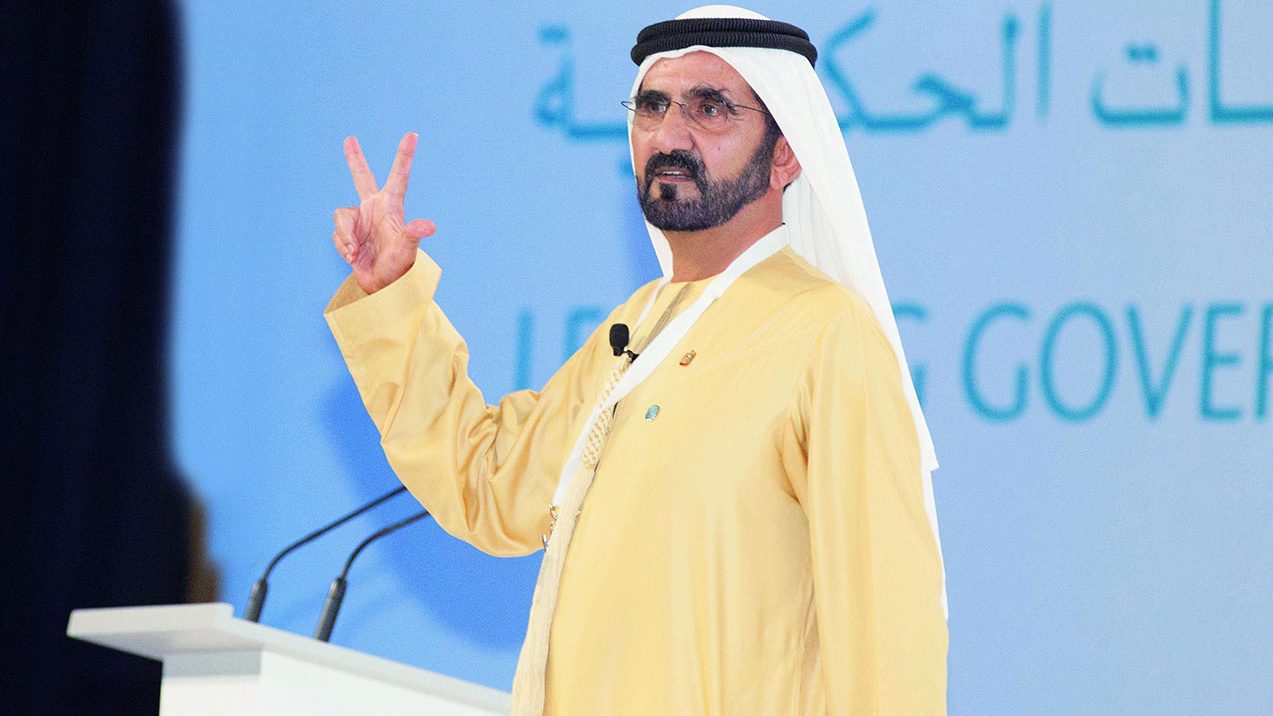
His Highness Sheikh Mohammed bin Rashid Al Maktoum, Vice President and Prime Minister of the UAE and Ruler of Dubai, reviewed the Dubai Loop and Glydways projects, two next-generation mobility initiatives developed by the Roads and Transport Authority (RTA).
The projects aim to reinforce Dubai’s leadership in smart and sustainable transport while strengthening public transit integration and improving first- and last-mile connectivity.
The review took place at the RTA’s stand during the World Governments Summit 2026, where Sheikh Mohammed was accompanied by Sheikh Maktoum bin Mohammed bin Rashid Al Maktoum.
Mattar Al Tayer, Director General and Chairman of the RTA, briefed the leadership on the technical features of both projects and their role in advancing Dubai’s future transport ecosystem.
Dubai Loop is designed as a high-capacity underground tunnel network for passenger transport across the emirate.
The system leverages advanced technologies to ease congestion in densely populated areas, enhance mobility efficiency, and support seamless connectivity, while ensuring rapid implementation with minimal disruption to existing infrastructure.
The initial phase of Dubai Loop will span 6.4 kilometres and include four stations connecting the Financial District to Dubai Mall.
This phase forms part of a wider plan for a 22.2-kilometre network featuring 19 stations that will link key districts across Dubai.
Sheikh Mohammed also reviewed the Glydways project, which represents the UAE’s first Autonomous Transit Network initiative.
The project introduces a new mobility model that supports Dubai’s smart city ambitions and strengthens its sustainable transport framework.
Glydways will operate autonomous electric vehicles on dedicated guideways, separate from conventional roads.
The system is designed to offer round-the-clock, on-demand, point-to-point travel, reducing journey times and improving mobility within high-density urban areas.
The electric vehicles can accommodate four to six passengers, with a driving range of up to 250 kilometres per charge and a maximum speed of 50 kilometres per hour.
They are built to meet public transport safety standards and are equipped with advanced redundancy systems to ensure operational reliability.
