
The Middle-East aviation market is projected to grow with a CAGR of over 6% during the forecast period (2022-2027). Aviation passenger traffic in the Middle East increased every year over the past decade until 2019.
However, the passenger traffic growth decreased in 2019 compared to 2018, and the advent of the COVID-19 pandemic has further slashed passenger traffic in 2020 and 2021. According to IATA, for 2021, annual passenger volumes of Middle Eastern airlines were 71.6% below 2019. The region is home to some prominent full-service carriers operating long-haul routes, like Emirates, Etihad, and Qatar Airways, which witnessed huge losses due to the closure of international borders. The carrier said it had carried 2.35 million passengers from January to March this year, an increase of 114% compared to the same period in 2021.
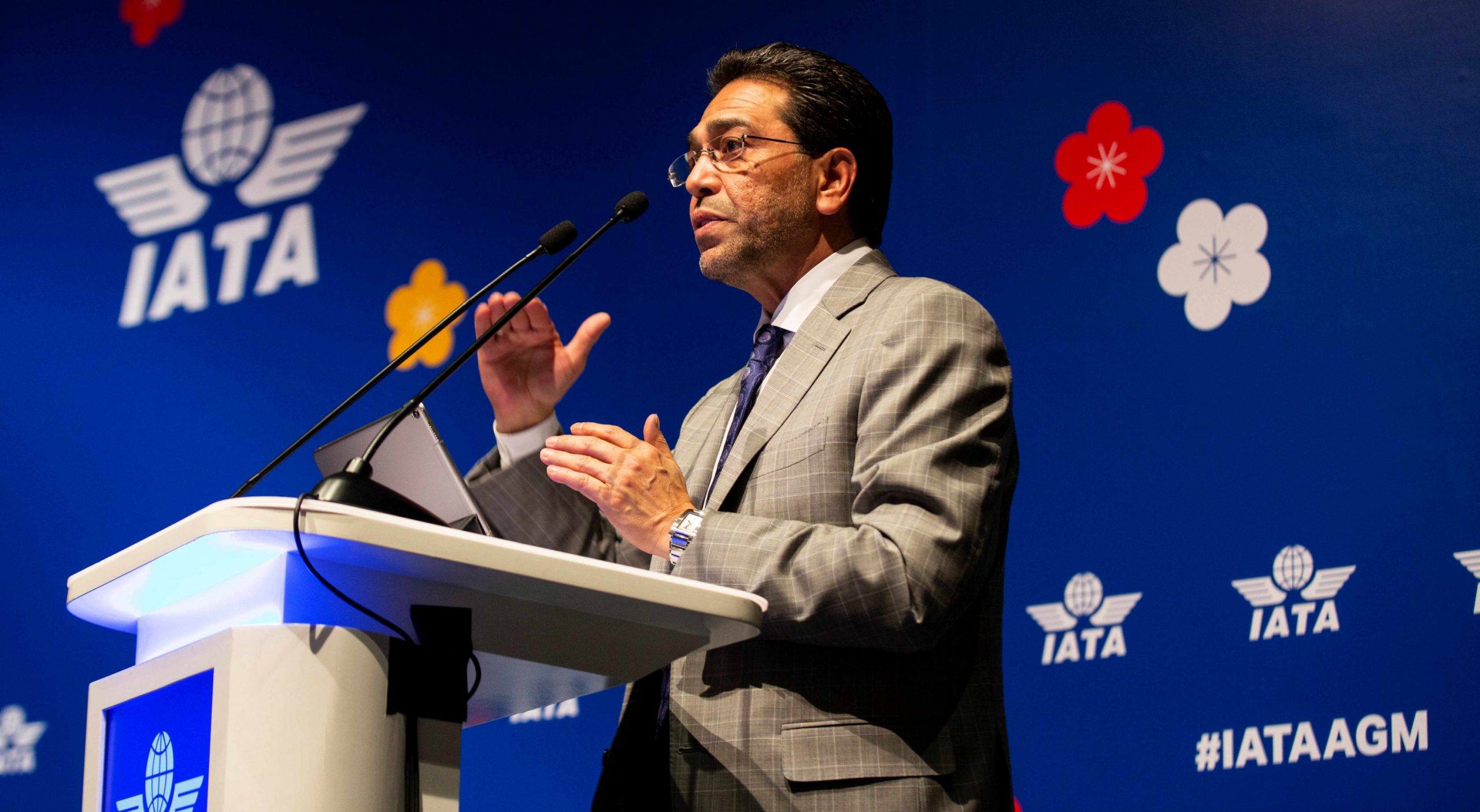
The region’s airlines are set to lose $7.1 billion in 2020 and their capacity is projected to plummet by 64.5% in 2020 compared with a year earlier, Muhammad Ali Albakri, IATA’s regional vice president for Africa and the Middle East, said in a media briefing. Middle East airlines are losing $68.50/passenger, he said. Middle Eastern airlines’ losses were $3.3 billion in 2021 when demand is forecast to increase 43% compared with 2020 but still be 61% lower than in 2019.
Military aviation has not witnessed any major disruption in demand in the region, as countries are proceeding with their procurement plans without delays in delivery timelines. Military aviation in the Middle East is expected to witness impressive growth in the coming years, owing to various combat aircraft procurement plans by countries like Turkey, Kuwait, Qatar, and Bahrain.
Lockheed Martin subsidiary, Sikorsky, announced that it had obtained a USD 53.87 million contract modification to produce four UH-60M Black Hawk helicopters for Saudi Arabia. The deliveries are expected to be completed by June 2022. Saudi Arabia is also a lucrative market for general aviation in the Middle Eastern region. The high wealth in the country and the focus of the government to transform the country into a major tourist hub as part of the Vision 2030 are projected to drive the market for general aviation during the forecast period.
Saudi Arabian Airlines is considering a massive aircraft order of more than 100 aircraft from either Airbus or Boeing. The airline is targeting a fleet of 250 aircraft by 2030. On the other hand, military aviation in Saudi Arabia is witnessing significant growth and changes. The privatization of airports has played a major role in increasing the growth of the aviation industry in Saudi Arabia. Moreover, in the last two decades, the aviation market in Saudi Arabia witnessed significant growth in terms of airport infrastructure.
For Airbus and Boeing, the Middle East has been a major demand-generating region for wide-body aircraft over the years. However, this is expected to change due to the emergence of new low cost carriers and the slump in demand for long-haul flights. In the military sector, players from Turkey are expected to increase their market share during the forecast period, as the country has been focusing on developing its domestic aircraft development and manufacturing capabilities. On the other hand, as the Middle East becomes a lucrative market for business jets, several business jet orders are expected from this region over the next decade. This is expected to further intensify the rivalry among the players in the market in the coming years.
The airline did not give any indications of its financial performance, but it had already moved into positive territory last year, with a $229 million profit recorded in 2021 after a loss of $194 million the year before.
Some of the losses at the national level include:
- Saudi Arabia
26.7 million fewer passengers resulting in a US$5.61billion revenue loss, risking 217,570 jobs and US$13.6 billion in contribution to Saudi Arabia’s economy.
- UAE
23.8 million fewer passengers resulting in a US$5.36 billion revenue loss, risking 287,863 jobs and US$17.7 billion in contribution to the UAE’s economy.
- Egypt
9.5 million fewer passengers resulting in a US$1.6 billion revenue loss, risking almost 205,560 jobs and around US$2.4 billion in contribution to the Egyptian economy.
- Qatar
3.6 million fewer passengers resulting in a US$1.32 billion revenue loss, risking 53,640 jobs and US$2.1billion in contribution to Qatar’s economy.
- Jordan
2.8 million fewer passengers resulting in a US$0.5 billion revenue loss, risking 26,400 jobs and US$0.8 billion in contribution to Jordan’s economy.
To minimize the broad damage that these losses would have across the African and Middle East economies, governments must step up their efforts to aid the industry. IATA is calling for a mixture of:
- direct financial support
- loans, loan guarantees, and support for the corporate bond market
- tax relief
“Some regulators are taking positive action. We are grateful to Ghana, Morocco, the UAE, Saudi Arabic, and South Africa for agreeing to a full-season waiver to the slot use rule. This will enable airlines and airports greater flexibility for this season and greater certainty for summer. But there is more to do on the regulatory front. Governments need to recognize that we are in a crisis,” said Al Bakri.
However, buoyed by sharp demand for international travel, Middle East airlines will become profitable next year, according to the latest IATA forecasts. Region-wide losses for these airlines this year will dip to $1.9 billion from $4.7 billion loss in 2021. Air travel demand – measured in revenue passenger kilometres (RPKs) – is expected to reach around 79 per cent of pre-covid levels.
“CEOs in the region are very positive about their financial performance, so I don’t see any reason why this region won’t be profitable in 2023,” said Willie Walsh, Director-General of the International Air Transport Association during a media briefing in the Qatari capital. Qatar Airways, one of the Gulf’s largest carriers, reported a profit of $1.5 billion for 2021, compared to a year ago loss of $4.1 billion. Emirates airline, the world’s largest long-haul carrier, is expected to return to profitability in 2023.
Walsh does not see growth getting derailed by another wave of restrictions. “We won’t see closures to the same extent because a lot of governments have recognized that closing the border has no benefit,” said Walsh. “The data is clear, (the restrictions) didn’t stop the virus from spreading and in many cases, and the border was closed after the virus was widespread in the country. The economic cost of closing the border was so high that I don’t think there’ll be an appetite for governments to incur that cost.”
Following the relaxation of curbs earlier this year, travel has taken-off in a major way, but the surge in oil prices to over $100 a barrel has emerged as a major concern for airlines. The IATA chief is confident that carriers will be able to make money even with high fuel prices. Depending on the type of fleet, fuel can represent around 25-40 per cent of an airline’s fixed expenses.
“We’ve seen prices high and the industry make profits, and we’ve seen oil prices low and the industry lose money,” said Walsh. “It’s a factor, but it very much depends on how airlines respond to these conditions.”
Cargo boost
During the pandemic, Gulf airlines benefited from a rapid surge in cargo demand. Abu Dhabi-based Etihad Airways posted a sharp drop in 2021 losses, largely due to a 49 per cent increase in cargo revenues. “All airlines sort of shifted their emphasis to cargo during the two years of the pandemic because it was a source of valuable cash and revenue for them,” said Walsh. “The recovery here will be determined other markets such as China, Africa and India as well.”
Cargo revenues are expected to account for $191 billion of industry revenues this year. That is down slightly from the $204 billion recorded in 2021, but nearly double the $100 billion achieved in 2019.
All models work
Low-cost carriers were among the first airlines to bounce back from the pandemic as they benefited from a stronger preference for short-haul flights in some markets. Sharjah-based Air Arabia, which reported a profit in 2021, saw a 756 per cent surge in its first quarter profit this year amid a recovery in global air travel demand. Walsh believes that all airline types can succeed as long as they are run well.
“The business model doesn’t determine your success, because there have been low-cost airlines and network carriers that have failed,” said Walsh. “What determines success is how those airlines are run, but there are opportunities for growth in all segments of the market.”
The current problems in the industry – such as staffing shortages and airline disruptions – are ‘teething’ issues after a two-year long pandemic. “It’s a perfect storm, but these are strong winds compared to what we’ve gone through in the past two years,” said Walsh.
