
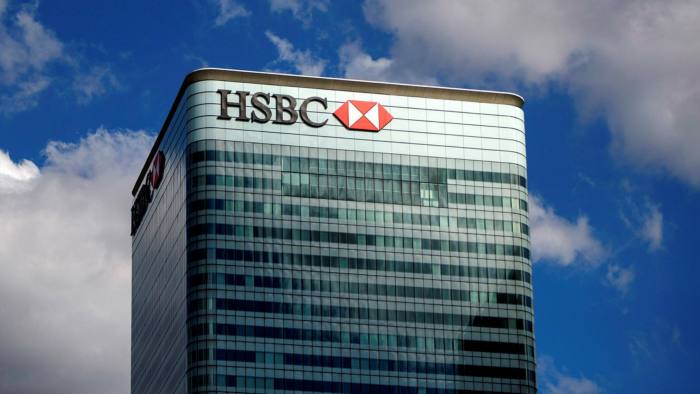
HSBC reported a decline in its pre-tax profits for 2022 due to the persisting impact of the Covid-19 pandemic on its financial performance. Despite a 4% increase in reported revenue, the bank’s pre-tax profits fell by over 7% to $17.5B compared to the previous year.
HSBC identified the challenging global economic environment as the reason for the dip in profits, pointing to factors such as renewed virus outbreaks in Hong Kong and mainland China that negatively impacted economic growth in 2022. The bank also cited various external uncertainties, including Russia’s invasion of Ukraine, rising inflation, and interest rates, as contributing to a difficult financial environment, which it anticipates will continue to affect its earnings in 2023, potentially surpassing the pandemic’s impact.
HSBC’s statement to the Hong Kong stock exchange emphasizes the challenges that international banks are currently facing. “We are already seeing… a cost of living crisis affecting many of our customers and colleagues,” Mark Tucker, the group’s chairman said in a statement.
However, after-tax profits rose $2B to $16.7B, while fourth-quarter pre-tax profit nearly doubled from $2.5B to $5.2B “All of our businesses grew profits in 2022, and we maintained our strong capital, funding and liquidity positions,” Tucker added. The bank said last year reflected “a strong overall financial performance,” and announced a full-year dividend of $0.32 per share.
During an event held in the previous month, Tucker expressed his confidence that the reopening of China and its latest initiatives to stabilize the turbulent real estate market would have a positive impact on both the Chinese and global economies, according to Agence France-Presse (AFP). As part of its long-term strategy to pivot towards the Asian and Middle Eastern markets, HSBC has already achieved some early success in its ambition to become a leading player in the region’s wealth management market. In November, the banking giant agreed to divest its Canadian division for $10.1B, with plans to use the proceeds to invest in its core operations and provide cash returns to shareholders.
The sale of the Canadian division is a response to a campaign by Ping An, the largest shareholder in HSBC, to reduce costs and shift resources towards Asia. While Ping An has called for the separation of HSBC’s Asian operations to unlock shareholder value amid tensions between China and the West, the bank has rejected the proposal. “It has been, and remains, our judgement that alternative structural options would not deliver increased value for shareholders,” Tucker said.
Chief executive Noel Quinn said the bank was focused on delivering a returns target of at least 12% for next year as well as keeping costs down. “We are on track to deliver higher returns in 2023 and have built a platform for further value creation,” Quinn said.
