
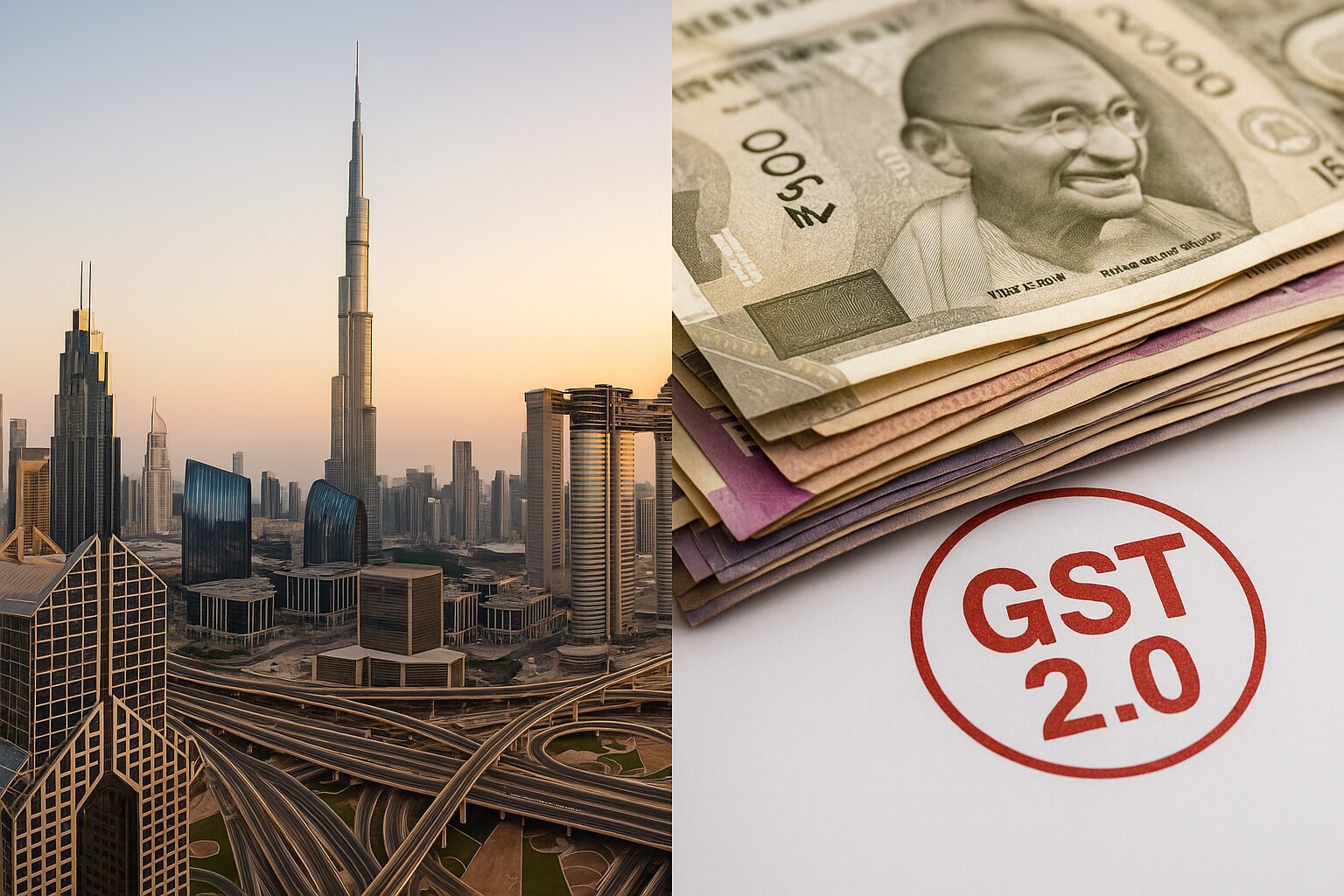
India’s new tax regime lowers costs on essentials and health cover, raises levies on luxury items, and could reshape how expatriates manage family expenses and investments back home.
India has rolled out GST 2.0, the most significant reform of its indirect tax system since 2017. The overhaul aims to simplify the country’s Goods and Services Tax structure, ease compliance, and make essential goods and services cheaper for households. For more than 3.5 million Indian expatriates in the UAE, the changes carry direct implications for family spending, insurance, and investments linked to India.
What changed under GST 2.0
- Simpler rate structure: India has moved from four GST slabs (5, 12, 18, 28 percent) to just two primary rates — 5 percent and 18 percent.
- Higher tax on luxury goods: A new 40 percent rate now applies to items such as tobacco, pan masala, sugary drinks, and high-end cars.
- Cheaper essentials and health cover: Household goods, medicines, and life and health insurance premiums are now either exempt or taxed at lower rates.
- Focus on compliance: The government expects the simplified regime to reduce classification disputes and make filings more efficient.
How UAE expats are affected
- Family expenses in India
Essentials and medicines are now cheaper. For expats supporting families in India, day-to-day household budgets will benefit from lower GST. - Insurance savings
Many expats pay for health or life insurance policies for dependents in India. These products are now less costly, providing tangible savings on recurring expenses. - Luxury purchases cost more
For expats buying cars, luxury goods, or vice products during visits to India, the higher GST will mean bigger bills. - Remittances and gifts
Care packages or goods sent home could see changed cost structures depending on the category of items included. - Investments and businesses
Expatriates with business interests in India will need to reassess pricing models and supply chains, particularly where input tax credits and margins are impacted.
Why the reform matters
GST 2.0 is designed to stimulate consumption in India by reducing the cost of essentials while discouraging spending on luxury and non-essential goods. For expatriates, this means a shift in how family budgets, insurance premiums, and discretionary spending are managed. It also impacts businesses in India that expats may own or invest in, especially in retail, healthcare, and consumer goods.
The bigger picture
While consumers may see immediate price drops, businesses are under pressure to pass on the tax savings transparently. Analysts say the net effect for expats will be positive in essentials and healthcare, but mixed in luxury and discretionary spending. Over the medium term, the reforms could also boost India’s consumption economy, indirectly benefiting UAE-based exporters and investors with exposure to the Indian market.
