
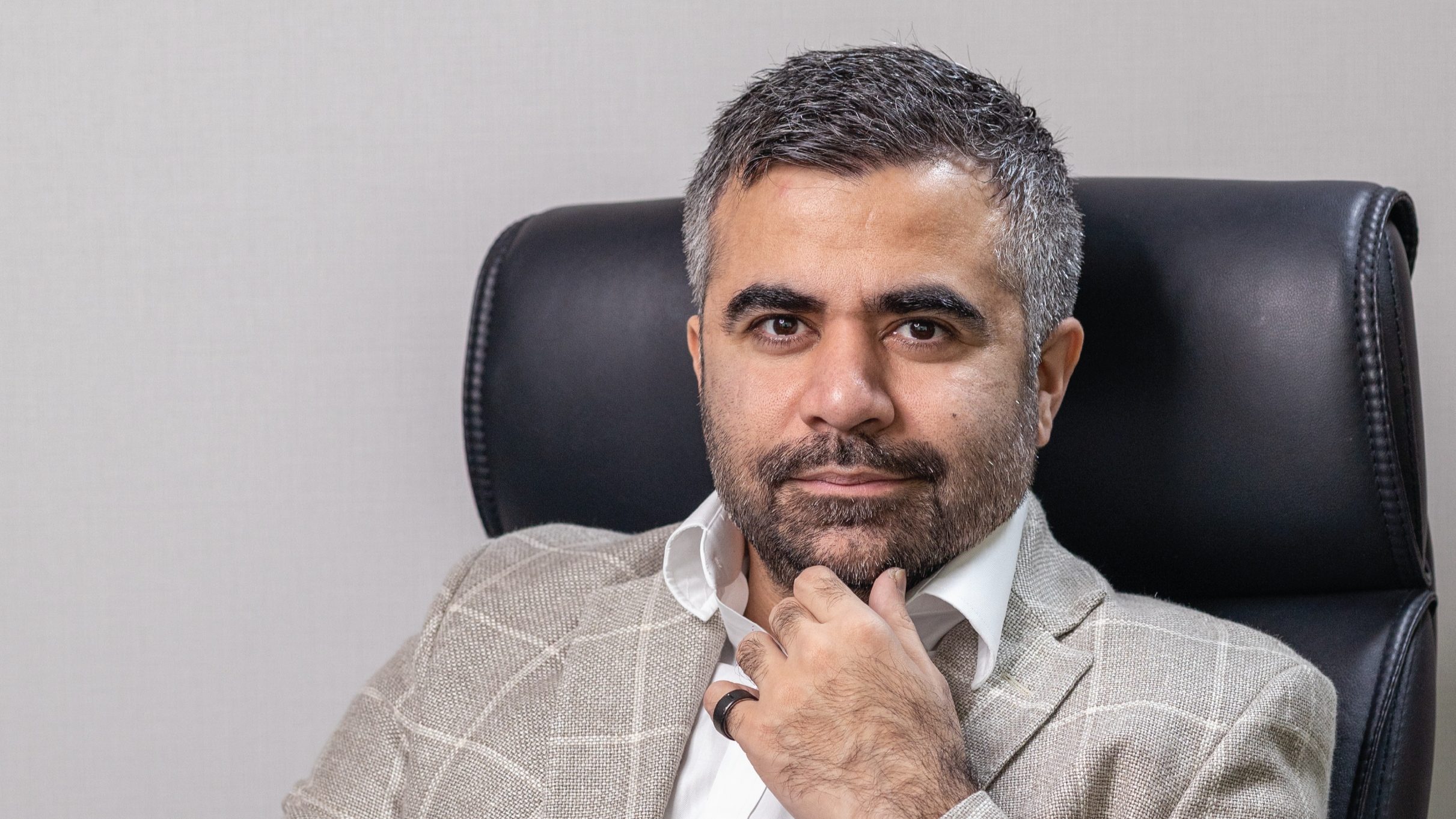
Herman Narula brings a sharply defined view of where virtual worlds are headed and why their impact is accelerating faster than most people realise. With more than half a billion people now spending time each month inside digital environments, building communities, and creating value, the metaverse is moving into a phase where real economic and social structures are beginning to take shape.
Across this exclusive interview, he lays out the principles driving that shift: the need for scalable infrastructure instead of device-led thinking; AI’s role in eliminating the content-creation barriers that once slowed the industry; and blockchain as the foundation that will enable open, interoperable digital economies. Narula describes where the market misread the initial metaverse wave, what new industries are likely to emerge from these technologies, and how large-scale virtual economies could evolve by 2035.
What follows is a candid, detailed look at the infrastructure, ideas, and long-term bets shaping the future of virtual worlds.
1. The term “metaverse” has been hyped, dismissed, and rebranded. How do you define it in 2025?
I actually think the term deserves a comeback. Look at the numbers: we now have half a billion people spending time inside virtual worlds every month, earning income, socializing, building communities.
That’s not hype; that’s a fundamental shift in how humans interact and create value. Designers are selling virtual fashion, architects building digital spaces, educators teaching in immersive environments, and artists finding audiences they could never reach in the physical world.
To me, the metaverse represents the emerging economy of ideas and virtual experiences we’re steadily drifting toward. It’s where creativity becomes currency, where geographic barriers dissolve, and where new forms of human expression are being invented in real-time. We’re watching the birth of entirely new industries and social structures that simply couldn’t exist in the physical realm. And the timing matters more than ever.
A read digital civilization begins when value and identity move freely across the worlds.”
Herman Narula, Co-founder & CEO of Improbable, MSquared (M²)
As AI drives widespread disruption in traditional employment, automating not only manufacturing jobs but also increasingly creative and knowledge-based work, we face an urgent existential question: where will people find meaning, opportunity, and genuinely human-centric experiences? Where will they find work that AI can’t replicate or devalue? Increasingly, the answer lies in these virtual worlds. They’re becoming a vital extension of our social and economic lives, spaces where human creativity, imagination, and connection can thrive even as automation reshapes the physical economy.
2. In your view, what does a genuinely “digital civilization” look like 10–15 years from now?
Over the next decade, we’ll witness virtual worlds evolve from closed, platform-controlled ecosystems into genuinely open economies, and that shift will be transformative. Right now, most virtual worlds operate as walled gardens where the platform owns everything, controls all transactions, and can change the rules arbitrarily. A true digital civilization can’t be built on that foundation.
Blockchain is the critical missing layer that makes this transition possible. It will allow value to move freely in and out of worlds, enable independent businesses to exist on top of virtual platforms rather than within them, and create a real digital economic system, one that isn’t controlled solely by the platforms themselves. Imagine creators who actually own their work, entrepreneurs who can build cross-platform businesses, and users whose digital assets and identity persist regardless of which world they’re visiting. That’s when we move from isolated virtual experiences to an actual interconnected civilization.
We’re also going to see a major resurgence of VR as the primary interface for this civilization. Yes, it’s been slower to take off than mobile phones were, but the trajectory is clear: VR headset sales now surpass popular gaming consoles, suggesting we’re approaching an inflexion point. The technology is finally catching up to the vision, with lighter headsets, better resolution, and more intuitive interfaces.
3. Which real-world problems do virtual worlds solve better than any other technology?
Virtual worlds uniquely solve social cohesion problems in ways that no other technology can match. They allow people to meet and collaborate free from the constraints of real-world identity, geography, and social norms, constraints that often create artificial barriers between human beings who might otherwise connect deeply.
I see this most vividly in the MENA region, which has become one of the fastest-growing gaming markets globally. We’re already witnessing virtual worlds breaking down deeply entrenched cultural barriers, enabling easier mixing across gender and age groups, fostering collaborations that would be socially complex or even prohibited offline, and creating new forms of community and self-expression that are difficult or impossible to achieve in the physical world.
These aren’t trivial social experiments. In regions where physical public spaces for certain groups are limited, where cross-gender interaction is restricted, or where traditional hierarchies are rigid, virtual worlds become spaces of genuine social innovation. They’re laboratories for new forms of human connection and community building. Young women who might face restrictions on their physical mobility can become entrepreneurs, leaders, and creators in virtual spaces. People can explore aspects of their identity, test ideas, and form relationships on their own terms.
4. Where is the most serious metaverse work happening today: gaming, defense, finance, or something else entirely?
The honest answer is that all of these sectors are already being reshaped by virtual world technology, but if you’re asking where the most transformative work is happening, I’d say it’s not about the sector. It’s about the underlying technology enabling all of them, it’s about the innovation: AI.
AI is the biggest force multiplier we’ve ever seen for virtual worlds because it dramatically reduces content-creation costs, which has always been the main constraint on innovation. Now, it only takes one breakthrough world or game to reset expectations for an entire industry. We saw it with Second Life, then Minecraft, then Fortnite, each time, one compelling experience changed what people thought was possible and sparked waves of innovation. We’ve seen that pattern repeatedly, and we’re about to see it again, but this time amplified by AI-driven content creation.
The question isn’t which sector will win, it’s which team will be first to combine AI-powered content generation with a genuinely compelling vision of what virtual worlds can be. That’s where the most serious work is happening: at that intersection, driving unprecedented growth across platforms as virtual creativity rapidly scales.
5. What is Improbable’s core role in this landscape: infrastructure provider, venture builder, or ecosystem architect?
Improbable is first and foremost an infrastructure company, though we increasingly operate as a venture builder and ecosystem architect as well. Our fundamental belief is that the most transformative ideas fail not because of vision, but because of infrastructure limitations. So we build the foundation that makes ambitious visions possible.
Most recently, we’ve played a major role in building Somnia, a new blockchain designed to support both automated and agentic finance today and in time, the next generation of large-scale virtual worlds. What sets Somnia apart is something the blockchain space has desperately needed: reliable and entertainment-grade infrastructure. This is the very thing most of web3 has been missing, and it’s why so many promising projects have struggled or failed to gain real adoption.
Think about the emerging trends we’re seeing: InfoFi, predictive markets, decentralized autonomous organizations, complex virtual economies. These aren’t failing because the ideas are weak or because there’s no demand. They’re failing because the infrastructure cannot scale to meet real-world usage patterns.
Somnia solves that fundamental problem by combining high-traffic systems expertise, the kind we’ve developed running massive multiplayer virtual worlds, with a blockchain built from the ground up for real adoption, not just speculative trading. This enables more resilient digital economies and unlocks entirely new classes of applications that simply weren’t feasible before. We’re talking about virtual worlds with millions of concurrent users, financial systems that can handle complex automated strategies at scale, and digital economies that actually function like economies rather than experimental prototypes.
6. Technically, what can Improbable do at scale today that most competitors simply cannot?
We specialize in building technologies that most people assume are impossible, and then we take a decade to prove them valuable. That’s not hyperbole; it’s our actual track record and our competitive advantage.
Improbable consistently takes long-term risks on infrastructure that unlocks entirely new categories of virtual experience, things that don’t exist yet because the underlying technology hasn’t been built. This willingness and capability to operate on multi-year horizons, sometimes decade-long horizons, is genuinely rare. It requires patient capital, technical depth across multiple complex domains, and frankly, a certain tolerance for being told you’re wrong for years before the market catches up. Most competitors simply can’t or won’t make that bet. They need to show results in quarters, not decades.
What we can do at scale today is run systems that handle the kind of complexity, concurrency, and state synchronization that break conventional architecture. We can support virtual worlds where every object, every interaction, every player action genuinely matters and persists in a shared reality, not instanced, not sharded in ways that break immersion, but truly unified.
7. We saw a surge of metaverse excitement during the pandemic, followed by a long silence. How do you interpret that cycle?
The pandemic created a perfect storm of conditions that artificially accelerated interest in virtual worlds, but for reasons that were never going to be sustainable. People were locked in their homes, desperate for social connection, and suddenly every corporation needed a “metaverse strategy” regardless of whether they understood what that meant. Expectations became wildly inflated, and in many cases, completely unrealistic.
That period created tremendous noise and later, inevitable scepticism when the overinflated promises didn’t materialize on impossible timelines. But fundamentally, the underlying adoption curve is simply returning to its natural trajectory.
We’re now beginning to see activity recover to pre-pandemic levels and beyond, but this time it’s supported by genuinely better technology and much clearer use cases. The VR headsets are lighter and more affordable. The rendering technology has dramatically improved. AI has solved content creation bottlenecks that seemed insurmountable just three years ago. And perhaps most importantly, we’re no longer asking “will people use virtual worlds?” We know they will, half a billion people already do. Now we’re asking better questions: What infrastructure do these worlds need? How do we create real economies? How do we ensure interoperability?
The serious builders kept building. And now we’re entering a more mature phase where the technology is finally catching up to the vision, without the distraction of unsustainable hype.
8. What did the market get fundamentally wrong during that hype phase that you think you got right?
The market made two critical miscalculations, both rooted in a misunderstanding of how transformative technologies actually scale.
First, everyone assumed metaverse progress would be linear and consumer-device-led, that if we just got the right VR headset into enough hands, everything else would follow naturally. Meta bet tens of billions on that assumption. The entire industry narrative became about hardware specs, price points, and adoption curves for devices. But we always believed that the real enabler would be infrastructure, not headsets. VR hardware alone was never going to be the answer, because even the best headset is useless if the virtual worlds it connects to can’t handle scale, can’t maintain persistent state, can’t support real economies, or crash when too many people show up.
Second, and perhaps more importantly, we understood early that content cost, not hardware, was the real bottleneck preventing virtual worlds from reaching their potential. That constraint meant innovation was painfully slow and only well-funded incumbents could compete.
With AI now collapsing those content creation costs, enabling small teams or even individual creators to build what once required hundreds of people, our long-term bets are paying off.
9. Why is the Middle East, specifically the UAE, the right base for your next chapter in virtual worlds?
The UAE is rapidly becoming one of the world’s most welcoming environments for crypto adoption, and I believe crypto infrastructure is the prerequisite for true metaverse adoption, not an optional feature. You can’t build genuine digital economies, real ownership, or interoperable virtual worlds without blockchain as the foundational layer.
But beyond what’s already happening, there’s still a significant untapped opportunity for government-led incentives to build national infrastructure that combines crypto and virtual worlds in genuinely ambitious ways. The UAE has both the resources and the will to make that kind of bet. Doing so could position the region to attract the global games industry at exactly the right moment. We’re seeing massive disruption and realignment right now, studios are being acquired, independent developers are looking for supportive ecosystems, and the traditional geographic centres of the gaming industry are becoming less dominant. The combination of crypto-friendly regulation, strong government backing, proximity to fast-growing MENA gaming markets, and world-class infrastructure positions the UAE to become a pivotal hub for virtual worlds.
There’s also something compelling about building the future of virtual civilization from a region that has always been a crossroads between East and West, a place that understands how to bridge cultures and create spaces where different worlds meet. That’s not just romantic symbolism, it’s a genuine strategic advantage when you’re building technology meant to connect the entire planet.
10. What can you build out of Dubai that would have been harder, slower, or smaller out of London?
Dubai offers a unique combination of regulatory openness, genuine willingness to experiment, and regional leadership in gaming and digital culture that you simply don’t find in traditional tech hubs anymore. London is an incredible city with deep technical talent and financial infrastructure, but it’s increasingly constrained by regulatory caution and institutional inertia that make bold experimentation difficult.
The most obvious difference is the crypto infrastructure. The ability to integrate blockchain at a national level, to build systems where digital ownership, cross-border transactions, and decentralized economies are treated as legitimate infrastructure rather than regulatory threats, would be far harder. The UK is still trying to figure out how to regulate crypto without stifling it, caught between the EU’s heavy-handed approach and the US’s regulatory chaos. Dubai has already made the decision: they want this technology, and they’re willing to create the conditions for it to thrive.
But it’s more than just regulation. Dubai has a fundamentally different appetite for ambitious, large-scale projects. The entire city is essentially a proof of concept that you can build extraordinary things quickly if you have vision, resources, and political will aligned. There’s also the regional advantage. Dubai sits at the centre of the fastest-growing gaming market in the world. The MENA region is experiencing explosive growth in virtual world adoption, but most of the infrastructure and platforms serving this market are built elsewhere, often without understanding the cultural context or specific needs. Building from Dubai means we’re directly connected to this market, understanding it from the inside rather than treating it as an export opportunity.
11. Which UAE or GCC sectors do you see as the earliest adopters of large-scale virtual environments?
The earliest adopters will be the sectors that already embrace crypto and digital assets, the fintech innovators, the blockchain development companies, and the digital asset trading platforms. These communities understand open economies intuitively. They already think in terms of digital ownership, decentralized systems, and borderless transactions. For them, virtual worlds aren’t a conceptual leap; they’re the natural next evolution of what they’re already building. They see immediately how virtual environments can host financial applications, create new trading venues, enable automated economic systems, and serve as testing grounds for novel economic models.
We’re already seeing early signals: crypto conferences are increasingly happening in virtual spaces, DeFi protocols are experimenting with immersive interfaces, and there’s growing interest in how virtual worlds can serve as venues for financial innovation that would face regulatory hurdles in the physical world.
But more broadly, the gaming sector across the GCC will continue to lead, and this is where the real scale happens. The GCC gaming market is already one of the fastest-growing in the world. We’re talking about a young, tech-savvy population with high smartphone penetration, strong purchasing power, and an appetite for digital entertainment that rivals anywhere globally.
12. Are you already in discussions with regional partners or governments, and what kind of collaborations are you seeking?
We’re seeking collaborations in three interconnected areas: first, building national virtual-world infrastructure, the kind of foundational layer that can support large-scale, persistent virtual environments at a country or regional level, similar to how nations invest in telecommunications or data infrastructure.
Second, integrating blockchain as a foundational layer across digital experiences, not as a feature bolted on afterwards, but designed from the ground up to enable genuine digital ownership and transparent economies.
And third, creating the broader ecosystem that attracts global studios and developers to the region, which means not just infrastructure and regulation, but also funding mechanisms, talent development programs, and the kind of community-building that transforms a location into a genuine hub where the best creators want to build.
13. How big do you believe the virtual worlds economy can realistically become by 2035? Within that market, what slice can Improbable credibly aim to own or influence?
By 2035, virtual worlds will have evolved far beyond entertainment to become a meaningful component of the global economy that encompasses not just gaming, but a real system of work, identity, and value creation. We are looking at virtual environments where people earn their primary income, where businesses operate and transact, where education happens, and where social structures form. This isn’t speculative; the trajectory is already clear when you look at how younger generations interact with digital spaces and where economic activity is increasingly flowing.
Improbable’s influence within that massive market will centre on the infrastructure layer, which I believe is where the most enduring value gets created. Specifically, that means three things: first, enabling open economies where value can flow freely across platforms, second, supporting AI-driven content creation at the scale and speed that the next generation of virtual worlds will require; and third, powering worlds that can actually host millions of users concurrently in genuinely shared experiences, not the instanced, fragmented environments that pass for “massive” today.
14. For investors, what growth path should they expect from Improbable over the next decade: steady infrastructure play, step-change upside, or something more asymmetric?
Investors should expect a company pursuing asymmetric upside, not linear growth. That’s been our pattern historically, and it’s very much our strategy going forward. Our history shows we build technologies that look impossible or premature when we start, then compound quietly for years until a breakthrough moment arrives and suddenly what seemed ambitious becomes obvious.
With Somnia, AI-driven content creation, and the broader shift toward open metaverse economies, we’re positioned for step-change expansion rather than steady incremental growth. These aren’t separate bets; they’re interconnected pieces that amplify each other.
