
Unmanned aerial activity has affected port infrastructure across the UAE, yet the country’s freight rail services continue to operate as normal, its national operator told.
Port of Fujairah has experienced two such incidents in the past three days, while similar activity has been reported at Ruwais Industrial Complex, Khalifa Port and Jebel Ali Port — all connected to the Etihad Rail network.
In the nine days following the start of the US–Israel–Iran tensions 2026, Etihad Rail’s freight division operated more than 100 train trips, transporting over 459,000 tonnes of cargo and 7,900 containers across its network, according to a statement released last week.
The company said it has introduced additional rail routes and reallocated capacity towards ports along the UAE’s east coast to ensure uninterrupted cargo movement. It also deployed five extra freight services to support the Al Ghail Dry Port rail terminal, located south of the city.
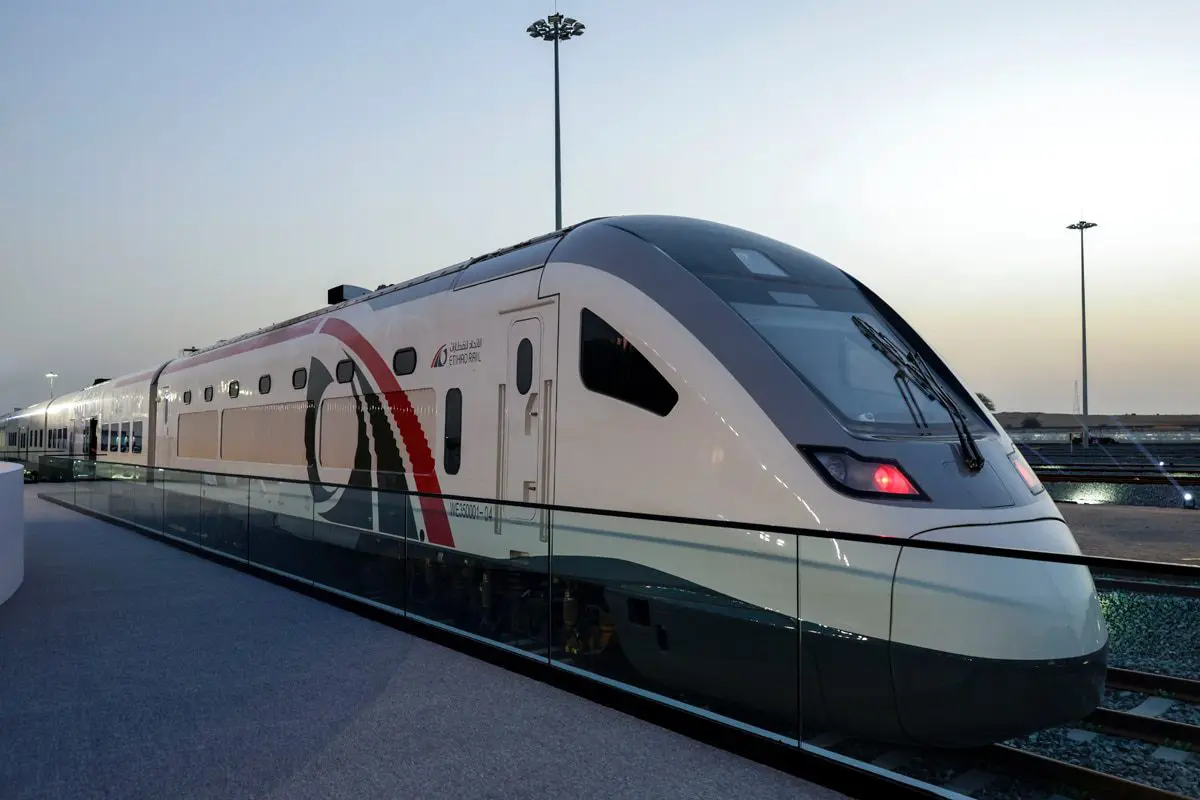
A spokesperson confirmed that passenger operations, scheduled to launch later this year, remain on track.
This operational continuity aligns with a broader government initiative to transition cargo transport from road to rail. Each freight train can carry the equivalent of up to 300 heavy trucks along the 900-kilometre network, which has been fully operational since 2023, linking Ghuweifat on the Saudi border with the Port of Fujairah on the Gulf of Oman.
“Last year we supported the reduction of almost 1.1 million road trips in the country. The goal is to double it,” Omar Alsebeyi told AGBI in an exclusive interview prior to the recent regional developments.
