
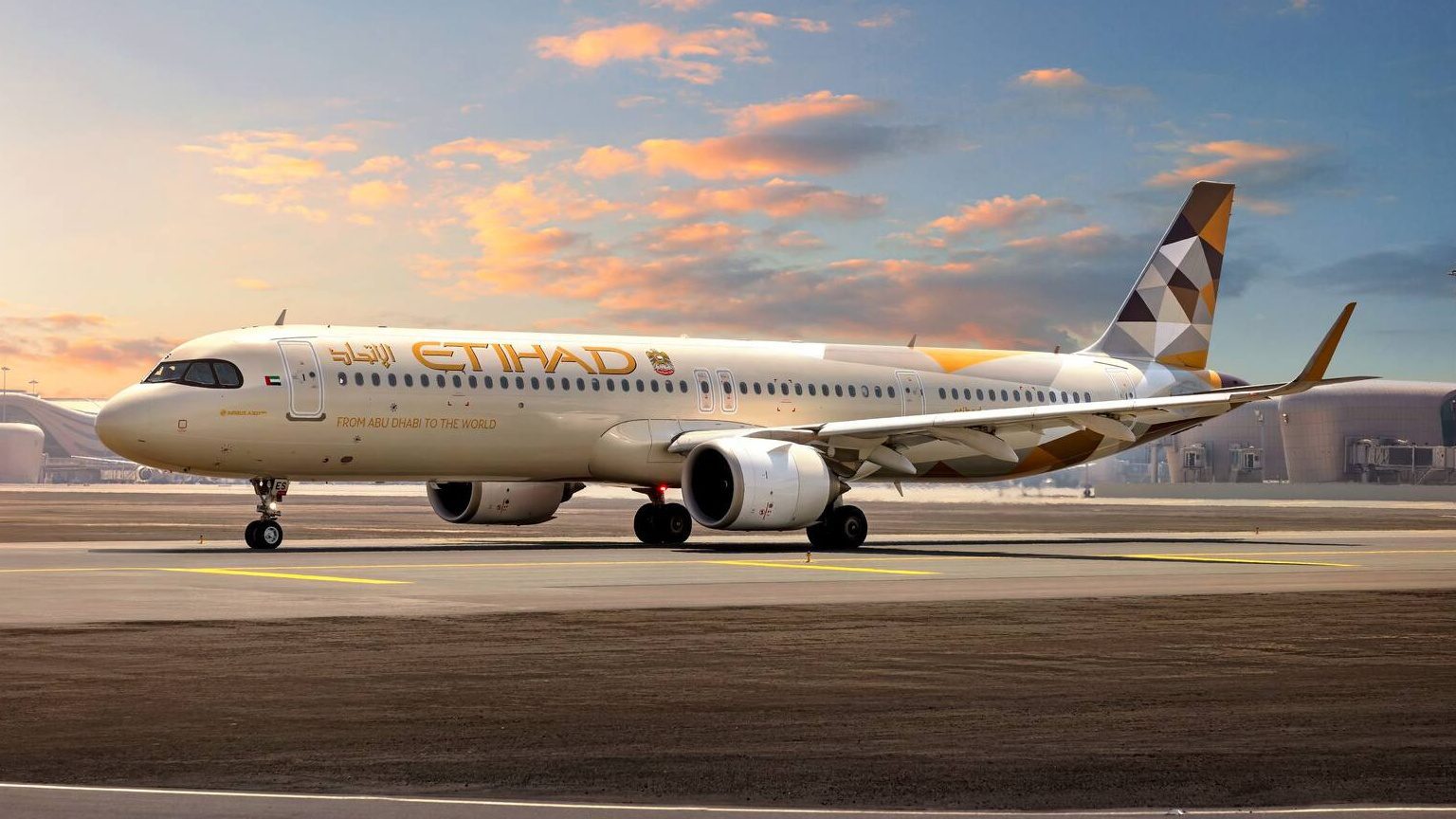
Etihad Airways has confirmed there is no timeline for an initial public offering, as the Abu Dhabi-based carrier has sufficient resources to finance its ambitious expansion strategy. According to CEO Antonoaldo Neves, the airline can “self-fund” its $20 billion growth plans for the next decade without relying on a stock market listing.
Neves explained that the decision to go public ultimately lies with its shareholder, ADQ. “Any decision about an IPO is much more a broader decision from the shareholder rather than any specific decision related to Etihad,” he said. “The time has not come yet.”
Focus on Organic Growth and Market Strength
The airline, launched in 2003, previously invested billions in minority stakes across global carriers to strengthen its Abu Dhabi hub. However, after many partners faced financial challenges, ADQ assumed control of Etihad in 2022. Since then, Neves has emphasised organic growth as the airline’s priority, ruling out mergers or acquisitions as part of its current strategy.
Etihad aims to enhance Abu Dhabi’s position as a key travel hub connecting Asia and Europe. Neves noted that the planned expansion does not require an IPO. “We believe we can self-fund that,” he said, reaffirming confidence in internal resources. Despite global economic uncertainty and geopolitical tensions, the airline remains committed to network expansion, supported by the region’s strong growth prospects.
Passenger traffic has risen 17% year-on-year, while load factor improved to 88% from 86%. Although bookings slowed during the Israel-Iran conflict, Neves confirmed that sales rebounded by the end of July. “People postponed their plans, but they did not cancel their plans,” he said.
Fleet Expansion and Future Plans
Etihad operates more than 100 aircraft, including Airbus and Boeing models. Earlier this year, it confirmed an order for 28 Boeing wide-body planes, including the 777X, which is expected to replace its Airbus A380 fleet after 2030. Additional aircraft acquisitions are planned through the secondary market. “It’s not necessarily with OEMs. It can be with lessors, it can be secondhand planes,” Neves added.
With strategic growth, strong financial backing, and a focus on market resilience, Etihad positions itself to strengthen its global presence without the need for immediate public listing.
