
Dubai has revealed its next phase of infrastructure upgrades, featuring aerial taxis, a 131 km rail network extension, and The Future Loop — a climate-controlled pedestrian system under the Dubai Walk Master Plan.
The plan was reviewed by Sheikh Hamdan bin Mohammed bin Rashid Al Maktoum, Crown Prince of Dubai, Deputy Prime Minister, and Minister of Defence, who met with Mattar Al Tayer, Director General and Chairman of the Board of Executive Directors of the Roads and Transport Authority (RTA).
Sheikh Hamdan stated that Dubai’s continuous investment in infrastructure demonstrates its dedication to its citizens and future generations, aligning with the vision of Sheikh Mohammed bin Rashid Al Maktoum, Vice President, Prime Minister of the UAE, and Ruler of Dubai.
He added that these initiatives reflect a progressive approach to creating a connected, sustainable city driven by innovation and in line with the Dubai Economic Agenda (D33).
Sheikh Hamdan further emphasised that Dubai’s urban development strategy focuses on long-term planning, adaptability, and sustainability, integrating technology into infrastructure to set new benchmarks for smart and resilient cities.
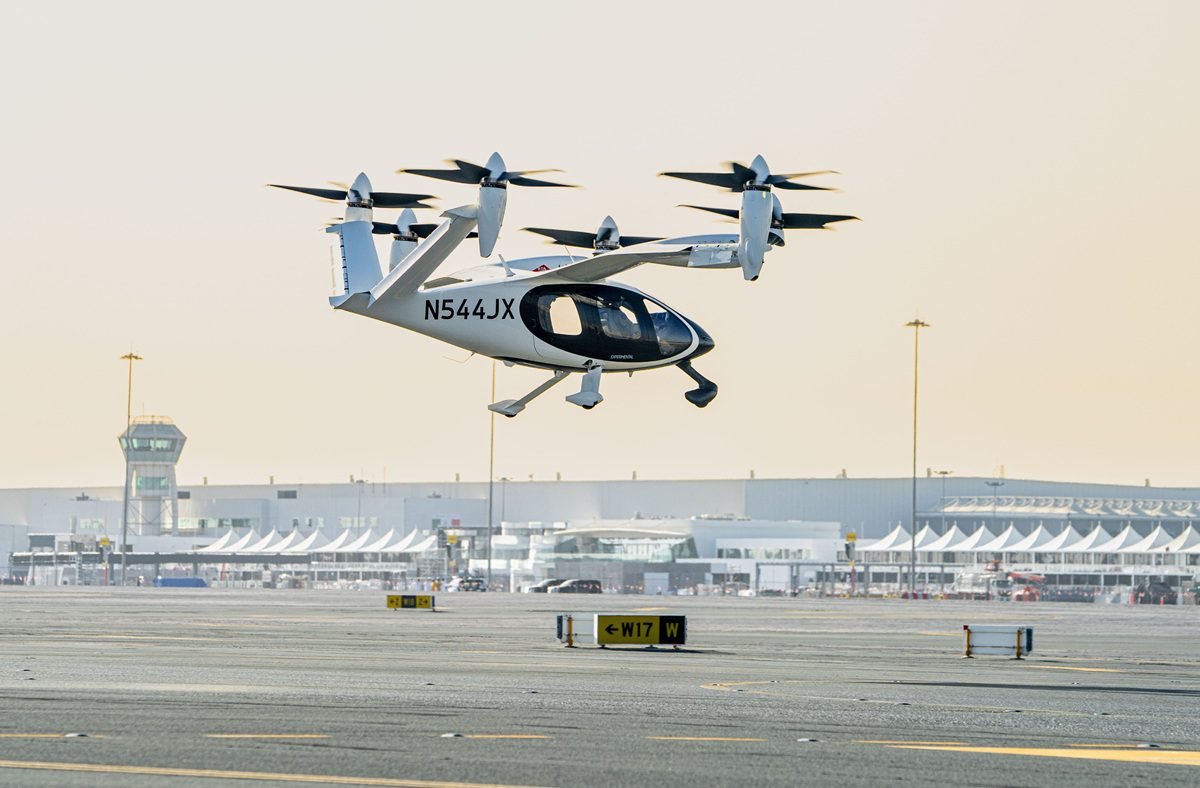
Mattar Al Tayer briefed Sheikh Hamdan on the progress of the Aerial Taxi project, noting that Joby Aviation has already conducted successful test flights in Dubai’s desert region, including the first crewed electric vertical take-off and landing (eVTOL) aircraft flight between two locations.
During the Dubai Airshow 2025, the eVTOL aircraft flew from Margham and landed at Al Maktoum International Airport (DWC), marking a crucial step before trials in urban areas commence.
This milestone paves the way for passenger services to start in 2026, pending coordination with the General Civil Aviation Authority and the Dubai Civil Aviation Authority.
The fully electric aircraft features six propellers and four independent battery packs, offering a range of 160 km and a top speed of 320 km/h, with capacity for four passengers plus a pilot.
The RTA is also advancing the development of aerial taxi vertiports, with Skyports Infrastructure constructing the first site near Dubai International Airport (DXB).
The vertiport will span 3,100 m² across four levels, comprising two floors for parking, two landing and take-off pads, and air-conditioned passenger facilities.
Further vertiports are planned across major urban projects in partnership with property developers.
Dubai’s metro network will extend from 101 km to 131 km by 2029, including 120 km for the Dubai Metro and 11 km for the Dubai Tram.
