
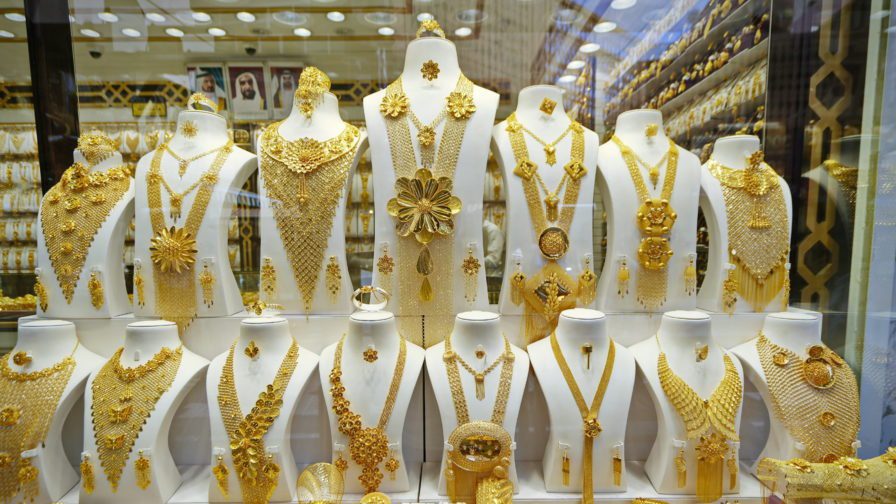
Gold prices in Dubai edged higher on Friday, reversing earlier losses, although market sentiment remained subdued despite ongoing geopolitical tensions linked to the Middle East conflict. Moreover, the rebound signals cautious buying interest following a recent correction phase.
Prices recover after recent declines
The price of 24-karat gold rose to Dh565.25 from Dh561.50, while 22-karat increased to Dh523.50 from Dh520.00. Additionally, international gold prices climbed 1.88% to $4,662.97, indicating renewed momentum after a multi-day decline.
This follows a sharp drop earlier in the week, when prices fell by more than Dh30 in a single session and over Dh80 from early March peaks. As a result, the earlier correction created a buying window for Eid shoppers, with prices easing from above Dh640 to the mid-Dh550 range.
However, the latest uptick suggests the correction may be short-lived. Furthermore, the modest rise reflects cautious re-entry by buyers, driven more by price levels than by traditional safe-haven demand.
Regional markets track upward movement
Regional markets moved in line with Dubai’s trend. In Saudi Arabia, 24-karat gold increased to 574.00 from 566.00, while 22-karat rose to 527.00 from 520.00. Similarly, in India, 24-karat gold reached ₹150,930 per 10 grams, up from ₹150,270, while 22-karat prices climbed to ₹138,350 from ₹137,750.
Additionally, the steady increase in India reflects continued retail demand ahead of festive buying cycles. Therefore, regional sentiment remains supported by consumer activity despite broader global uncertainty.
Global factors limit safe-haven demand
Globally, gold prices are experiencing a technical rebound after a six-day losing streak. However, broader market signals remain mixed due to macroeconomic pressures.
Carsten Menke, Head Next Generation Research at Julius Baer, said, “precious metals markets are showing an unusual level of calm despite the geopolitical backdrop.”
He added that gold has slipped below key psychological levels, while support from geopolitical tensions is offset by a stronger US dollar, rising bond yields, and expectations of tighter monetary policy. Moreover, the US Federal Reserve decision to hold interest rates steady has reduced gold’s appeal, reinforcing cautious investor positioning.
Furthermore, physically backed gold products continue to see outflows, indicating limited safe-haven inflows or bargain-hunting activity. As a result, analysts suggest that a more pronounced escalation in geopolitical tensions may be required to restore strong demand for gold as a defensive asset.
