
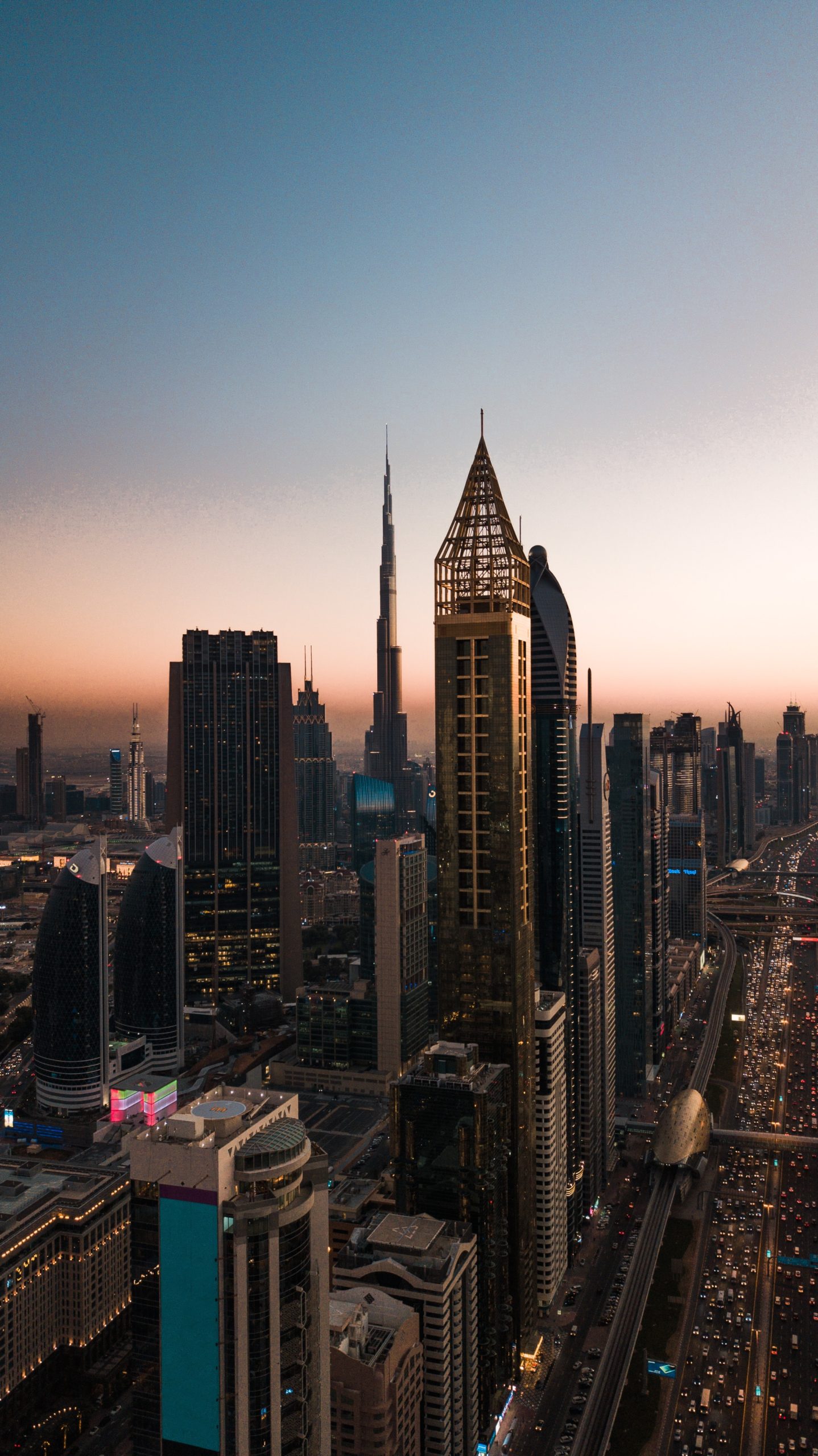
Most investors are drawn to Dubai because of its economic stability, low energy costs, and, most crucially, its tax-free environment for businesses. The absence of restrictions on profit repatriation makes Dubai an appealing environment for both domestic and foreign companies.
On the other hand, the Dubai government’s openness and support for a diverse economy play an important part in making Dubai an appealing destination for investors. Dubai is the most developed of the Emirates and the country’s second largest city. Dubai today has a large number of expatriates living and working there, as well as those who have established businesses there.
The oil and gas industry is Dubai’s most developed sector. The financial sector in Dubai is also well developed, with attractive and flexible policies for international investors establishing businesses in the city-state. Foreign citizens can also make large investments in Dubai’s real estate sector. This is due to the Dubai Government’s creation of a highly flexible regulatory framework for investors purchasing properties in Dubai. Service and agriculture are two more businesses in Dubai that have provided amazing investment prospects and have received specific investment plans from the Dubai government. Dubai’s free zones are also one of the city’s most appealing features to foreign investors. This is because there are no restrictions on establishing businesses in Dubai’s free zones. There are currently around twenty free zones in Dubai, with the number steadily increasing.
The UAE is expected to overtake the most preferred destinations of the rich, such as the US, UK, and Russia, by attracting the largest net inflows of millionaires globally in 2022, according to the latest Henley Global Citizens Report.
As expected, Russia has suffered the biggest emigration of millionaires over the past six months, with forecast net outflows of 15,000 by the end of 2022, a massive 15% of its HNWI population and 9,500 more than in 2019, pre-pandemic, according to the report that tracked private wealth and investment migration trends worldwide.
While traditional hotspots for wealthy investors are losing their luster, the UAE has been on a meteoric rise as a wealth hub.
The UAE is anticipated to have the greatest net influx of HNWIs in the world in 2022, with 4,000 expected, a 208 percent increase over 2019’s net inflow of 1,300 and one of the highest on record.
In 2021, Dubai ranked top in the region and second internationally in attracting FDI projects in the creative economy
Dubai’s emergence as a magnet for FDI in the sector has been driven by the farsighted vision and directives of Mohammed bin Rashid
• Dubai attracted FDI in the creative economy worth AED50.9 billion from 2017 to 2021.
• Dubai ranks first in the region and fourth globally in terms of creating jobs from FDI in the sector in the same period.
• Dubai emerges as a magnet for foreign investment and creative talent thanks to its supportive environment, advanced infrastructure and a legislative system that stimulates the creative economy
• The USA topped the list of countries in FDI capital inflows to Dubai in the past five years.
Dubai consolidated its status as a global cultural hub and investment destination, ranking first in the MENA region and second in the world in attracting foreign direct investment (FDI) in the cultural and creative industries (CCI) in 2021, revealed Her Highness Sheikha Latifa bint Mohammed bin Rashid Al Maktoum, Chairperson of the Dubai Culture and Arts Authority (Dubai Culture) and member of the Dubai Council. Her Highness said Dubai’s emergence as a magnet for FDI in the sector has been driven by the farsighted vision and directives of His Highness Sheikh Mohammed bin Rashid Al Maktoum, Vice President and Prime Minister of the UAE and Ruler of Dubai.
According to the Dubai FDI Monitor report, which was released by the Dubai Investment Development Arm (Dubai FDI), an agency of the Department of Economy and Tourism (DET), Dubai attracted 233 new creative economy projects in 2021. Dubai surpassed other large cities such as New York, Singapore, and Berlin, moving up from fifth place the previous year. The analysis used data from the Financial Times’ fDi Markets, the world’s premier data source for greenfield FDI projects.
“These achievements show the maturity and stability of the investment environment in the emirate’s creative economy,” HH Sheikha Latifa stated. By developing a solid ecosystem and innovative business-enabling infrastructure for creative entrepreneurs, Dubai has created tremendous FDI prospects in the industry.
“By fostering an environment that promotes learning, development, and innovation, Dubai has developed a vibrant global creative community. Its unique social fabric that has evolved out of the emirate’s remarkable cultural diversity and its comprehensive human-centered development process has further supported the growth of Dubai’s creative economy.”
Data from Dubai FDI Monitor indicates significant growth in foreign investment in the cultural and creative industries. The sector’s estimated value of FDI capital flows exceeded AED4.9 billion in 2021. The rise in FDI inflow and rankings reflect the enhanced attractiveness of the emirate’s creative economy. In terms of the number of new jobs in the creative economy, Dubai held on to its top rank regionally and fourth globally with 6,204 new jobs created from FDI.
According to the Dubai FDI Monitor, foreign investment in the cultural and creative industries has increased significantly. The increase in FDI inflows and rankings reflects the emirate’s creative economy’s increased attractiveness. With 6,204 new employment created by FDI, Dubai maintained its regional and worldwide lead in the number of new positions in the creative industry.
A magnet for FDI
HH Sheikha Latifa said Dubai has witnessed a remarkable rise in FDI capital flows in the creative economy during the past five years. In the 2017-21 five-year period, the emirate’s creative economy witnessed FDI capital inflows of AED50.9 billion across 787 projects. This increase follows the directives and initiatives of Dubai’s wise leadership to make the emirate a destination for creativity and talent through innovative infrastructure, laws and legislation. The results are now a tangible and sustainable reality in the development journey, as envisioned by the leadership.
According to the Dubai FDI Monitor report, these projects created 32,542 new jobs during the five-year period. Dubai ranks fifth globally in terms of projects, eighth in terms of FDI capital flows into the creative economy, and fourth in terms of jobs created during the past five years, data from Financial Times Ltd ‘fDi Markets’ shows.
Her Highness further said: “Dubai’s success in continuously enhancing the well-being of its citizens, residents, and visitors and elevating the quality of services provided to them has raised the global creative community’s confidence in the emirate and made it a preferred global business, lifestyle, and entertainment destination.”
A futuristic global hub for the creative economy
Her Excellency Hala Badri, Director General of Dubai Culture, said the Authority continues to reinforce the foundations to open new horizons for the various components of the emirate’s creative economy and cement its position on the global scene as an ideal investment destination. “At Dubai Culture, we continue to work to enhance Dubai’s position on the global creative economy map and support and attract talent by developing mechanisms, strategies, legislative frameworks, regulations and policies that ensure ease of doing business in creative fields. We also continue to explore partnerships with government, semi-government and private entities, experts, consultants, and creative sector representatives to create new opportunities that ensure prosperity for all. We endeavour to consolidate the emirate’s position as a global destination for investment in the cultural and creative industries.”
“2021 witnessed increased inflows of FDI capital into Dubai’s creative economy despite the pandemic, which reflects the emirate’s flexibility and readiness to face all challenges, nurture talent and help businesses maintain their stability, sustainability and competitiveness,” Badri added.
His Excellency Helal Saeed Almarri, Director General of the Department of Economy and Tourism in Dubai, stressed that Dubai’s regional and global pre-eminence in FDI attraction stems from the vision and guidance of the leadership to build a diversified economy based on knowledge and innovation. “The cultural and creative industries today are among the most attractive for investments, advanced technologies, and talent. The sector has contributed greatly to Dubai achieving the top global ranking in attracting greenfield FDI projects in 2021,” added AlMarri.
Fahad Al Gergawi, Chief Executive Officer of Dubai FDI, stressed that Dubai’s cultural and creative industries sector has increased its attractiveness to all forms of FDI, including greenfield FDI projects, FDI Reinvestment projects, Mergers and Acquisitions (M&As), Joint-Ventures, and New Forms of Investments (NFIs), in addition to Venture Capital (VC) Backed FDI. “The Dubai FDI Monitor data provides a comprehensive analysis of FDI projects in Dubai’s economic sectors. It helps the strategic planning process for enhancing Dubai’s attractiveness for FDI, as well as the FUS promotion, facilitation and the provision of specialised and reliable services to the investor community,” Al Gergawi said.
According to ‘Dubai FDI Monitor’ data, Greenfield FDI accounted for 71% of the total FDI projects in Dubai’s cultural and creative industries in 2021, followed by Mergers & Acquisitions projects (12% of the total), Reinvestment FDI projects (9%), New Forms of Investments (5%) and Joint Venture (2%).
Dubai Culture is working with its strategic partners to develop an effective framework that will enhance the growth of Dubai’s culture and arts sector and raise its contribution to the emirate’s GDP. It is supported by the full activation of Dubai Culture’s founding law, which stipulates its role as a policymaker, regulator, and enabler of this sector in the emirate.
Dubai’s real estate business is the most ‘transparent’ in MENA
According to JLL’s most recent Worldwide Real Estate Transparency Index, the real estate markets of Dubai and Abu Dhabi will be the top global improvers in 2022. For the first time, Dubai entered the ‘Transparent’ category, emphasizing its position as the most transparent property market in the Middle East and North Africa area. The emirate raised three places in the rating to 31st overall, and it is the only MENA property market in the ‘Transparent’ tier.
Dubai’s gains in the transparency ranking are driven by new regulations governing market lending practices, beneficial ownership tracking, and sustainability reporting, as well as enhanced digital services and data provision via the Dubai REST platform, such as service charge management, automated valuations, and transaction databases. The ranking improvement is partly a result of new efforts announced by the Dubai Government with private enterprises, such as transaction-based sales indexes and building wellness certification.
HE Sultan Butti bin Mejren, Director General of Dubai Land Department, said: “With the global recovery of the economy, we recognized the need to focus on improving market transparency to make better decisions that will support both developers and investors alike. Today, investors from around the world are increasingly looking at Dubai’s real estate to invest, and we, at Dubai Land Department, are committed to enhancing transparency within the sector.”
Bin Mejren added: “We are pleased that Dubai has entered a new phase of transparency and is the only city to do so in the MENA region. The government’s ongoing efforts that are driving digital services and data provisions, new regulations and sustainability reporting have helped advance Dubai’s ranking in this year’s Global Real Estate Transparency Index, which is an important guide used for cross-border investment and corporate occupiers to inform their decision making.”
Abu Dhabi, which ranked 45th globally, gained one rank and maintained its position in the ‘Semi-Transparent’ tier. The improvements reflect the expansion of digital services through the Dari platform including sales and lease management and development and transaction databases. The Department of Municipalities and Transport (DMT) also published its first code of ethics covering real estate professions, and the property market has benefitted from increased data provision by private providers in new sectors, the report states.
UAE ranks first in Arab world and 19th globally for FDI attractiveness
The UAE has been ranked as the number one country in the Arab world and the 19th country globally for its ability to attract foreign direct investment (FDI), according to the World Investment Report 2022.
The United Nations Conference on Trade and Development (UNCTAD) report also indicated that the country placed 17th globally for FDI outflows, with outflows totalling $22.5 billion in 2021, a 19% increase over 2020.
“The progress, as revealed by this report, is the latest addition to a series of achievements that were recently accomplished by the UAE, under the directives of our wise leadership, starting with its fast recovery from the pandemic’s impact, followed by the achievement of a 3.8 percent GDP growth – the highest in the region,” Abdullah bin Touq Al Marri, Minister of Economy said, WAM reported.
The assessment, according to the Minister, revealed that the UAE was on track to meet its aims of enhancing its national economy and global competitiveness.
“The UAE launched the ‘Projects of the 50’ and a number of comprehensive strategic initiatives with the potential to advance the county’s economic growth – both domestically and externally, in line with its vision for long-term, sustainable development,” the minister said.
“These projects and initiatives add more value to the attractiveness of our national investment environment, while also supporting the outflows of investments from the UAE to other global markets. These include the Investopia summit, which seeks to consolidate the UAE’s position in the world of future investments and the new economy, and attract FDI worth AED550 billion to the country by 2030,” he added.
Dr. Thani bin Ahmed Al Zeyoudi, UAE Minister of State for Foreign Trade, said that the UAE’s investment environment continues to grow and develop as a result of the country’s leadership, and reflects the increasing competitiveness of the UAE’s investment environment.
In 2021, the UAE attracted $20.7 billion in FDI, a 4 percent increase from 2020, and accounted for 40 percent of all FDI received by Arab nations.
The oil, gas and energy sector accounted for 59 percent of FDI, followed by the information, technology and communications sector at 10 percent of total inward FDI; followed by banking, finance, and insurance (7 percent), real estate, management and development activities (7 percent), health care (6 percent), and manufacturing (5 percent).
The country’s manufacturing sector saw the highest growth rate of FDI at 13 percent, with the health sector following with 9 percent, followed by the communications and technology sector at 6 percent, real estate at 4 percent, energy at 3 percent, and services at 2 percent.
The report also ranks the UAE as the number one FDI destination in West Asia, accounting for 37 percent of all investment inflows in the region. It also leads in the MENA region, acquiring $66.6 billion, or 31 percent, or all foreign investment in the region.
UNCTAD also found that global FDI flows have begun to return to pre-pandemic levels. According to the report, global FDI reached $1.6 trillion in 2021, a 64 percent increase, with this figure expected to continue to grow throughout 2022.
The US was the largest recipient of FDI at $367.3 billion, an increase of 143 percent over 2020.
UAE Golden Visa for investors
In 2022, the UAE visa residency system announced that real estate investors could obtain Golden Visa when purchasing a property worth no less than Dh2 million. This has encouraged many Dubai residents to invest or merge their properties to reach the Dh2 million milestones to be eligible for long-term residency.
Real estate industry executives and investors who got Golden Visa for buying Dh2 million worth of property acknowledge that Golden Visa motivates people to buy more and is also a great tool to retain people in Dubai post Expo 2020.
Obtaining Golden Visa through investment in real estate:
— Buy property worth Dh2 million or more
— Merge or combine properties to total up the value of Dh2 million or more
— Invest in an off-plan property worth a minimum of Dh2 million and pay instalments – this way they will not have to invest a lump sum amount at one go
— Take a loan from local banks provided the value of the property is a minimum of Dh2 million
— Married couples are making joint investments in a Dh2 million-property in order to fit in the eligibility criteria
This is applicable for properties bought from approved developers as per the announcement.
All these factors directly or indirectly support the growth of Dubai and UAE turning the city into a golden hub for investment opportunities.
