
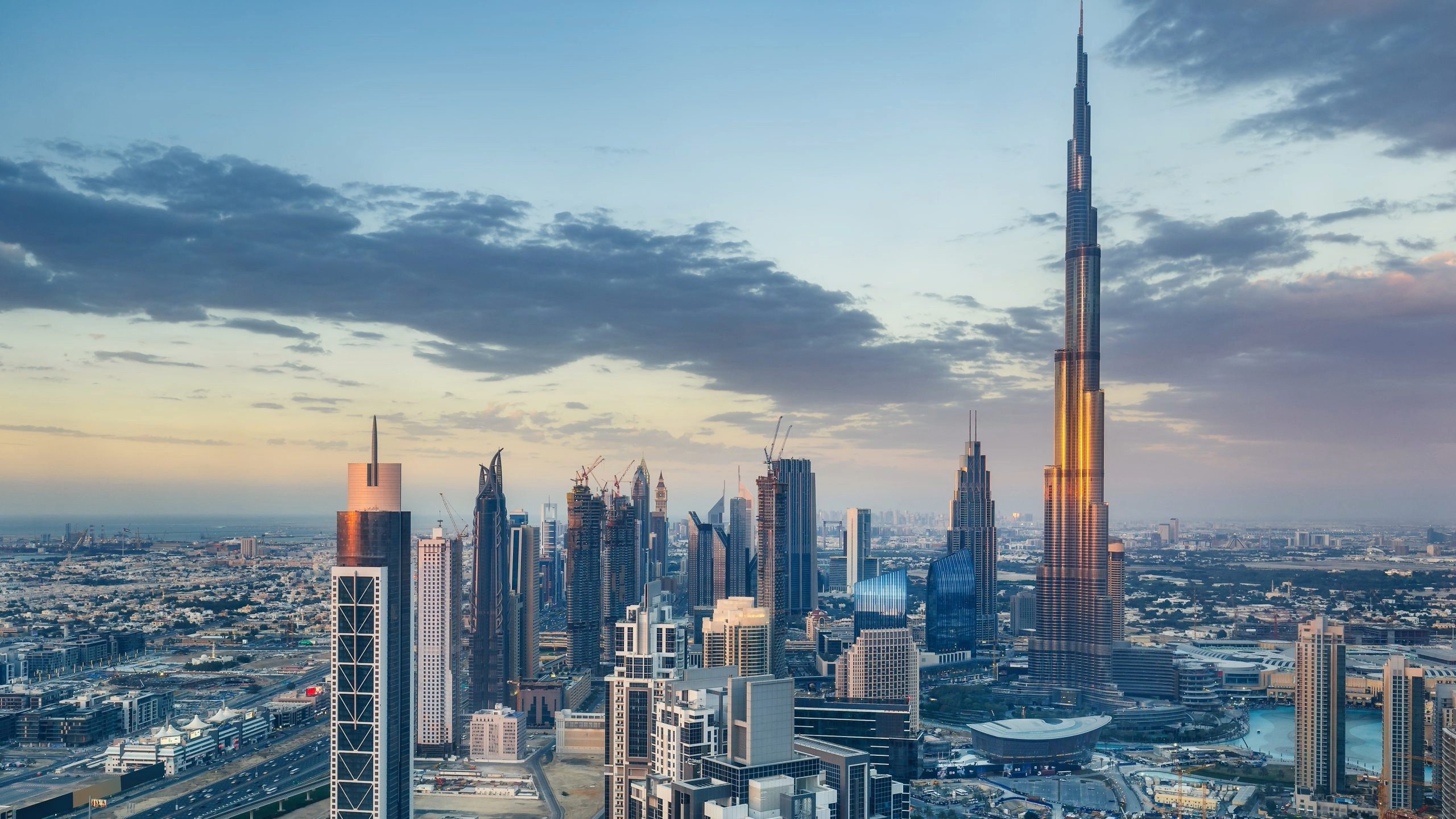
The UAE economy is on track to accelerate in the coming years, with real GDP growth projected at 4.9% in 2025 and rising to 5.3% in 2026, according to the Central Bank of the UAE’s (CBUAE) latest quarterly review. The outlook reflects sustained momentum in non-hydrocarbon activities alongside a rebound in the hydrocarbon sector, underpinned by updated OPEC+ production plans.
Non-hydrocarbon sectors sustain diversification
In Q1 2025, real GDP expanded by 3.9% year-on-year, driven by a 5.3% rise in non-hydrocarbon GDP. Manufacturing, financial services, construction, and real estate remain key growth pillars, underscoring the UAE’s diversification strategy. Looking ahead, non-hydrocarbon GDP is forecast to grow 4.5% in 2025 and 4.8% in 2026, maintaining its role as a stabilising force for the economy.
Meanwhile, the hydrocarbon sector is expected to expand by 5.8% in 2025 and 6.5% in 2026, reversing the previous slowdown.
Inflation trends and stable financial system
Inflation fell to 0.6% in Q2 2025, driven by lower energy costs, prompting the CBUAE to revise its annual forecast to 1.5% for 2025 (down from 1.9%). Inflation is expected to rise modestly to 1.8% in 2026 due to base effects.
The UAE’s banking system remains resilient, with a capital adequacy ratio of 17.3%, deposit growth of 13.1% year-on-year, and loans up by 11.1%. The insurance sector also strengthened, recording 14.5% growth in gross written premiums in H1 2025.
Capital markets and real estate remain robust
The UAE’s capital markets posted strong gains, with the Dubai Financial Market index surging 35.6% year-on-year and the Abu Dhabi index up 8.1%. Investor confidence remains firm, reflected in low credit default swap spreads.
Real estate sales rose 13.7% year-on-year in the first five months of 2025, led by a 14.3% increase in off-plan sales and 12.5% growth in ready unit sales. However, rental transactions in Abu Dhabi and Dubai slipped by 4.2%, pointing to some cooling in the leasing market.
Tourism, aviation, and global context
Tourism and aviation continue to thrive. Dubai welcomed 9.9 million international visitors in H1 2025, up 6.1%, while Abu Dhabi and Dubai airports handled 15.8 million and 46 million passengers, respectively.
Globally, the IMF forecasts growth at 3.0% in 2025, with the GCC expected to outperform at 3.5%, led by the UAE and Saudi Arabia. Global inflation is projected to fall from 5.7% in 2024 to 4.2% in 2025.
Monetary policy outlook
In line with the US Federal Reserve, the CBUAE lowered its base rate to 4.15% in September after holding at 4.4% earlier in the year. Its balance sheet expanded by AED 43.6 billion in Q2 2025, largely due to higher net foreign assets, reinforcing monetary stability.
