

Patrick Ngan has spent over two decades moving between corporate finance and the digital asset world. His career spans investment banking roles at UBS, ABN AMRO, and Huatai International, where he advised on IPOs and M&A transactions across Asia and the United States. As an entrepreneur, he co-founded Nova Vision Acquisition Corp, led its Nasdaq IPO, and subsequently completed a successful de-SPAC transaction. He is also a co-founder of Alchemy Pay, a cryptocurrency payment platform listed on Coinbase and Binance.
Today, as Chief Investment Officer of Zeta Network Group, Patrick oversees global investment strategy and institutional digital-asset treasury operations, with a focus on governance, compliance, and risk management. In this interview, he discusses how institutions should approach digital assets, the evolution of Bitcoin as a treasury instrument, and why governance rather than speculation should drive adoption, drawing on experience across Hong Kong, New York, Singapore, and Tokyo.
1. You’ve had a career spanning IPOs, fintech platform development, and institutional digital-asset strategy. How do you approach investment strategy and risk management in today’s complex market environment
Across different stages of my career, the discipline around capital has been consistent. Before thinking about returns, I always start by being clear about what capital is meant to do. Is it there to preserve liquidity, to support growth, or provide resilience through different market cycles?
What makes the current environment more demanding is not volatility on its own, but the number of forces moving at the same time. Geopolitics, interest-rate cycles, liquidity conditions, and regulation are all interacting. In that context, structure and governance matter far more than tactical positioning. This applies whether capital is deployed in traditional instruments, digital assets, or increasingly in tokenised real-world assets that bring familiar risk profiles onto more efficient infrastructure.
2. Global markets are navigating persistent volatility driven by geopolitics, rates, and liquidity cycles. From your perspective, how should institutions think about volatility today, as a risk to minimise or a source of opportunity to allocate around?
For institutions, volatility is something to design around rather than react to. In every major cycle I have experienced, the organisations that navigated periods of stress most effectively were those with clear liquidity planning and diversified exposure, rather than those focused on chasing incremental yield.
When treasury portfolios are built in layers, with highly liquid instruments for immediate needs, stabilising assets for predictability, and longer-duration allocations for return, volatility becomes far more manageable. This is also where real-world asset tokenisation plays an important role. By bringing traditional stabilising instruments onto more efficient digital infrastructure, institutions can reduce reliance on price-driven assets and lower overall balance-sheet volatility.
3. Bitcoin is often framed as volatile, yet correlations shift across market cycles. How do you assess Bitcoin’s role in a diversified institutional portfolio relative to equities, fixed income, and alternatives?
Bitcoin needs to be assessed in context. Like any asset, its role depends on portfolio objectives, governance standards, and position sizing. What institutions increasingly recognise is that Bitcoin’s correlations are not fixed across market cycles. When managed thoughtfully, that variability can contribute to diversification rather than detract from it.
From a treasury perspective, Bitcoin works best as a highly liquid and transparent asset rather than a speculative position. It trades at meaningful scale, with daily spot volumes often exceeding US$20 billion, which matters for institutions that prioritise flexibility and access. In practice, Bitcoin is rarely the end point of a treasury strategy. More often, it serves as an entry point into a broader digital-treasury framework, one that is later balanced with tokenised real-world assets to stabilise returns and manage duration more effectively.
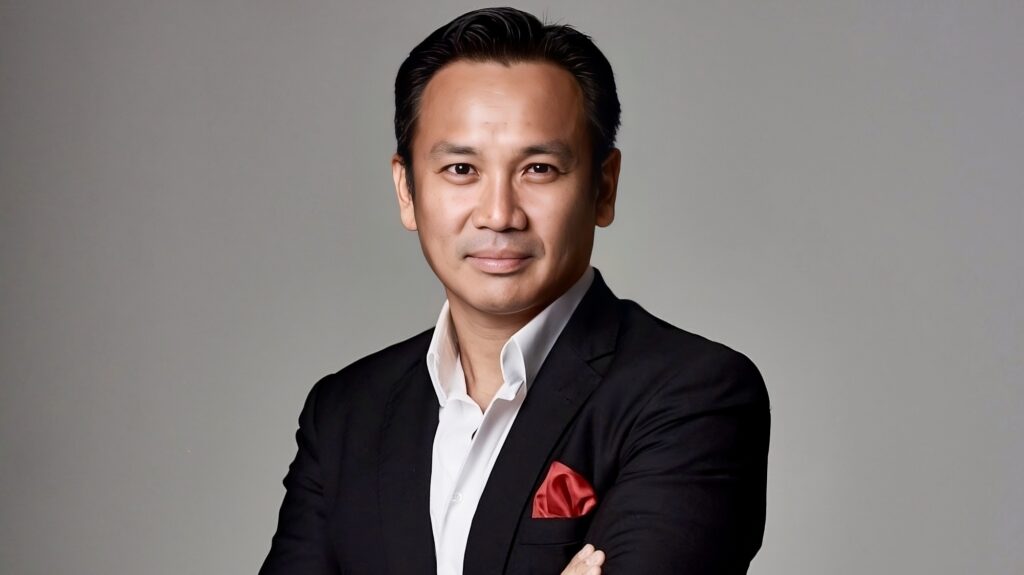
“Bitcoin will continue to play an important role by
Patrick Ngan
anchoring liquidity and interoperability across digital markets.”
4. Do you see digital assets evolving more as a hedge, a growth asset, or a new form of financial infrastructure within institutional portfolios?
Digital assets are increasingly being understood as financial infrastructure rather than a single asset category. Early adoption was often framed around growth or hedging narratives. The more structural shift is about how tokenisation, programmability, and faster settlement change the way capital behaves on a balance sheet.
This is particularly evident in real-world asset tokenisation. Instruments such as money-market funds, short-duration bonds, and receivables can now be represented and managed more efficiently. Estimates from institutions like Boston Consulting Group suggest that tokenised real-world assets could reach around US$16 trillion globally by 2030, largely because they modernise how familiar financial products operate rather than introducing new economic risk.
5. For institutions exploring digital assets for the first time, what portfolio allocation frameworks make sense today: strategic allocation, tactical exposure, or treasury-driven positioning?
For most institutions, a treasury-led approach is the most sensible starting point. That means integrating digital assets into liquidity and capital management discussions, rather than treating them as a standalone investment theme.
Governance, custody, accounting, and reporting frameworks should be established first, with allocation size following naturally. Real-world asset tokenisation fits well into this progression because it allows institutions to adopt digital infrastructure while maintaining exposure to familiar asset classes. In doing so, it bridges traditional treasury practice with digital execution and supports incremental, responsible adoption.
6. From your experience, what are the most common mistakes institutions make when evaluating digital assets? Is it over-focusing on price, underestimating operational risk, or misunderstanding custody and governance?
The most common challenge I see is an overemphasis on price, often at the expense of operational considerations. Custody arrangements, governance structures, accounting treatment, and regulatory alignment are what ultimately determine whether a digital-asset strategy can be sustained over time.
Institutions that approach digital assets in isolation tend to face greater volatility and perception risk. By contrast, those that integrate Bitcoin alongside tokenised real-world assets typically build more balanced treasury structures. The inclusion of predictable, yield-bearing, and familiar asset types reduces reliance on market appreciation alone and supports a more resilient and defensible treasury strategy.
7. Zeta positions itself as a bridge between traditional capital markets and decentralised finance. What does “institutional-grade digital finance” truly mean in practice, and where do most crypto-native firms fall short today?
Institutional-grade digital finance is ultimately defined by governance rather than technology. It requires regulated custody, transparent reporting, clear accountability, and alignment with established capital-market standards. These are non-negotiable requirements for institutions operating under public-market scrutiny.
Tokenisation is effective when it strengthens these foundations rather than bypassing them. Real-world asset tokenisation is a practical example of how digital finance can improve efficiency while preserving institutional discipline. It allows innovation to take place within frameworks that boards, auditors, and regulators already understand, which is where many crypto-native models have historically struggled to bridge the gap.

8. Zeta’s US$231 million private placement funded in Bitcoin or SolvBTC marks a significant treasury decision. What strategic gap does Bitcoin fill that traditional treasury instruments cannot?
Bitcoin adds a globally liquid and highly transparent instrument into the treasury toolkit. It complements traditional assets by providing diversification and operational flexibility that is difficult to replicate with conventional instruments.
More importantly, Bitcoin anchors a broader digital-treasury strategy. It provides liquidity and optionality, while tokenised real-world assets contribute yield stability and duration control. When combined, these elements create a more resilient balance-sheet structure than any single asset could on its own, which is particularly important for listed companies operating under public-market scrutiny.
9. With AI, blockchain, and capital markets converging, where do you see the next major effiency breakthrough in institutional finance?
The most meaningful efficiency gains I see will come from automation and verification rather than the creation of new asset types. AI is increasingly used to enhance monitoring, risk assessment, and decision support, while blockchain improves settlement speed, reconciliation, and transparency across financial operations.
Real-world asset tokenisation sits at the intersection of these trends. It simplifies reporting, reduces settlement friction, and improves visibility across capital flows in near real time. These advantages are particularly relevant in regions such as the UAE, where cross-border capital movement is a core feature of institutional finance and operational efficiency has a direct impact on treasury performance.
10. Having worked across Hong Kong, New York, Singapore, and Tokyo, how do regional attitudes toward digital finance differ, and where do you see the next institutional growth wave coming from?
Regional differences largely reflect regulatory culture and market structure. The US benefits from depth, liquidity, and an ability to scale quickly once frameworks are clear. Many Asian financial centres, by contrast, place greater emphasis on stability, sequencing, and measured adoption, often prioritising resilience over speed.
What is increasingly notable is the convergence between Asia and the Middle East. Both regions place strong emphasis on governance, regulatory clarity, and capital efficiency. This shared mindset has made areas such as real-world asset tokenisation a natural point of alignment, as it allows innovation to be introduced within frameworks institutions already understand. As a result, I see the next wave of institutional growth emerging from corridors that connect Asia and the Middle East, rather than from any single market in isolation.
11. The UAE has moved quickly to establish regulatory frameworks for virtual assets through bodies like VARA and ADGM. How important is this proactive approach in attracting institutional capital and public-market participation?
It is critically important, and more than that, it is strategic.
Frameworks developed through VARA and ADGM have given institutions something they value deeply, clarity without rigidity. Rules around custody, reporting, and governance are clearly defined, while still allowing innovation to develop in a responsible and controlled way. This aligns closely with what institutional capital looks for, a point often reflected in the work of global bodies such as the BIS and the IMF, where predictability and transparency are fundamental to participation.
This clarity becomes even more important in areas such as real-world asset tokenisation. Banks, asset managers, and listed companies need confidence before committing capital at scale, particularly when new infrastructure intersects with public-market accountability. In that sense, the UAE is not simply reacting to global trends. It recognised the opportunity early and acted decisively to shape an environment where institutional capital can engage with confidence.

12. What role do you see the UAE playing in shaping Bitcoin treasury strategies for corporates across the Middle East, Africa, and South Asia?
The UAE is increasingly emerging as a bridge rather than simply a regional hub.
Its regulatory clarity, capital-market sophistication, and openness to innovation make it a natural convergence point for institutions from the Middle East, Africa, Southeast and North Asia. Many corporates across these regions face similar treasury realities, including cross-border operations, currency exposure, liquidity management, and the need to deploy capital efficiently and responsibly. The UAE offers a neutral, well-regulated environment where these strategies can be developed, tested, and refined.
What makes the UAE particularly distinctive is its ability to connect different financial cultures. Southeast Asia brings execution and innovation, North Asia contributes scale and capital depth, while the UAE provides regulatory certainty and international connectivity. In this way, the UAE is shaping not only how Bitcoin is incorporated into corporate treasuries, but also how those strategies are aligned and harmonised across regions.
As digital-asset treasury models mature and expand to include tokenised real-world assets, this bridging role will become even more important. The UAE is well positioned to serve as the platform where regional best practices converge before scaling globally.
13. Looking ahead, do you believe the UAE can emerge as a global hub for regulated digital-asset infrastructure, not just trading, and what key ingredients are still needed to make that vision a reality?
Yes, and I believe this is already happening.
The next phase of digital-asset development is not defined by trading activity alone. It is defined by infrastructure. Custody, accounting expertise, compliance frameworks, legal clarity, and strong professional services are what ultimately determine whether institutional adoption can scale in a sustainable and credible way.
The UAE has made meaningful progress across these areas. As tokenised real-world assets become more prevalent, this depth will matter even more. Institutions need environments where innovation is supported end-to-end, from issuance and custody through to reporting, audit, and regulatory oversight.
If the UAE continues to build ecosystem depth alongside regulation, it is well positioned to be one of the few global centres where regulated digital-asset infrastructure operates at true institutional scale.
14. Where do you see institutional digital finance heading over the next five years, and what role will Bitcoin-centric platforms play in shaping that future?
Over the next five years, institutional digital finance will move from experimentation to normalisation. The discussion will shift away from whether digital assets belong on balance sheets and toward how they are structured, governed, and optimised as part of broader capital strategies.
Bitcoin will continue to play an important role by anchoring liquidity and interoperability across digital markets. At the same time, real-world asset tokenisation will meaningfully expand the opportunity set, allowing treasuries to diversify, reduce volatility, and manage duration in more familiar and predictable ways.
From a regional perspective, the UAE and Southeast Asia are likely to play a crucial role, if not lead the next wave of adoption. Both regions combine strong capital markets, forward-thinking regulators, and a pragmatic approach to innovation. They are less constrained by legacy systems and more focused on execution.
As a result, many of the most practical, institution-ready models for digital-asset treasury management and real-world asset tokenisation are likely to emerge from these regions before being adopted more broadly elsewhere.
15. If you were advising today’s CIOs or CFOs on preparing for a digital-asset-integrated balance sheet, what is the single most important principle they should adopt now?
Start with governance. Once custody, compliance, accounting, and reporting frameworks are clearly established, digital assets can be integrated in a responsible and sustainable way.
Combining Bitcoin with tokenised real-world assets allows treasuries to reduce volatility, improve predictability, and scale digital-asset strategies in a manner that aligns naturally with institutional finance and public-market expectations.
