
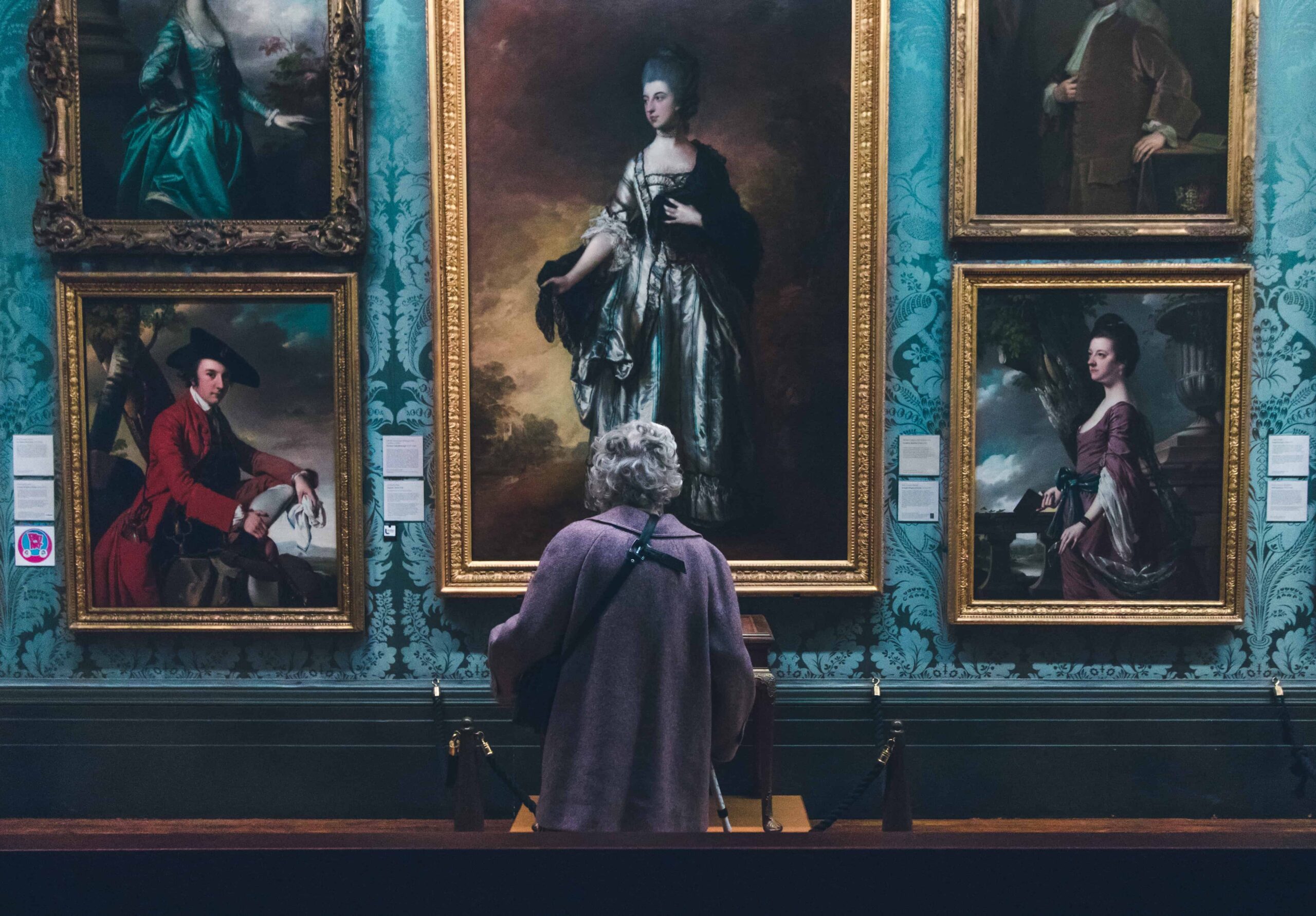
In the past, there was a notion that only certain individuals with specific skills, abilities, and interests were able to invest in art effectively. This stereotype created barriers for people from certain social classes, educational backgrounds, and economic status from entering the art world. However, over time, this belief has diminished, and the idea of investing in art is gaining broader acceptance.
Over time, many hurdles and preconceptions about investing in artworks have been dispelled, and industry insiders have been more open to divulging their trade secrets to outsiders. Investing in art is now a chance that everyone can take advantage of, and the amount you gain has very little to do with where you begin. It may be a fantastic investment opportunity with a lot of study, preparation, and knowledge of the art industry.
Recent big-ticket auction transactions have generated substantial interest around the fine art market. The artwork Shot Sage Blue Marilyn (1964) by Andy Warhol sold for a record-breaking $195M at an auction in May 2022. According to Art Basel and UBS Global Art’s 2022 annual study, global art sales were expected to exceed $65.1B in 2021. This marked a 29% rise in sales from 2020, exceeding pre-pandemic levels in 2019. They also discovered that sales volume rebounded from Covid-19 levels, climbing by 17% in 2021 to a predicted 36.7 million transactions.
“Purchasing art serves as a means of storing wealth that is completely separate from the fluctuations of typical assets.”
Low Correlation to Traditional Markets
Risk is always a factor to consider while investing. Market risk is the systemic risk inherent in the stock market that cannot be mitigated by diversification. During a market slump, no matter how many different index funds someone invests in, they will lose money. Artwork, on the other hand, is unrelated to any stock index or market. Buying art operates as a store of wealth wholly distinct from regular asset movements.
According to a 2022 Citibank Report, the connection between art and all other asset classes is mildly positive or near to zero. Contemporary Art and Developed Equities exhibited a connection of -0.04 between 1985 and 2021, while Contemporary Art and Investment Grade Fixed Income showed a correlation of 0.15. In fact, art had the highest association with real estate – another tangible asset sector – with a correlation of 0.21.
No Price Depreciation
While art may and has historically provided price appreciation, another key benefit of art as an asset is the lack of price decline. Art, unlike other tangible assets, as houses and automobiles, does not degrade after years of hanging on a wall. A 500-year-old picture is likely to be more valuable today than it was when it was commissioned.
From January 2020 through June 2021, the Masterworks.io All Art Index achieved a 28.2% return – equivalent to broad, publicly-traded risk asset classes including developed market stocks, developing market equities, and commodities, as noted by a 2022 Citibank Report.
Hedge Against Inflation
According to Masterworks internal research, during times of inflation equal to or more than 3.0% from 1985 to 2020, Post-War & Contemporary art prices had an annual average actual price gain of 23.2%. According to Art Net, during periods of high inflation, art sales tend to grow, signalling a greater volume market and probable higher price appreciation.
Aesthetic Value
In comparison to other investment vehicles, art is a tangible asset that you may enjoy while keeping it in your portfolio. Because this is where the majority of the value of art is obtained, individuals who acquire it should value it.
What Are the Risks of Investing in Art?
When determining whether to invest in artwork, there are a few factors to consider, just like any other investment:
• Illiquid & Long-Term Asset
Investing in artwork is akin to investing in real estate or vintage vehicles in that they are very illiquid assets that cannot be quickly sold for cash. It is generally difficult to find a buyer for any collection, especially highly priced paintings. Finding a buyer on short notice might be very tough. There are specific routes that must be followed in order to sell a work of art. Art investing should be part of a wider long-term investment plan and should not be anticipated to provide regular income or to be liquidated quickly.
•Costs and Fees
Investment worthy objects of art rarely come with a tiny price tag. There are, of course, art investment funds and fractional shares of artwork that allow an investor to add art to their portfolio without spending a million dollars. If an investor wants to buy the art right away, they will need to spend some money on a desirable piece. Handling, storage, and insurance are all costs that may add up quickly. Art investors frequently aim on keeping onto artwork for a long time, in order to let it increase in value. Meanwhile, the investor would be required to pay for upkeep and repair.
•Counterfeits and the Threat of Destruction
The collections market is crowded with counterfeit objects, and it would be simple to fall victim unless an investor is highly informed in assessment. Before making any investment, it is critical to conduct research on what you are purchasing. There are strategies to assist avoid becoming misled including: examine the certificate of authenticity; research the edition number; and examine the materials. Working with an expert or a third party, such as purchasing from an auction house or working with an appraiser, is another strategy to avoid falling for a counterfeit. Investing in art funds or fractional shares relieves the investor of the burden of authenticity.
How to make your first investment in art?
Art may be purchased simply from galleries and auction houses (both physical and online). You might also go to local art shows. Online publications and social media platforms like Instagram can assist you in discovering artists you like, and you can purchase works straight from the artists’ websites. You might also explore the realm of NFTs, which symbolise ownership of digital art. However, art investments may be made in a variety of methods, each with a different level of risk and profit.
•High cost and high risk:
Original artwork may be purchased at art fairs, galleries, and auctions, but doing so carries the highest price and risk. Try to purchase pieces from a budding artist in the hopes of discovering the next Banksy. A unique painting or sculpture may one day be worth considerably more than you bought for it, or you may find it difficult to sell it.
•Low risk and low cost:
Instead of purchasing an original, consider purchasing a reproduction of an original painting or sketch. Many artists and galleries will create limited-edition prints of their works and allow customers to purchase them at a specified retail price on their website. A high-quality, limited-edition print may be quite valuable and costs a fraction of the price of the original. However, because prints aren’t generally one-of-a-kind, they don’t appreciate as much as originals.
•Low risk and high cost:
You may acquire works by “blue-chip” painters like Andy Warhol, which keep their value better but provide less financial appreciation or upside. Blue-chip painters are those whose works have the highest steady worth and are not subject to fads and speculation. Many first-time investors cannot afford to purchase a high-end painting or sculpture, but numerous funds allow investors to purchase shares in a holding company that will purchase a high-end work of art.
Additionally, if you are going to purchase particular works of art, you will most likely want to purchase works that make you joyful. If you invest $10,000 on an unattractive artwork because you expect its value to grow, you’re losing out on the fun element of investing in art vs other asset classes.
In conclusion, investing in fine art may be a suitable fit for you if, you have a strong interest in art and are eager to learn more about it, or if you already have a portfolio of other investments and want to diversify your holdings. also, if you have an extremely high-risk tolerance, are willing to own a piece of art indefinitely, and can afford to maintain and insure the items you purchase, investment of art is the right investment for you.
On the other hand, you should avoid investing in art if you anticipate returns that outperform the stock market, or if you have no intention of displaying the works you purchase. If you want to be able to rapidly and conveniently liquidate your assets, you should not invest in this area as well.
