
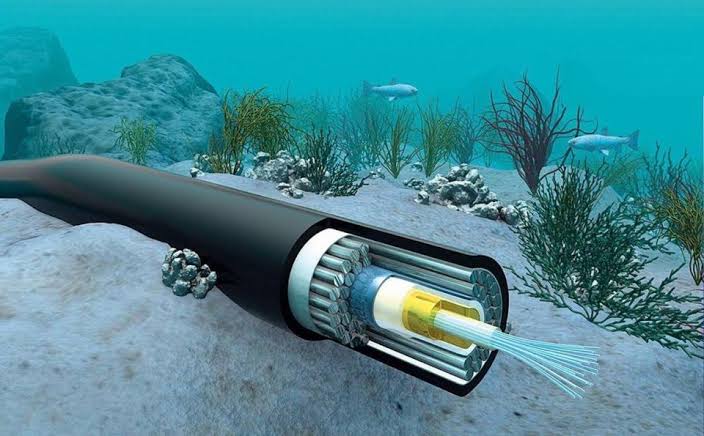
Internet access in the UAE may remain unstable for up to six weeks following the severing of undersea cables in the Red Sea, experts have said.
Over the weekend, internet services in regions including the Middle East, India, and Pakistan significantly slowed after the Red Sea cables were cut. By Monday, user complaints were already indicating poor connectivity on Du and Etisalat.
Dr Sarath Raj, project director at Amity University’s satellite ground station in Dubai, explained that cable repair could take as long as six weeks, during which users can expect reduced internet speeds.
“Fixing these cables isn’t a swift task,” he said. “Specialised vessels need to identify the fault, retrieve the damaged cable from the seabed, splice it together, and then conduct tests before service can be resumed. This procedure usually takes two to six weeks, depending on factors like location, weather, and ship availability.”
He referenced the 2008 Alexandria cable break, which prevented full service restoration for almost a month and impacted millions across North Africa, the Middle East, and South Asia.
“During that time, internet traffic is redirected through alternative cables, allowing services to continue but typically with slower speeds and increased latency,” he noted. He added that satellite options like Elon Musk’s Starlink—which could help in such scenarios—are not yet operational in the UAE.
However, he maintains that submarine cables will continue to serve as the primary “backbone of the global internet,” owing to their substantial data-carrying capacity.
“At the same time, satellite internet—especially from newer low-earth orbit networks—can add redundancy and strengthen resilience,” he said. “A hybrid network combining both undersea cables and satellites is the most dependable strategy for preventing major disruptions.”
The cause of the disruption remains unclear. While there have been concerns that Yemen’s Houthi rebels might have targeted the Red Sea cables, they have previously denied such claims. Most cable cuts—nearly 70 per cent of past cases—have been accidental, often resulting from ship anchors.
