
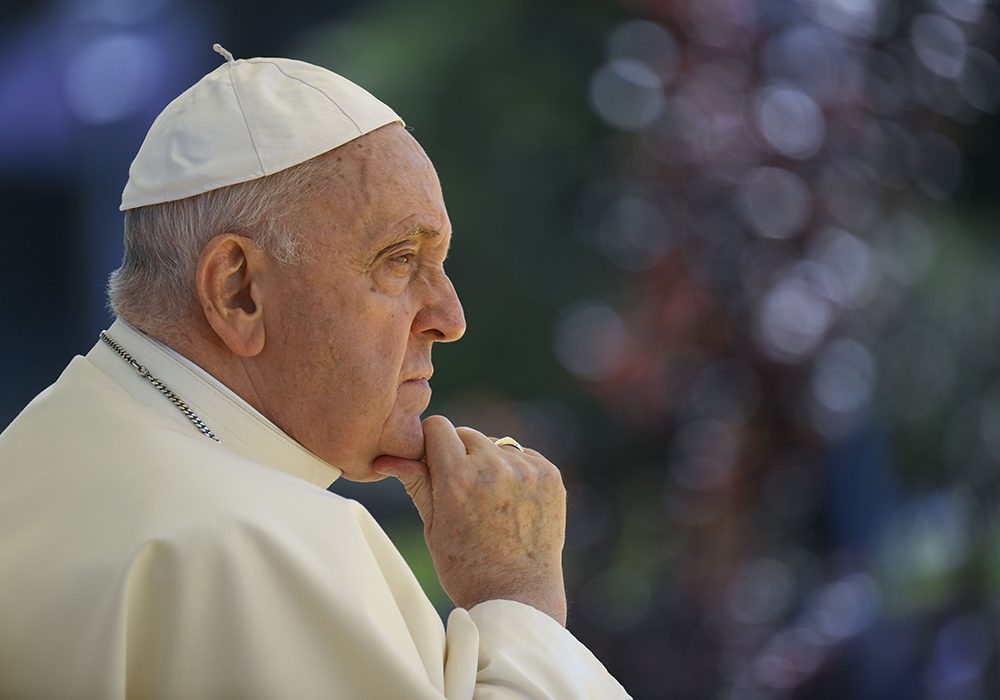
Following the Vatican’s announcement on Monday regarding the death of Pope Francis, the Roman Catholic Church initiates a series of traditional rites. These ceremonies signify the conclusion of one papal era and the beginning of another.
Cardinal Kevin Farrell, serving as the camerlengo (chamberlain), is responsible for officially confirming the pope’s death. He then secures the late pope’s private quarters and arranges the funeral proceedings.
Together with three aides, the camerlengo determines when the pope’s coffin will be placed in St. Peter’s Basilica for public viewing. They also ensure the destruction of the “Fisherman’s Ring” and the lead seal to prevent misuse. An autopsy is not carried out.
The mourning period lasts for nine days, and the College of Cardinals decides the dates for the funeral and burial. Typically held four to six days after the death, the funeral takes place in St. Peter’s Square. Pope Francis had requested to be buried not in St. Peter’s Basilica’s crypt like many of his predecessors, but in Rome’s St. Mary Major Basilica, in a plain wooden coffin.
During the interregnum, the College of Cardinals manages the Church’s essential affairs, although their authority is restricted and most Vatican operations are temporarily paused.
The process to elect a new pope, known as the conclave, is held in the Sistine Chapel between 15 and 20 days after the pope’s death. Cardinals, who remain within Vatican grounds during the proceedings, decide on the specific start date.
All cardinals under the age of 80 are eligible to vote in the confidential ballot. A two-thirds majority plus one is required for a successful election, which may involve several voting sessions across multiple days. Upon election, the chosen cardinal is asked whether he accepts the role and which papal name he would like to adopt.
The global community is informed of the election result when the ballots are burned with special chemicals that produce white smoke from the chapel’s chimney. Black smoke signals that a decision has not yet been reached.
Finally, the Dean of the College of Cardinals appears on the central balcony of St. Peter’s Basilica to declare “Habemus Papam” (We have a pope). The newly elected pope then presents himself and delivers his first blessing to the gathered public.
