
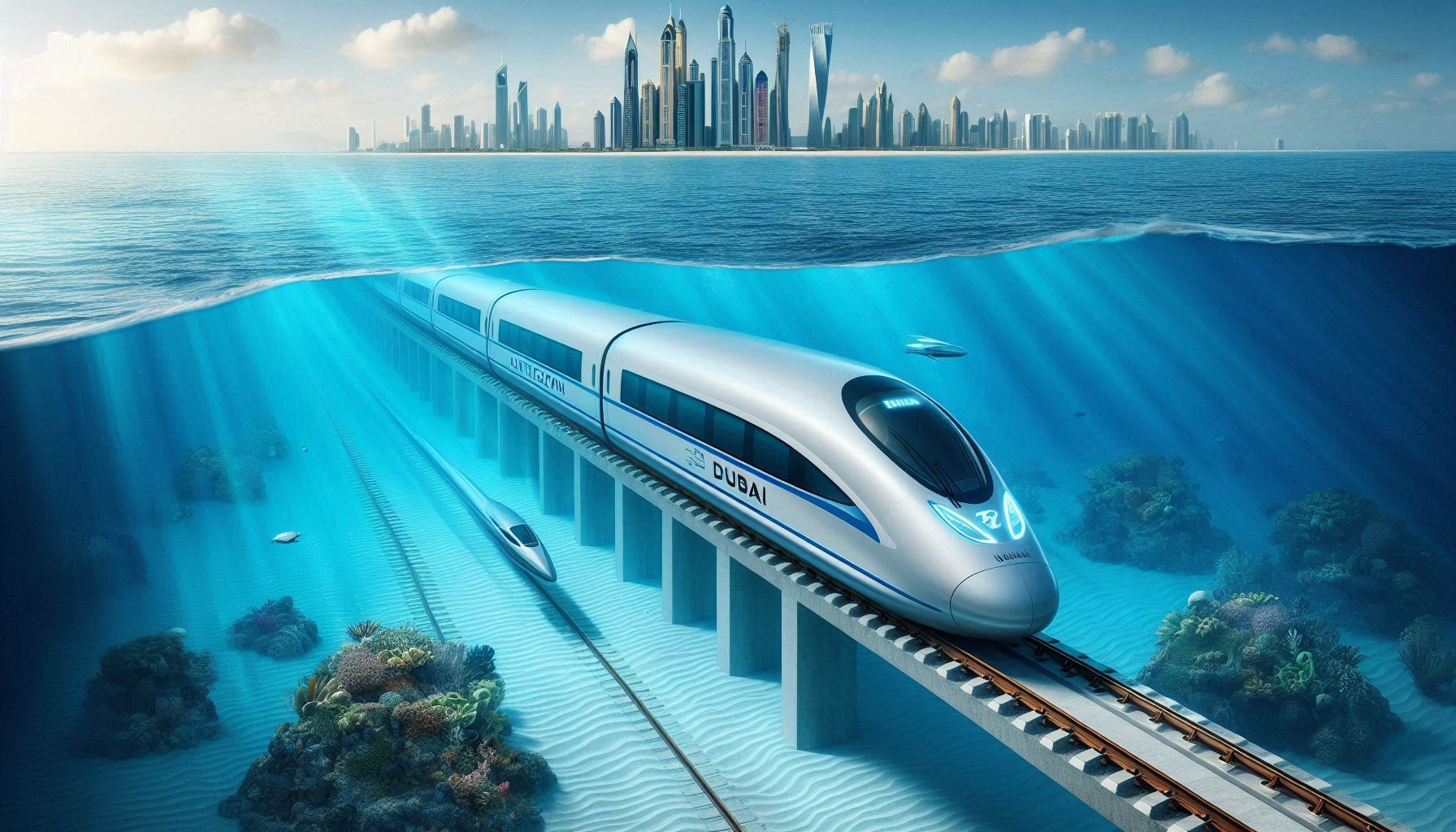
The UAE is planning an ambitious underwater high-speed bullet train that will connect Dubai and Mumbai. This groundbreaking project aims to enhance trade, tourism, and connectivity between the two cities, setting a new benchmark for transportation innovation.
The underwater rail link is expected to span approximately 2,000 kilometers, significantly reducing travel time between Dubai and Mumbai. The concept, which has been under discussion for several years, is now gaining momentum with feasibility studies and initial planning phases underway. Experts believe this project will revolutionize transportation between the UAE and India, fostering economic and cultural ties.
Bullet Train: Enhancing Trade and Connectivity
This train will not only serve passengers but also facilitate the transport of goods, including oil and water, between the two nations. The UAE and India share strong trade relations, and this project is expected to further strengthen economic partnerships. By offering a faster and more efficient alternative to air and sea routes, the rail link could play a vital role in boosting trade.
Challenges and Technological Innovations
Constructing an underwater high-speed rail system presents several engineering and environmental challenges. Developers will need to implement cutting-edge technology to ensure safety, durability, and sustainability. Key considerations include the pressure of deep-sea travel, energy-efficient designs, and eco-friendly construction materials.
The Dubai-Mumbai bullet train project reflects the UAE’s commitment to pioneering advanced infrastructure solutions. If realized, this ambitious venture could set the stage for similar projects worldwide, redefining how countries connect across vast distances. While the project remains in the early stages, its potential impact on global transportation is undeniable.
Also Read: UAE-India Council Launches Trade Research Initiatives
