
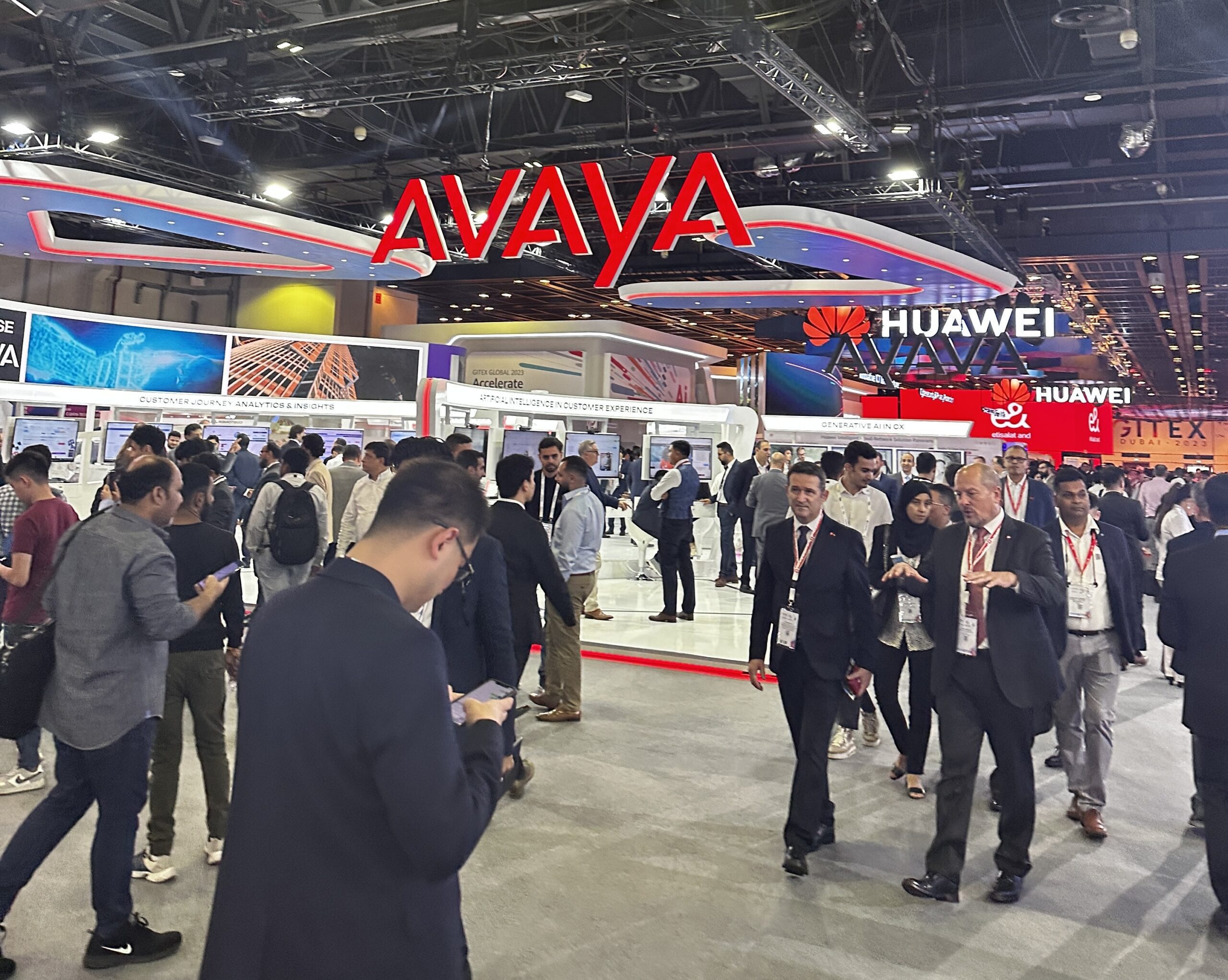
Emirates Integrated Telecommunications Company (du), is collaborating with leading technology firms to integrate generative artificial intelligence into mainstream consumer services, according to its CEO.
Although Du doesn’t plan to create its own ChatGPT-style platform, it is actively engaging with prominent AI players, including Microsoft, which supports OpenAI, the creator of ChatGPT, and Amazon.
Al Hassawi Aims to Tap Generative AI’s Potential at Gitex
This move is aimed at harnessing the significant potential of this emerging and powerful technology, said Fahad Al Hassawi in an interview at the Gitex Global Technology conference in Dubai.
While specific partnership details were not disclosed, Al Hassawi emphasized the company’s commitment to forming strong alliances with technology leaders like Microsoft and Amazon in the AI realm to deliver the best capabilities to their customers.
Mr Al Hassawi highlighted that a crucial aspect of the broader adoption of generative AI lies in localisation, both in terms of language and tailored applications, according to Arabian Business.
However, for this endeavour to achieve success, it’s imperative to identify suitable partners who can help extend its influence, he further noted.
“How can we take something that is extremely powerful and localise it for the market completely by ourselves? … It’s not the right way to do it,” Mr Al Hassawi said.
“You should find the right partners, use the effort to localise a service or capability to the market and to the customers that this will serve.”
Fostering Generative AI Advancements in the Arabic-Speaking World
Generative AI, the revolutionary technology popularized by ChatGPT, has ignited a competitive race among tech companies and personalities, with the Middle East and the Arabic-speaking world offering a substantial opportunity.
Arabic, spoken by over 400 million people and the official language in 22 countries, has a remarkable reach. However, its online presence remains limited, accounting for just about 1% of digital content.
The UAE has made significant strides in this field, introducing prominent large language models that underpin generative AI to establish itself as a leader in the industry.
The Technology Innovation Institute, backed by the Abu Dhabi government, has launched the Falcon flagship LLM and its advanced version, enhancing generative AI capabilities in the region.
Notably, Abu Dhabi AI firm G42’s Inception, the Mohammed bin Zayed University of Artificial Intelligence, and Silicon Valley’s Cerebras Systems jointly unveiled Jais, an open-source bilingual Arabic-English model.
The Technology Innovation Institute also introduced Noor, which was once the world’s largest Arabic natural language processing model. The UAE’s enthusiasm for generative AI and its adoption of this emerging technology have drawn global attention, as highlighted by PwC Middle East.
Generative AI in the UAE: A Disruptive Innovation with Far-Reaching Potential
Generative AI is at the forefront of an innovation trend, yet it has also been deemed the most overhyped emerging technology in 2023, as noted by Gartner.
But Mr Al Hassawi said generative AI is “very exciting” – and not overhyped.
“It is going to open a completely new dimension now to the use of AI. It’s a matter now of finding all the right use cases to be able to utilise its capabilities,” he said.
“It is disruptive in a good way because traditional models require some disruption and using generative AI will be able to really disrupt and improve the way you provide services and your performance.”
AI also has capabilities to streamline operations in the telecom sector, from anticipating customer requirements to supporting bottom lines, Mr Al Hassawi said.
“There is a proactive approach that makes sure that our telecom network has less faults and less requirements for maintenance. We can also use AI to better serve customers, understand their needs and give them the right offers based on the information we have on them,” he said.
“Generative AI will even make it better … it will enable organisations across all industries to take their performance to the next level and become cost-effective and running their operations.”
