
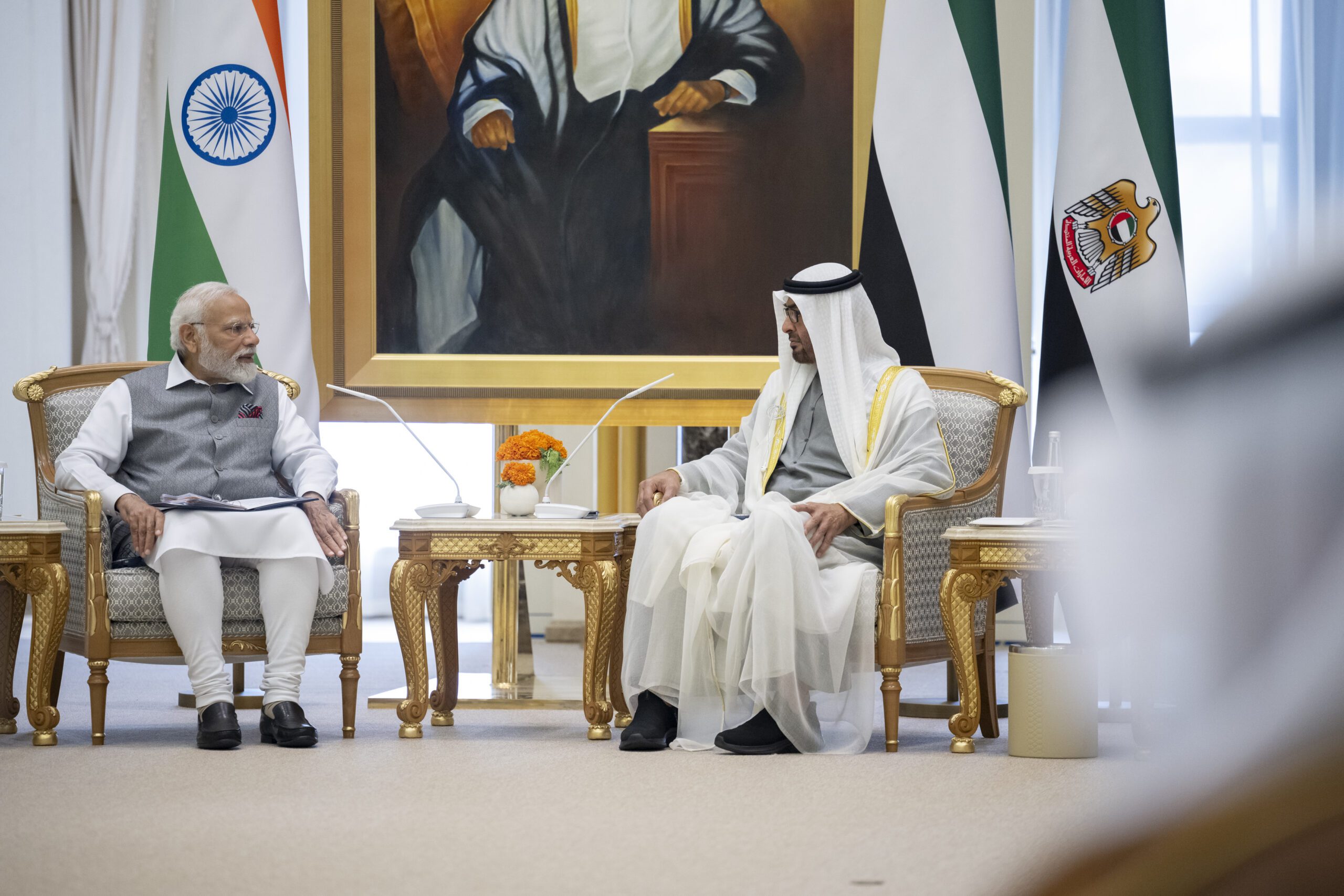
The UAE and India have recently entered into agreements to create a framework that encourages the use of their respective local currencies in cross-border transactions. Additionally, they have committed to collaborating on integrating their payment and messaging systems.
The signing event occurred in Abu Dhabi on Saturday, graced by the presence of His Highness President Sheikh Mohamed and Indian Prime Minister Narendra Modi. Khaled Balama, Governor of the Central Bank of the UAE, and Shaktikanta Das, Governor of the Reserve Bank of India, were the official signatories of the accords.
According to the Reserve Bank of India’s statement on its website, the primary objective of the agreement is to establish a local currency settlement system (LCSS) that will serve as a platform for mutually promoting the usage of the Indian rupee and the dirham. The framework that encourages the use of the respective local currencies in cross-border transactions is designed to integrate payment systems for both countries.
“The agreement covers all current account transactions and permitted capital account transactions,” it said.
“Creation of the LCSS would enable exporters and importers to invoice and pay in their respective domestic currencies, which in turn would enable the development of an INR-AED foreign exchange market.”
By using their local currencies in transactions, both countries can streamline transaction costs and settlement times, benefiting remittances from Indian residents in the UAE.
Furthermore, India and the UAE have agreed to cooperate in connecting their fast payment systems, specifically India’s Unified Payments Interface and the UAE’s Instant Payment Platform, in order to facilitate cross-border money transfers and reduce payment expenses.
The agreement also aims to explore the integration of their respective Card Switches, namely RuPay switch and UAESWITCH, to enable mutual acceptance of domestic cards and facilitate card transactions.
The Central Bank of the UAE introduced UAESWITCH in 1996, which connects the ATM networks of all banks in the UAE and provides regional and international connectivity with similar national systems.
Both nations are also looking to link their payments messaging systems to facilitate bilateral financial messaging, as announced by the RBI.
Additionally, Abdullah Al Marri, Minister of Economy, stated that the UAE and India have adopted various initiatives and joint action plans to expand the new economy sectors in their markets. They aim to boost the growth of Emirati and Indian start-ups and enhance their contribution to the countries’ gross domestic product.
The bilateral non-oil foreign trade between India and the UAE reached Dh188.8 billion ($51.4 billion) in 2022, marking a 15 percent growth compared to 2021.
Since the Comprehensive Economic Partnership Agreement (Cepa) came into effect a year ago, the two nations have strengthened their strategic relations.
Dr Thani Al Zeyoudi, Minister of State for Foreign Trade, noted that bilateral non-oil trade reached $50.5B in the first 12 months of signing the Cepa, indicating progress towards the Cepa’s goal of achieving $100B in non-oil trade annually by 2030.
The Cepa offers advantages such as improved market access, reduced or eliminated tariff regulations, simplified customs procedures, transparent rules, and rule-based competition.
