
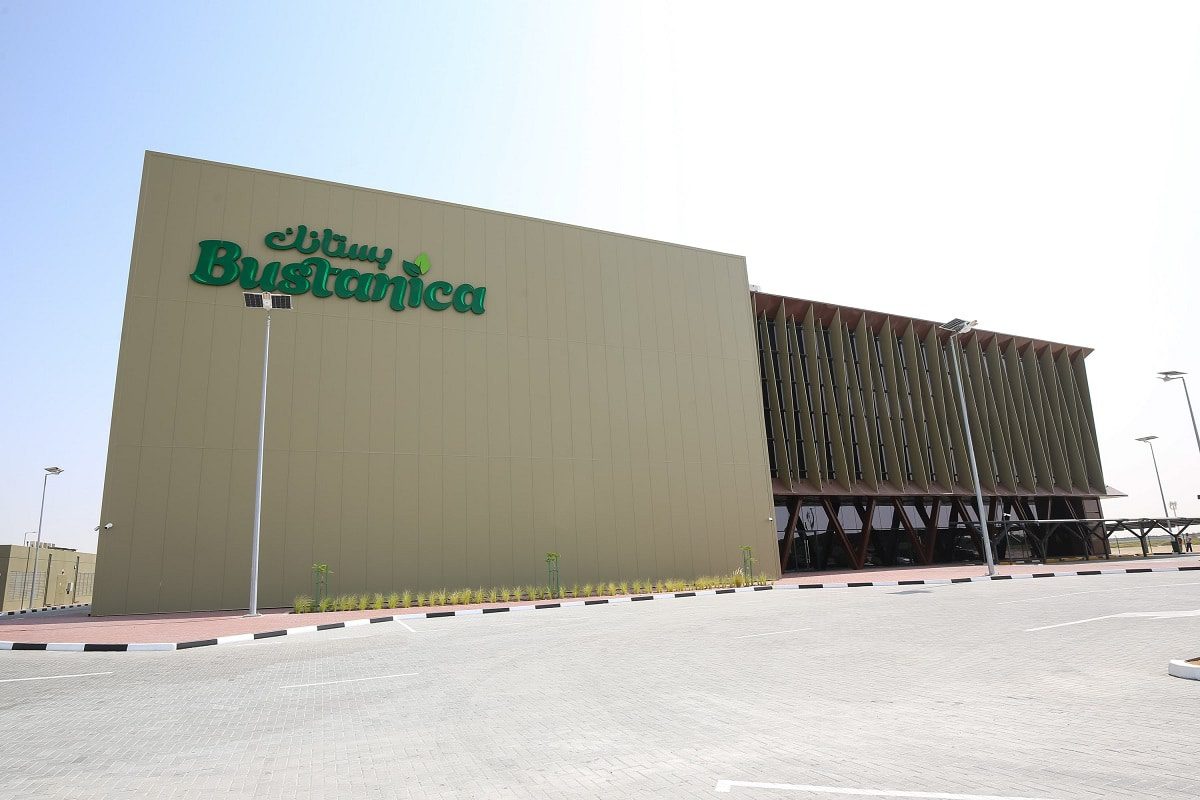
Design-build construction specialist Group Amana has completed the region’s first vertical farm. It is the biggest in the world, covering 330,000 square feet and costing $40 million (AED146.8 million) to construct.
The Bustanica hydroponic farm, located in Dubai World Central, will produce more than a million kilos of high-quality leafy greens with 95 percent less water than conventional farming and will boost the UAE’s food security.
The high-tech hydroponic facility in Dubai South was constructed by Amana Contracting in collaboration with Crop One Holdings and Emirates Flight Catering (EKFC). The produce will be available on certain Emirates flights and for consumers to purchase across stores in the UAE under the Bustanica brand.
Joe Labaky, General Manager of UAE and Emerging Markets, Amana Contracting, said: “Amana continues to push the boundaries of innovation using the latest building techniques. Being a part of a revolutionary project in the UAE’s agriculture industry to ensure long-term food security and strengthen national resilience is a great privilege for the Amana team.”
Amana brought in the best and latest innovations in construction to build the world’s largest vertical farm. They executed and installed specialised systems to ensure maximum sustainability and environmental conservation. The project was completed on time, by leveraging advanced techniques to maximise output on site.
The project was delivered while adhering to the highest quality and safety norms, using off-site construction techniques. Amana executed and installed specialised systems throughout the project, such as LED lights in the grow room and germination room, grow fans, grow room controls, pack house equipment, grow kit, racking, nutrient dosing systems, and germination room equipment.
Amana leveraged BIM (building information modelling) technology to develop all the workshop drawings and executed MEP (mechanical, electrical and plumbing) using offsite construction. Given that modular techniques are more efficient, leaner and result in less waste production, Amana ensured that the project was executed in the most sustainable way possible. It also achieved a milestone of 1+ million work hours without any lost time injury at the project.
Offsite construction is becoming increasingly popular because it is a time-saving, no wastage, safe and clean process that benefits all stakeholders – clients, contractors, the workforce, and the environment. The turnaround time on the projects is shorter and cost overruns are significantly reduced. It also improves workplace safety and reduces environmental impact when compared to traditional on-site construction.
In its three decades of business, Group Amana has built more than 1,500 buildings in the area. In 11 cities across seven countries, it employs more than 8,000 people.
