
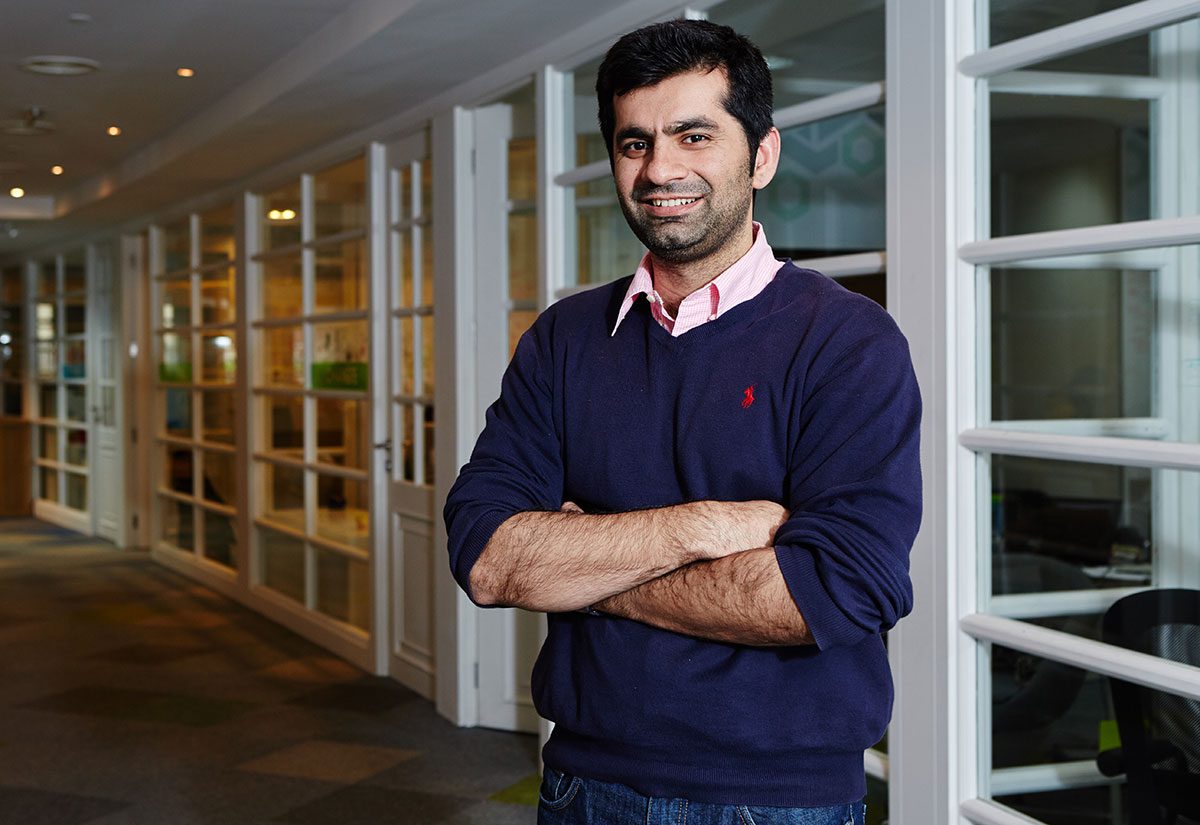
Mudassir Sheikha is the CEO and co-founder of Careem. He grew up in Karachi, Pakistan, before graduating from the University of Southern California with a degree in economics and computer science and then completing a master’s degree in computer science at Stanford.
A Karachi-born Mudassir Sheikha was taken aback when he discovered that Pakistan has only a one-billion-dollar company, outside the oil and gas industry, which is an FMCG company. For the next 10 years, he set a goal of building an institution in the region that delivers great products and creates a positive impact on the regional population.
Career Background
Mudassir’s career in tech started with Silicon Valley start-up “Brience.” Mudassir then moved back to Pakistan and co-founded “Device Anywhere,” a company that was acquired by “Keynote” in 2008 before joining the management consulting firm McKinsey & Company in Dubai.
In 2012, he left to form a new company with an ex-McKinsey colleague, Magnus Olsson. The idea was not just to build a big business, but to start one that would have a significant impact, be meaningful, and with a mission to simplify and improve lives and create an impressive organization that inspires. From that came Careem.
Today, Careem is the leading technology platform across the greater Middle East and was recently acquired by Uber in the largest industry transaction seen in the region. Careem operates in more than 100 cities across 14 countries with more than 1,300 colleagues and well over one million captains on its platform.
Careem and its endeavours
Careem is the internet platform for the greater Middle East region. A pioneer of the region’s ride-hailing economy, Careem is expanding services across its platform to include mass transportation, delivery, and payments to become the region’s everyday SuperApp. Careem’s mission is to simplify and improve the lives of people and build a lasting organization that inspires. Careem was established in July 2012 and was acquired by Uber in 2020.
Dubai-based Careem has expanded beyond its original avatar of a ride-hailing app to become a ‘Super App’ that includes a wide range of services such as food delivery, grocery shopping, cleaning, shipping, and bike rentals and this is just the beginning.
Careem’s creative transformation toward being a ‘Super App’ differentiates it from its parent company Uber Technologies which still focuses on mobility.
Uber bought Careem in 2019 for $3.1 billion, and even though Uber has full ownership, both companies operate independently.
The acquisition had given hope to many start-ups in the region who dreamt of becoming the next unicorn, utilizing the facilities offered by the kingdom toward nurturing the entrepreneurship sector.
Careem today operates in almost a hundred cities in the MENA region. It now plans to expand the ‘Super App’ in other countries such as Saudi Arabia, Egypt, Pakistan, Jordan, and the rest of the GCC in the next two years.
Recently, as part of its continuous effort to become a super app, Careem has acquired the subscription-based food delivery service Munch: On.
Munch: On will cease operations because of the acquisition, and its services will be moved to the Careem application, which recently expanded to provide payments, ride-hailing, PCR testing, food, and other services in one integrated platform.
Munch: On is a subscription-based food delivery service that connects clients to meals at a discount by utilizing unused kitchen capacity as well as packaging, scheduling, and routing technologies. It was founded in 2016. It now mainly caters to the corporate lunch market.
Currently serving millions of consumers around the Middle East, the Careem app’s food offering is expanding quickly. According to Mudassir Sheikha (above), CEO and Co-Founder of Careem, by purchasing Munch: On, Careem Food will be able to construct an even more competitive offering with a far deeper variety of benefits for both restaurant partners and customers.
Eight cities in Saudi Arabia, Jordan, the UAE, and Qatar can download the Careem app.
Careem also announced the acquisition of the assets of Denarii, a Dubai-based money transfer platform that integrates fintechs and financial institutions with remittance aggregators, banks, exchanges, and wallets globally. Some key members of the Denarii team will also be joining Careem.
Careem Pay will use Denarii’s money transfer technology to connect customers and Captains with remittance services provided by licensed providers. Careem already has a large presence in countries connecting some of the most active remittance corridors in the world, such as the UAE, KSA, and Pakistan.
Careem Pay offers a digital wallet that stores real money for customers in the UAE as well as a peer-to-peer (P2P) transfer product that enables customers to send, request, and receive money using just a phone number, personal QR code, or personal payment link. Seamless access to international remittance services will round out Careem Pay’s payment offering for customers and Captains to address their everyday financial needs.
Mudassir Sheikha commented on the same “We’re thrilled to acquire the assets of Denarii, a startup that is transforming the way people move money across the world. Denarii’s innovative API will accelerate our journey to offering simple and affordable international remittance services, adding to the wide variety of services already available through Careem Pay.”
Mudassir believes there is a $2.8 trillion sized market in the Middle East for the company to tap into.
During one of his interviews, the CEO said consumer payments, financial services, and international transfers are three areas Careem can develop.
He said that Saudi Arabia and the UAE are the two largest markets in this regard.
Careem will launch smartphone services in the UAE first then in Saudi Arabia, the largest and most strategic market for the company, Sheikha said, adding: “What we apply in the UAE, we must adjust it to match the requirements of the Saudi market.
“We have partners, merchants, and customers in Saudi Arabia, and we can implement solutions that facilitate matters for all these groups.”
Talking about the company’s presence in Egypt, Morocco, and Pakistan, Sheikha said that despite the population is extremely high in those countries, the percentage of people who have bank accounts is exceptionally low.
The challenge in these countries is how to simplify things, including simplifying transfers, for example, and how to make it easier for small businesses to receive payments for their services, he said.
Careem’s CEO stressed that the company is not competing with banks, on the contrary, it looks for partnerships with banks and fintechs in developing and facilitating digital payments and increasing their spread at the expense of using cash.
Cross-border transfers are part of the company’s future, allowing its customers to use the funds placed within the Careem wallet on the application and transfer them appropriately and at the lowest possible cost to their families, he explained.
Recovery from the pandemic
Careem’s business exceeded pre-pandemic levels in some countries, most notably the UAE, driven by a list of services provided by the company.
The picture differs from one country to another, and the company is rushing to recover in all markets.
“In the UAE, we have a complete basket of products within the umbrella of the comprehensive Careem application or the SUPER APP, which includes 12 services, including car rental, food delivery, grocery products, and taxis,” he explained.
The pandemic came as a deep hit to the company but could quickly diversify its business and its merging as a ‘Super App’ could do many more things than just ride-hailing.
