
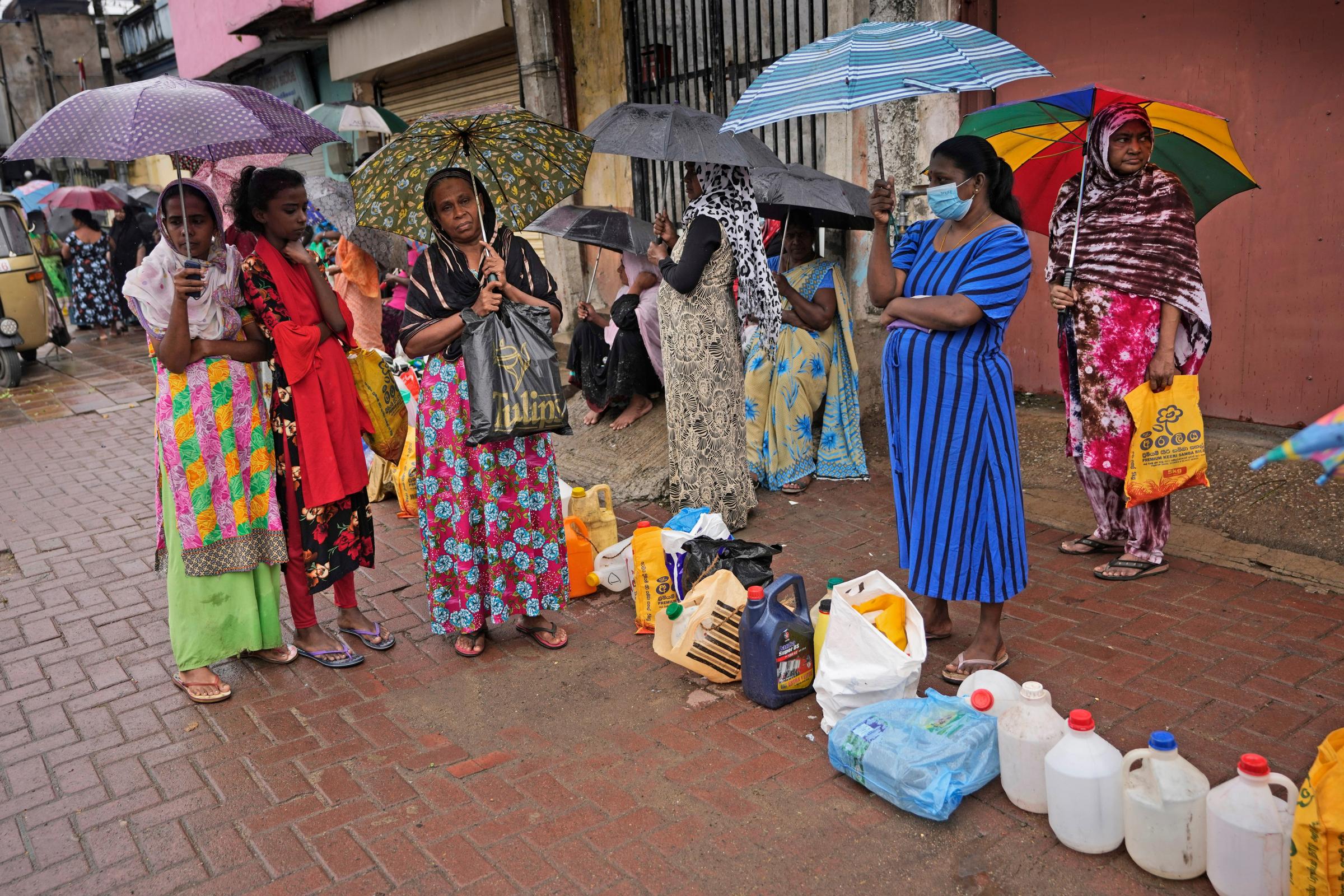
Sri Lanka’s prime minister says its debt-laden economy has “collapsed” after months of shortages of food, fuel, and electricity, and the South Asian island nation cannot even purchase imported oil.
It follows months of shortages of food, fuel, and electricity, and the realization that even the credit lines from neighboring India that have sustained the country so far will not be enough.
The crisis has started to hurt Sri Lanka’s middle class, which is estimated to be 15% to 20% of the country’s urban population. The middle class began to swell in the 1970s after the economy opened up to more trade and investment. It has grown steadily since. Until recently, middle-class families generally enjoyed economic security.
“We are now facing a far more serious situation beyond the mere shortages of fuel, gas, electricity, and food. Our economy has completely collapsed. That is the most serious issue before us today,” Prime Minister Ranil Wickremesinghe told Parliament. Mr. Wickremesinghe said that the state-owned Ceylon Petroleum Corporation is $700m (£572m) in debt, adding: “As a result, no country or organization in the world is willing to provide fuel to us. Wickremesinghe said the government had failed to act in time to turn the situation around, as Sri Lanka’s foreign reserves dwindled.
Sri Lanka has been struggling under the weight of its debt, combined with the impacts of the coronavirus pandemic, including a loss of tourism revenue and the rising cost of commodities. It must pay $5 billion on average annually until 2026.
The foreign currency crisis has resulted in massive shortages that have forced people to stand in long lines to buy essentials, including fuel, cooking gas, and medicine. The crisis on the island of 22 million is considered its worst in recent memory, but Wickremesinghe did not cite any specific new developments.
Wickremesinghe’s remarks also sent a message to potential lenders. “You can’t let a country of such strategic importance collapse,“ said Mukherjee, who noted that Sri Lanka sits in one of the world’s busiest shipping lanes.
Mr. Wickremesinghe said that efforts to turn the situation around had failed, adding: “If steps had at least been taken to slow down the collapse of the economy at the beginning, we would not be facing this difficult situation today. “But we lost out on this opportunity.
Wickremesinghe said IMF assistance seems to be the country’s only option now. Officials from the agency are visiting Sri Lanka to discuss the idea. A staff-level agreement is likely to be reached by the end of July. “We have concluded the initial discussions, and we have exchanged ideas on various sectors,” Wickremesinghe said.
