
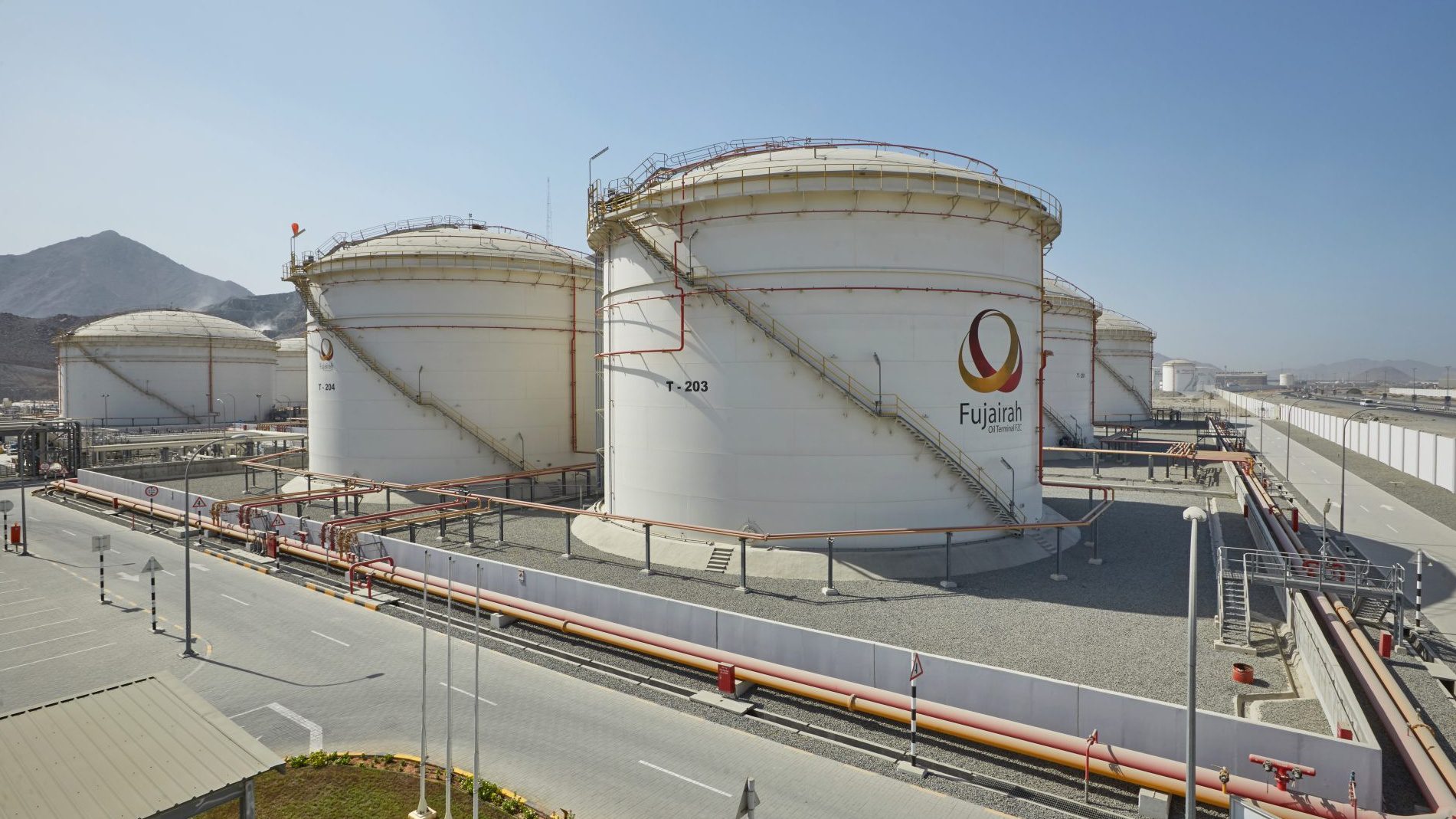
Dubai-listed Gulf Navigation Holding said it is seeking to maximise returns as demand for energy storage rises sharply amid escalating regional conflict, driving costs higher in Fujairah. Moreover, the company announced plans to expand its energy sector portfolio as market conditions continue to tighten.
Fujairah storage costs rise amid demand surge
The shipping and maritime logistics firm said Fujairah, its primary storage base, has seen an increase in storage and handling costs due to stronger global demand. Additionally, the company highlighted that the emirate’s strategic position outside the Strait of Hormuz has increased its importance as a key alternative hub.
The company said, “Fujairah has witnessed a notable rise in storage costs driven by growing demand on its storage capacity.”
“Its strategic importance stems from its unique geographical location on the eastern coast of the United Arab Emirates, overlooking one of the world’s most critical maritime routes near the Strait of Hormuz.”
Conflict disrupts oil flows through Strait of Hormuz
The conflict involving the US, Israel and Iran has entered its fifth week, with a blockade of the Strait of Hormuz disrupting one of the world’s most important energy transit corridors. Moreover, roughly 20% of global oil normally passes through the waterway, raising significant supply concerns.
Analysts have pointed to Fujairah, located outside the Strait, as a critical alternative route for moving oil out of the Gulf. As a result, storage capacity in the emirate has come under pressure as supply chains adjust to the disruption.
Acquisition supports expansion strategy
Gulf Navigation recently completed its acquisition of Brooge Energy and now operates an advanced storage and blending terminal in Fujairah. Additionally, the company reported total operating revenue of AED307.5 million for 2025, up 9% year-on-year.
The firm said it expects to “sustaining its growth trajectory” as storage requirements increase. Furthermore, it cited rising demand for capacity in Fujairah as a key driver of its outlook.
According to International Energy Agency estimates, crude and oil product flows through the Strait of Hormuz have dropped sharply from around 20 million barrels per day before the conflict. Therefore, the tightening supply environment has contributed to reports that storage costs in Fujairah have doubled or tripled, with port capacity reaching about 90%.
