
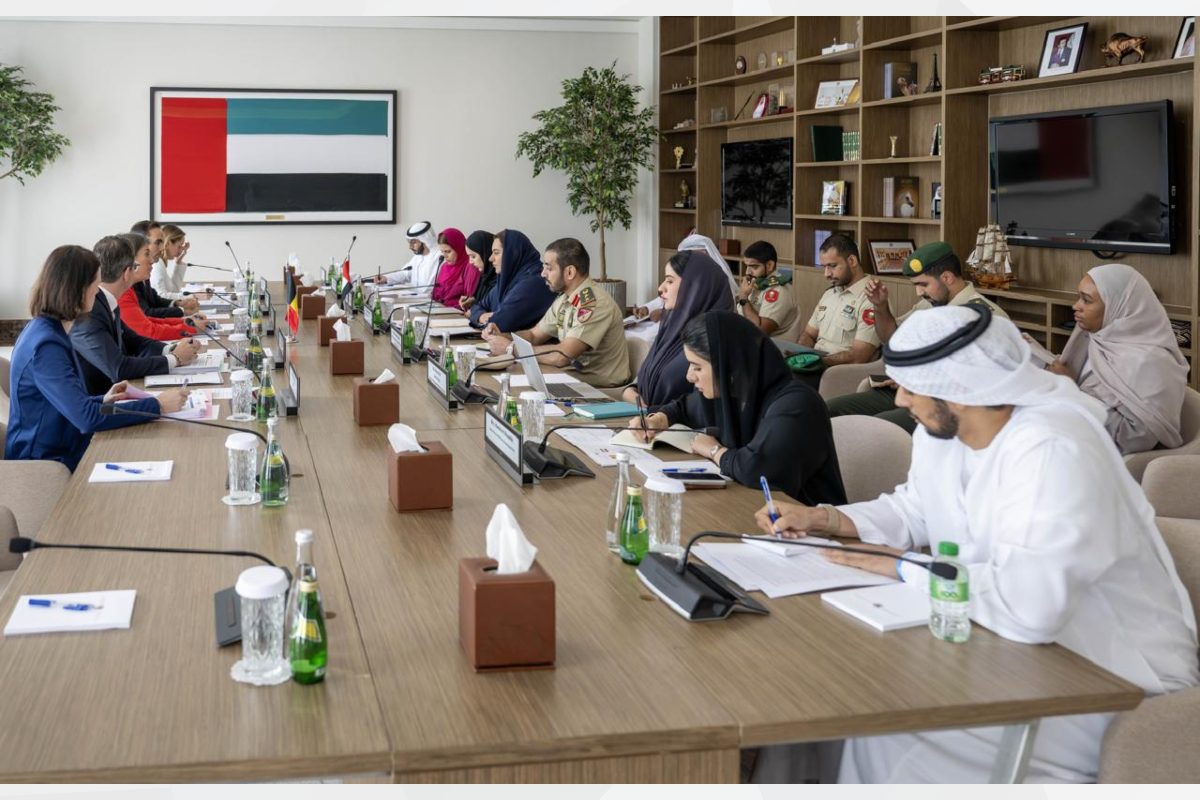
The Ministry of Foreign Affairs hosted the third round of political consultations between the United Arab Emirates and the Kingdom of Belgium. The session was co-chaired by Reem Ketait, Deputy Assistant Minister for Political Affairs, and Her Excellency Theodora Gentzis, Secretary General and President of the Board of Directors of Belgium’s Ministry of Foreign Affairs, Foreign Trade and Development Cooperation, with senior officials from both sides in attendance.
Both delegations reviewed the progress and depth of bilateral relations, reaffirming the strength of the longstanding partnership and their shared determination to expand cooperation across strategic sectors.
They emphasised the enduring people-to-people ties between the two countries, reflected in active cultural, educational and commercial exchanges, as well as the growing presence of Belgian companies in the UAE across logistics, energy, advanced manufacturing, ports, life sciences and innovation. This momentum underscores dynamic economic collaboration and a joint commitment to sustainable, innovation-driven growth.
The two sides highlighted consistent growth in bilateral trade in recent years, demonstrating a resilient and diversified economic relationship. Discussions explored ways to expand non-oil trade, strengthen private sector partnerships and enhance investment flows in priority areas including energy transition, renewable energy, hydrogen, advanced technologies and sustainable infrastructure.
Within this context, both sides discussed the ongoing negotiations for the UAE–EU Comprehensive Economic Partnership Agreement (CEPA), reiterating support for constructive and timely progress while recognising the UAE’s role as a vital economic and logistics hub linking Europe, West Asia and East Africa.
Judicial and consular cooperation also featured in the talks, with both parties acknowledging the high level of coordination and mutual trust underpinning this collaboration. They agreed to further advance cooperation in legal affairs and law enforcement coordination, including through institutional exchanges.
The consultations included substantive discussions on joint efforts to counter terrorism and extremism, enhance maritime security and promote regional stability. Both sides stressed the importance of coordinated approaches to address emerging security challenges.
On regional and international developments, the delegations exchanged views on the Middle East, European security and the Horn of Africa. They underscored the urgency of de-escalation, the protection of civilians and the importance of dialogue to prevent further instability, reaffirming that sustained diplomatic engagement remains the only viable path to lasting stability.
Humanitarian assistance efforts were also reviewed, including support extended to the Horn of Africa and Gaza. Both sides emphasised the need to ensure rapid, safe and unhindered humanitarian access and reaffirmed their shared commitment to peacebuilding and coordinated international action.
The meeting concluded with agreement to increase the frequency of high-level visits to reinforce strategic coordination and deepen institutional engagement. Both parties also confirmed that the fourth round of political consultations will take place in Brussels in 2027.
